Agusan bent-toed gecko (Cyrtodactylus agusanensis)
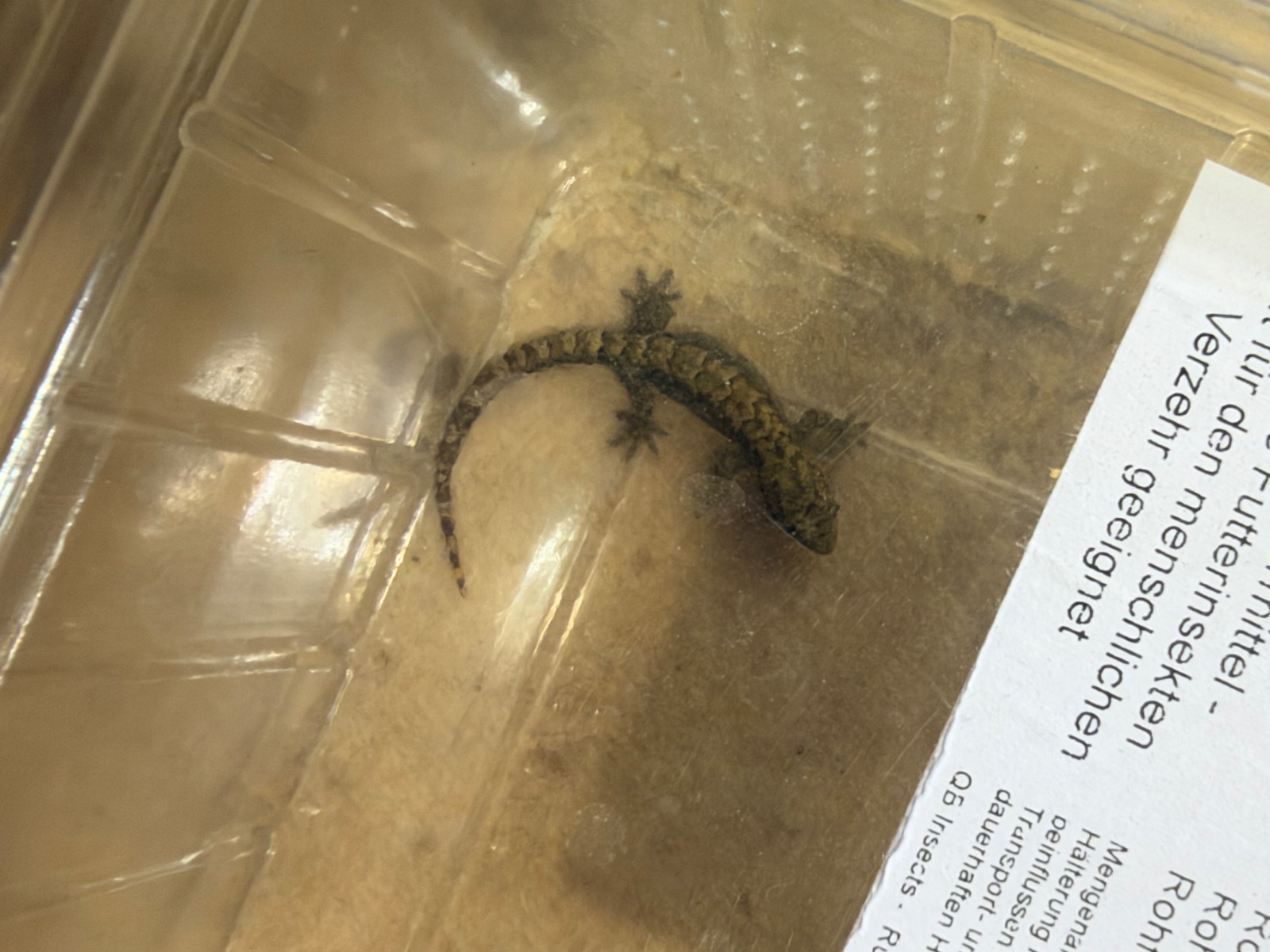
Geckos · Difficulty: Intermediate
Key facts and care guidance for Agusan bent-toed gecko (Cyrtodactylus agusanensis) (origin: Philippines, Mindanao island; type locality Bunauan in Agusan province, neotype from Mt. Magdiwata in Agusan del Sur at 350 m altitude. Older sources also list Leyte and Dinagat — but a 2010 revision restricted the true C. agusanensis to northern and eastern Mindanao and split off the remaining populations as separate species.). Adult size around 18–22 cm. Life expectancy 8–12 years. The values below are carefully researched guidance.
Short answers
Agusan bent-toed gecko: How big does the enclosure need to be?
60×45×60 cm for a pair.
Agusan bent-toed gecko: What temperature does it need?
Daytime 25–29 °C during the day, lower to 22–24 °C at night, basking spot No basking spot — at most a warm place up to 30 °C, at night 22–24 °C.
Agusan bent-toed gecko: Does it need UVB lighting?
UVB: Not essential (nocturnal), but weak UVB is still beneficial.
Agusan bent-toed gecko: How long do they live?
Life expectancy: 8–12 years.
Agusan bent-toed gecko: Is it suitable for beginners?
Rather not – it is considered an intermediate species (difficulty: Intermediate).
Climate
- Daytime temperature
- 25–29 °C during the day, lower to 22–24 °C at night
- Night temperature
- 22–24 °C
- Basking spot
- No basking spot — at most a warm place up to 30 °C
- Humidity
- 70–85 %
- UVB
- Not essential (nocturnal), but weak UVB is still beneficial
Enclosure
- Minimum size
- 60×45×60 cm for a pair
- Substrate
- Forest-floor substrate, permanently slightly damp, plus cork tubes and vertical pieces of bark
Feeding
- Food
- Crickets, roaches, house crickets and firebrats, dusted regularly with calcium and vitamins
- Feeding interval
- adults 2–3×/week
Key facts
- Adult size
- 18–22 cm
- Life expectancy
- 8–12 years
- Origin
- Philippines, Mindanao island; type locality Bunauan in Agusan province, neotype from Mt. Magdiwata in Agusan del Sur at 350 m altitude. Older sources also list Leyte and Dinagat — but a 2010 revision restricted the true C. agusanensis to northern and eastern Mindanao and split off the remaining populations as separate species.
- Protection status
- Not listed under CITES
- Brumation
- No winter rest; in winter just somewhat cooler and drier
- Cohabitation
- 1.1 or 1.2; never house males together, as they fight over territory and hides until one is injured or withdraws permanently. Females lay double clutches several times a year — if a female lays too often, she is separated from the male to recover. It is important to provide plenty of vertical pieces of bark and cork tubes so every animal has its own hide, and to feed separately where there are size differences.
Notes
A rock species from river gorges. It needs high humidity and good ventilation at the same time.
Do you keep this species?
Add your animal to Reptoria – Reptoria reminds you about feeding and shedding. Add your animal for free →
Look for Agusan bent-toed gecko (Cyrtodactylus agusanensis) in the marketplace →
Related species
- Chanhome's bent-toed gecko (Cyrtodactylus chanhomeae) – Intermediate
- Elok bent-toed gecko (Cyrtodactylus elok) – Intermediate
- Intermediate bent-toed gecko (Cyrtodactylus intermedius) – Intermediate
- Kinabalu bent-toed gecko (Cyrtodactylus baluensis) – Intermediate
- Short-palmed bent-toed gecko (Cyrtodactylus brevipalmatus) – Intermediate
- Malayan bent-toed gecko (Cyrtodactylus pulchellus) – Intermediate
- Malaysian bent-toed gecko (Cyrtodactylus malayanus) – Intermediate
- Marbled bent-toed gecko (Cyrtodactylus marmoratus) – Intermediate
What you need to start
To keep Agusan bent-toed gecko (Cyrtodactylus agusanensis) you typically need: a suitable enclosure (60×45×60 cm for a pair), substrate (Forest-floor substrate, permanently slightly damp, plus cork tubes and vertical pieces of bark), a heat source with a thermostat, UVB lighting, thermometer and hygrometer, a water dish and hides. You will find equipment in the Reptoria marketplace.
The complete, interactive care database is in the Reptoria app.
Last updated: 23 September 2026 · Editor: Reptoria editorial team · Sources include: reptile-database.reptarium.cz, bioone.org (Herpetological Monographs 24), species.wikimedia.org, Wikipedia EN, einrichtungsbeispiele.de
All values are non-binding guidance and do not replace expert advice. Research thoroughly from several sources before acquiring and keeping an animal, and observe the applicable law (species and animal protection in particular).