Anthill python (Antaresia perthensis)
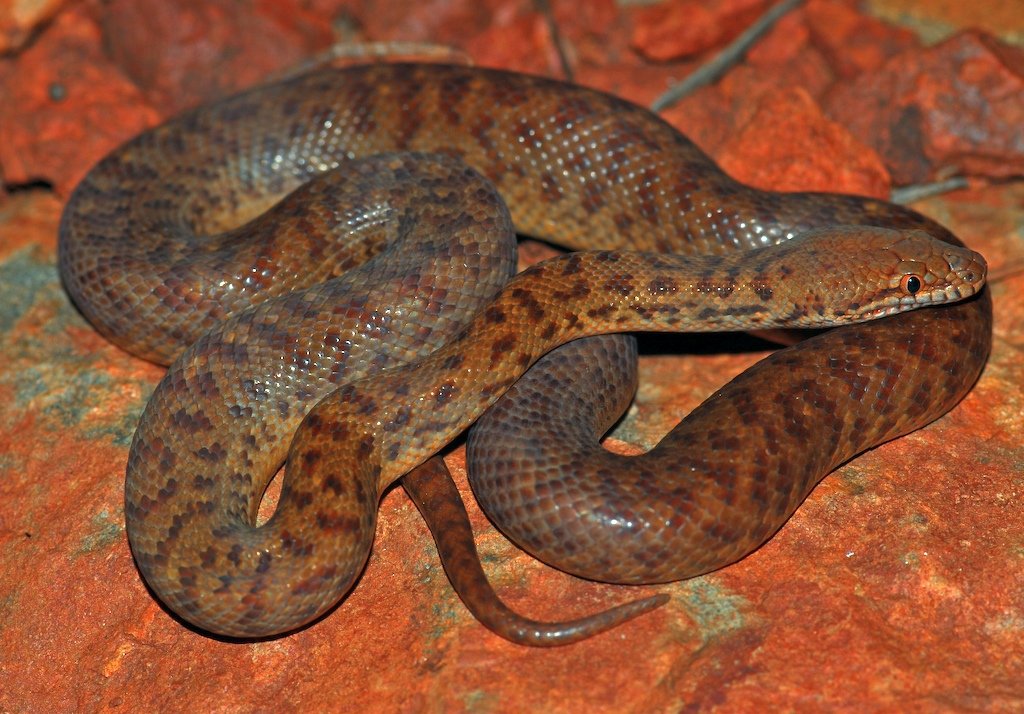
Snakes · Difficulty: Beginner
Key facts and care guidance for Anthill python (Antaresia perthensis) (origin: Mid-west Western Australia, mainly the Pilbara, plus a few coastal islands; hilly terrain with rocks, hollows, gorges and termite mounds providing shelter). Adult size around 40–70 cm total length, around 200 g; making it the smallest giant snake in the world. Life expectancy 15–20 years. The values below are carefully researched guidance.
Short answers
Anthill python: How big does the enclosure need to be?
100×60×70 cm for an adult animal.
Anthill python: What temperature does it need?
Daytime 28–32 °C, basking spot 32–35 °C at a small warm spot, at night 22–24 °C.
Anthill python: Does it need UVB lighting?
UVB: Optional.
Anthill python: How long do they live?
Life expectancy: 15–20 years.
Anthill python: Is it suitable for beginners?
Yes – it is considered suitable for beginners (difficulty: Beginner).
Climate
- Daytime temperature
- 28–32 °C
- Night temperature
- 22–24 °C
- Basking spot
- 32–35 °C at a small warm spot
- Humidity
- 40–60 %
- UVB
- Optional
Enclosure
- Minimum size
- 100×60×70 cm for an adult animal
- Substrate
- Coco humus, a sand-soil mix or beech chips, hides
Feeding
- Food
- Thawed frozen mice of a suitable size, in large animals occasionally a fuzzy rat. In the wild this species mainly eats geckos and other small reptiles, plus small mammals.
- Feeding interval
- adults every 10–14 days
Key facts
- Adult size
- 40–70 cm total length, around 200 g; making it the smallest giant snake in the world
- Life expectancy
- 15–20 years
- Origin
- Mid-west Western Australia, mainly the Pilbara, plus a few coastal islands; hilly terrain with rocks, hollows, gorges and termite mounds providing shelter
- Protection status
- CITES Appendix II / EU Annex B (registration required)
- Brumation
- None (a slight drop for breeding is optional)
- Cohabitation
- Keeping them singly is recommended. Snakes are solitary and do not seek company. The concrete reason is the feeding accident: if two animals grab the same food item, one can swallow the other along with it. On top of that, once they are kept together you can no longer tell which animal has eaten and which is losing weight. For breeding, put them together under supervision.
Notes
The world's smallest python – ideal for limited space, very calm and it hardly ever bites. Nocturnal, and it prefers heat from the floor.
Do you keep this species?
Add your animal to Reptoria – Reptoria reminds you about feeding and shedding. Add your animal for free →
Look for Anthill python (Antaresia perthensis) in the marketplace →
Related species
- Spotted python (Antaresia maculosa) – Beginner
- Children's python (Antaresia childreni) – Beginner
- Papuan pygmy python (Antaresia papuensis) – Beginner
- Stimson's python (Antaresia stimsoni) – Beginner
- Egyptian sand boa (Eryx colubrinus colubrinus) – Beginner
- Desert kingsnake (Lampropeltis splendida) – Beginner
- Florida kingsnake (Lampropeltis getula floridana) – Beginner
- Western fox snake (Pantherophis vulpinus) – Beginner
What you need to start
To keep Anthill python (Antaresia perthensis) you typically need: a suitable enclosure (100×60×70 cm for an adult animal), substrate (Coco humus, a sand-soil mix or beech chips, hides), a heat source with a thermostat, UVB lighting, thermometer and hygrometer, a water dish and hides. You will find equipment in the Reptoria marketplace.
The complete, interactive care database is in the Reptoria app.
Last updated: 2 November 2026 · Editor: Reptoria editorial team · Sources include: Wikipedia EN, Wikipedia DE, tierenzyklopaedie.de, kaleidoskop-der-naturnahe.jimdoweb.com, bmleh.de (Gutachten Reptilien 1997)
All values are non-binding guidance and do not replace expert advice. Research thoroughly from several sources before acquiring and keeping an animal, and observe the applicable law (species and animal protection in particular).