Aran rock lizard (Iberolacerta aranica)
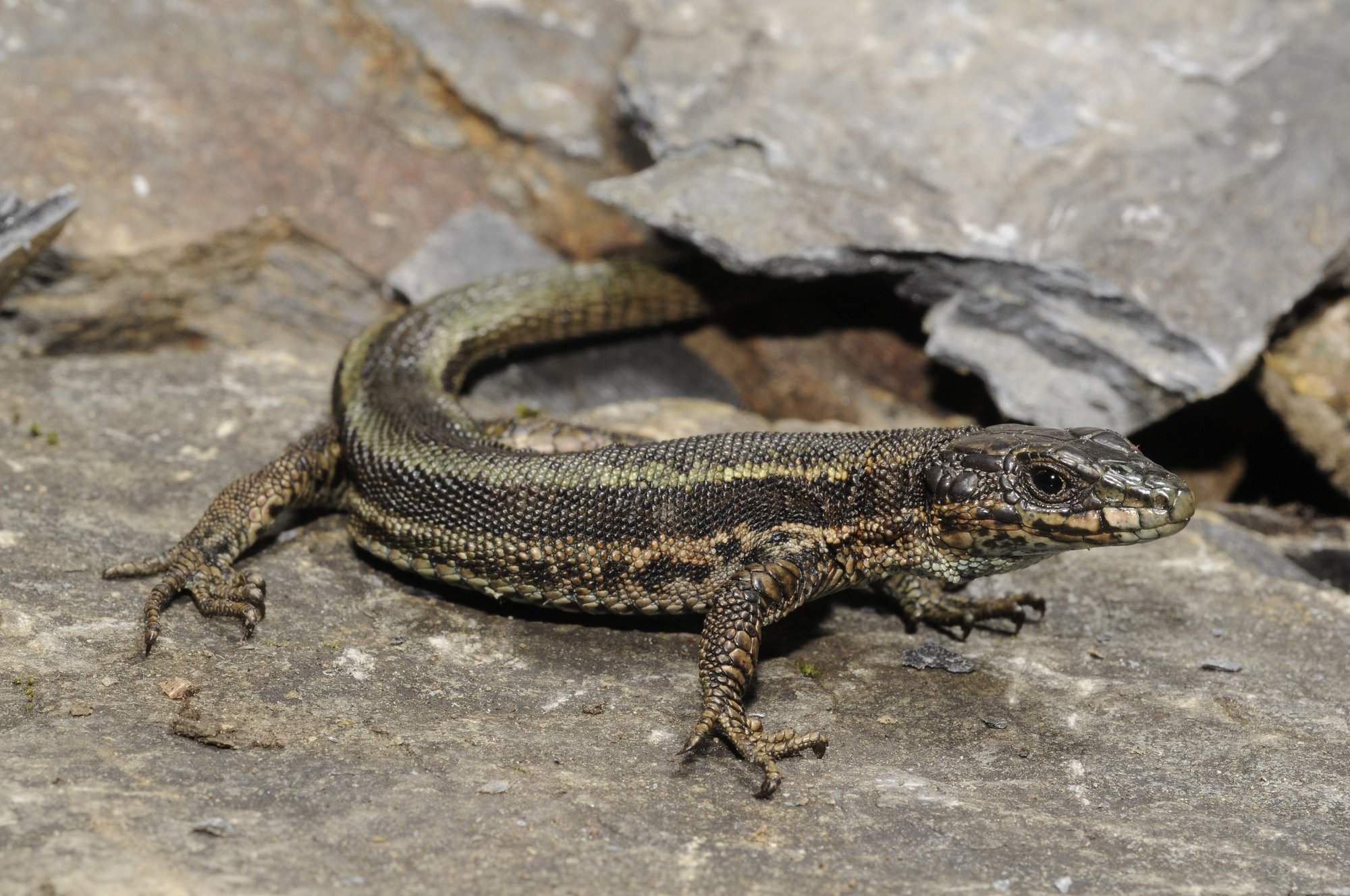
Lizards · Difficulty: Expert
Key facts and care guidance for Aran rock lizard (Iberolacerta aranica) (origin: The Mauberme massif of the central Pyrenees: Val d'Aran (Spain), Ariège and, marginally, Haute-Garonne (France), 1,940–2,540 m, total range around 26 km²). Adult size around 15–18 cm. Life expectancy 5–10 years. The values below are carefully researched guidance.
Short answers
Aran rock lizard: How big does the enclosure need to be?
100×50×60 cm for a group.
Aran rock lizard: What temperature does it need?
Daytime 18–25 °C ambient temperature with a strong gradient, basking spot 40–45 °C at the basking spot, at night 12–18 °C.
Aran rock lizard: Does it need UVB lighting?
UVB: Essential (UVB 10.0 — these species bask for hours).
Aran rock lizard: How long do they live?
Life expectancy: 5–10 years.
Aran rock lizard: Is it suitable for beginners?
No – better suited to experienced keepers (difficulty: Expert).
Climate
- Daytime temperature
- 18–25 °C ambient temperature with a strong gradient
- Night temperature
- 12–18 °C
- Basking spot
- 40–45 °C at the basking spot
- Humidity
- 40–60 %
- UVB
- Essential (UVB 10.0 — these species bask for hours)
Enclosure
- Minimum size
- 100×50×60 cm for a group
- Substrate
- A sand-loam mix with stone slabs, a dry-stone wall and a few plants
Feeding
- Food
- Crickets, house crickets, roaches, wax moths and the occasional fruit, dusted regularly with calcium and vitamins
- Feeding interval
- adults 3–4×/week
Key facts
- Adult size
- 15–18 cm
- Life expectancy
- 5–10 years
- Origin
- The Mauberme massif of the central Pyrenees: Val d'Aran (Spain), Ariège and, marginally, Haute-Garonne (France), 1,940–2,540 m, total range around 26 km²
- Protection status
- Bern Convention, IUCN "Endangered" — only documented captive breeding
- Brumation
- A winter rest of 10–14 weeks at 5–10 °C — without it there is no breeding and a markedly shorter life
- Cohabitation
- Harem of 1.2 or 1.3; never keep males together. The reason: several males fight over territory and the basking spot until one is injured or permanently sits in a corner. Females usually get along, but each needs her own basking and hiding spot; feed separately if sizes differ.
Notes
A high-mountain endemic above 1,900 m. It needs cool conditions and a long, cold winter rest.
Do you keep this species?
Add your animal to Reptoria – Reptoria reminds you about feeding and shedding. Add your animal for free →
Look for Aran rock lizard (Iberolacerta aranica) in the marketplace →
Related species
- Aurelio's rock lizard (Iberolacerta aurelioi) – Expert
- Batuecan rock lizard (Iberolacerta martinezricai) – Expert
- Pyrenean rock lizard (Iberolacerta bonnali) – Beginner with some knowledge
- Iberian rock lizard (Iberolacerta monticola) – Expert
- Horvath's rock lizard (Iberolacerta horvathi) – Expert
- Leon rock lizard (Iberolacerta galani) – Beginner with some knowledge
- Cyren's rock lizard (Iberolacerta cyreni) – Beginner with some knowledge
- Aeolian wall lizard (Podarcis raffonei) – Expert
What you need to start
To keep Aran rock lizard (Iberolacerta aranica) you typically need: a suitable enclosure (100×50×60 cm for a group), substrate (A sand-loam mix with stone slabs, a dry-stone wall and a few plants), a heat source with a thermostat, UVB lighting, thermometer and hygrometer, a water dish and hides. You will find equipment in the Reptoria marketplace.
The complete, interactive care database is in the Reptoria app.
Last updated: 2 November 2026 · Editor: Reptoria editorial team · Sources include: vertebradosibericos.org, uicnmed.org (IUCN-Bewertung, PDF), reptile-database.reptarium.cz, FFH-Richtlinie 92/43/EWG, amtliche Liste Anhang IV(a), en.wikipedia.org
All values are non-binding guidance and do not replace expert advice. Research thoroughly from several sources before acquiring and keeping an animal, and observe the applicable law (species and animal protection in particular).