Argus monitor (Varanus panoptes)
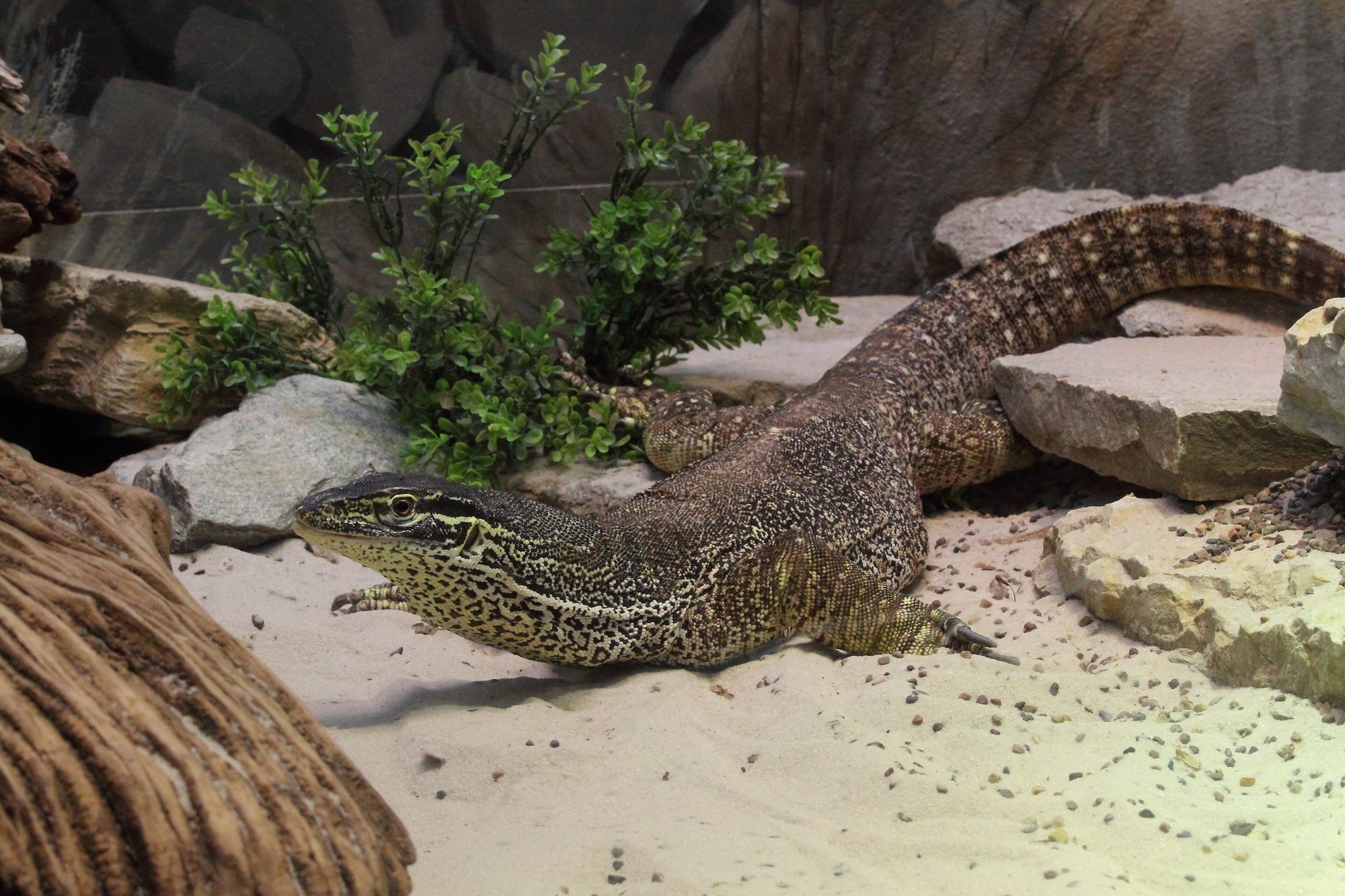
Monitors & tegus · Difficulty: Expert
Key facts and care guidance for Argus monitor (Varanus panoptes) (origin: Northern Australia, southern New Guinea). Adult size around 120–160 cm. Life expectancy 15–20 years. The values below are carefully researched guidance.
Short answers
Argus monitor: How big does the enclosure need to be?
350×150×150 cm for an adult animal, with 40–50 cm of digging substrate.
Argus monitor: What temperature does it need?
Daytime 28–34 °C, basking spot 45–50 °C (local basking spot), at night 22–26 °C.
Argus monitor: Does it need UVB lighting?
UVB: Essential (strong UVB, 10–14%, lamp directly above the basking spot).
Argus monitor: How long do they live?
Life expectancy: 15–20 years.
Argus monitor: Is it suitable for beginners?
No – better suited to experienced keepers (difficulty: Expert).
Climate
- Daytime temperature
- 28–34 °C
- Night temperature
- 22–26 °C
- Basking spot
- 45–50 °C (local basking spot)
- Humidity
- 50–65 %
- UVB
- Essential (strong UVB, 10–14%, lamp directly above the basking spot)
Enclosure
- Minimum size
- 350×150×150 cm for an adult animal, with 40–50 cm of digging substrate
- Substrate
- Very deep sand-loam they can dig in (at least 50 cm), a water basin
Feeding
- Food
- Chicks as a lean staple food, plus fish, chicken heart and gizzard, eggs, insects for enrichment, rodents only in moderation
- Feeding interval
- adults 2×/week
Key facts
- Adult size
- 120–160 cm
- Life expectancy
- 15–20 years
- Origin
- Northern Australia, southern New Guinea
- Protection status
- CITES II; export from Australia is prohibited – captive-bred animals only
- Brumation
- A cooler spell of 6–8 weeks
- Cohabitation
- Keep them singly. Monitors and tegus are territorial; grown animals defend their territory and injure each other with serious bites in the process. Even small size differences mean one animal claims the warm spot and the food for itself while the other falls behind — which is often only noticed once the weaker animal has already lost weight. For breeding, put them together only under supervision.
Notes
A very large, extremely active burrowing monitor – it digs burrows metres long. The space requirement is enormous and is almost always underestimated; a normal terrarium is not enough.
Do you keep this species?
Add your animal to Reptoria – Reptoria reminds you about feeding and shedding. Add your animal for free →
Look for Argus monitor (Varanus panoptes) in the marketplace →
Related species
- Bengal monitor (Varanus bengalensis) – Expert
- Blue tree monitor (Varanus macraei) – Expert
- Blue-tailed monitor (Varanus doreanus) – Intermediate to expert
- Finsch's monitor (Varanus doreanus finschi) – Expert
- Boatsi tree monitor (Varanus boatsi) – Expert
- Bogert's tree monitor (Varanus bogerti) – Expert
- Lace monitor (Varanus varius) – Expert
- Timor monitor (Varanus timorensis) – Intermediate
What you need to start
To keep Argus monitor (Varanus panoptes) you typically need: a suitable enclosure (350×150×150 cm for an adult animal, with 40–50 cm of digging substrate), substrate (Very deep sand-loam they can dig in (at least 50 cm), a water basin), a heat source with a thermostat, UVB lighting, thermometer and hygrometer, a water dish and hides. You will find equipment in the Reptoria marketplace.
The complete, interactive care database is in the Reptoria app.
Last updated: 9 October 2026 · Editor: Reptoria editorial team · Sources include: Wikipedia DE, reptile-database.reptarium.cz, atlarium.bio, monster-reptiles.com, berlin.de
All values are non-binding guidance and do not replace expert advice. Research thoroughly from several sources before acquiring and keeping an animal, and observe the applicable law (species and animal protection in particular).