Dumeril's fringe-fingered lizard (Acanthodactylus dumerilii)
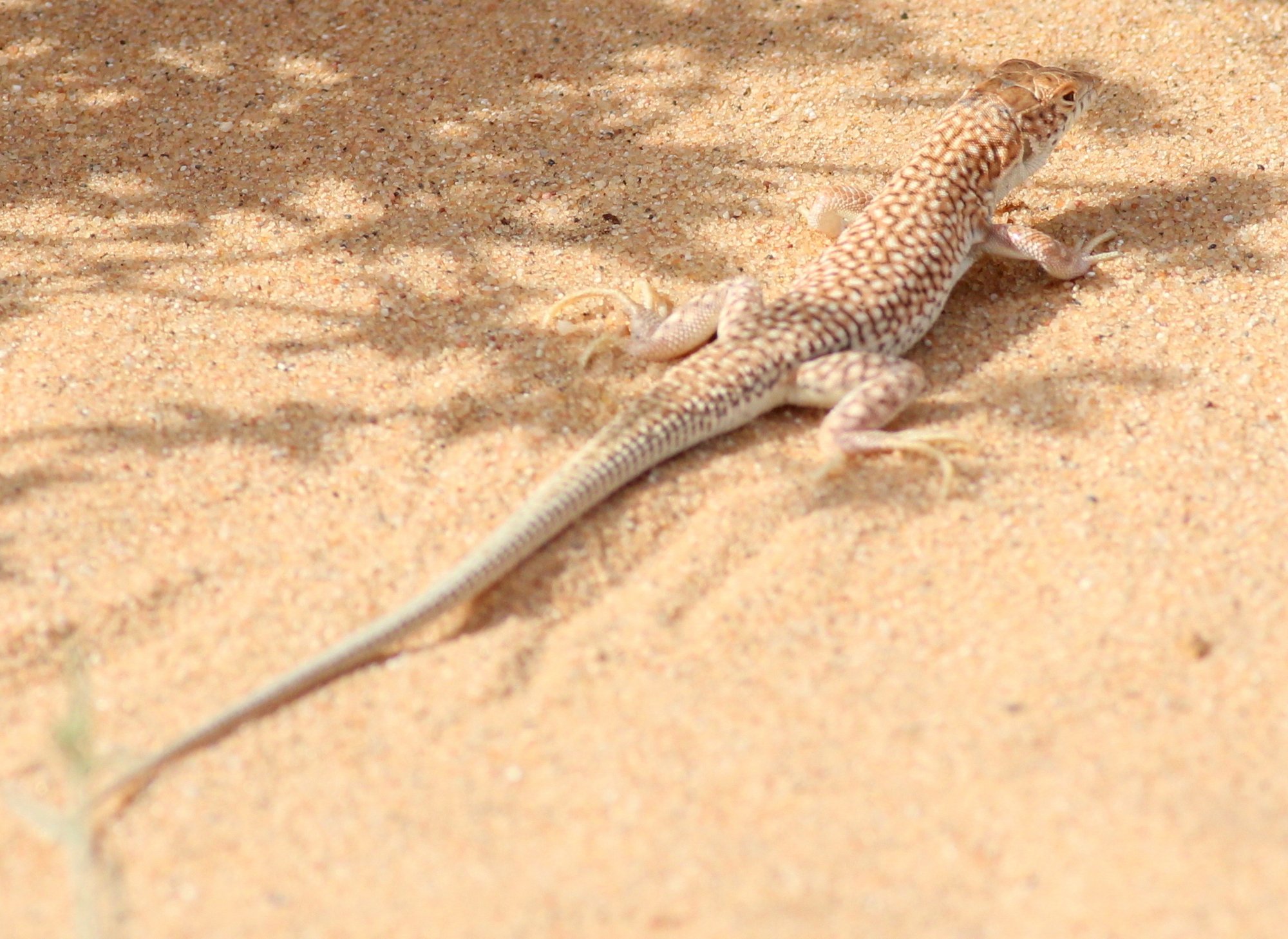
Lizards · Difficulty: Intermediate
Key facts and care guidance for Dumeril's fringe-fingered lizard (Acanthodactylus dumerilii) (origin: North Africa). Adult size around 18–23 cm. Life expectancy 4–8 years. The values below are carefully researched guidance.
Short answers
Dumeril's fringe-fingered lizard: How big does the enclosure need to be?
120×60×50 cm for a group.
Dumeril's fringe-fingered lizard: What temperature does it need?
Daytime 28–34 °C, basking spot Basking spot 45–50 °C, at night 16–20 °C.
Dumeril's fringe-fingered lizard: Does it need UVB lighting?
UVB: Essential (UVB 10.0–12.0, extremely sun-hungry species).
Dumeril's fringe-fingered lizard: How long do they live?
Life expectancy: 4–8 years.
Dumeril's fringe-fingered lizard: Is it suitable for beginners?
Rather not – it is considered an intermediate species (difficulty: Intermediate).
Climate
- Daytime temperature
- 28–34 °C
- Night temperature
- 16–20 °C
- Basking spot
- Basking spot 45–50 °C
- Humidity
- 25–40 %
- UVB
- Essential (UVB 10.0–12.0, extremely sun-hungry species)
Enclosure
- Minimum size
- 120×60×50 cm for a group
- Substrate
- Deep sand they can dig in, with a few stones and dry twigs
Feeding
- Food
- Crickets, house crickets, roaches and mealworms, dusted regularly with calcium and vitamins
- Feeding interval
- adults 3–4×/week
Key facts
- Adult size
- 18–23 cm
- Life expectancy
- 4–8 years
- Origin
- North Africa
- Protection status
- Not listed under CITES
- Brumation
- A cooler rest of 8–10 weeks at 10–15 °C
- Cohabitation
- Keep as a pair (1.1) for the least stress; one male with 2-3 females (1.2 or 1.3) also works in a large, well-structured enclosure with sight barriers - but never two males together. The genus Acanthodactylus is known as markedly aggressive, with rivals continually fighting over territory and the basking spot until one is injured or permanently driven off; females usually get along but need their own warm spots and hides.
Notes
A robust species from semi-desert and dune margins.
Do you keep this species?
Add your animal to Reptoria – Reptoria reminds you about feeding and shedding. Add your animal for free →
Look for Dumeril's fringe-fingered lizard (Acanthodactylus dumerilii) in the marketplace →
Related species
- Bosk's fringe-fingered lizard (Acanthodactylus boskianus) – Intermediate
- Spiny-footed lizard (Acanthodactylus erythrurus) – Intermediate
- Spotted fringe-fingered lizard (Acanthodactylus maculatus) – Intermediate
- Golden fringe-fingered lizard (Acanthodactylus aureus) – Intermediate
- Long-footed fringe-fingered lizard (Acanthodactylus longipes) – Intermediate
- Leopard fringe-fingered lizard (Acanthodactylus pardalis) – Intermediate
- Schreiber's fringe-fingered lizard (Acanthodactylus schreiberi) – Intermediate
- Nidua fringe-fingered lizard (Acanthodactylus scutellatus) – Intermediate
What you need to start
To keep Dumeril's fringe-fingered lizard (Acanthodactylus dumerilii) you typically need: a suitable enclosure (120×60×50 cm for a group), substrate (Deep sand they can dig in, with a few stones and dry twigs), a heat source with a thermostat, UVB lighting, thermometer and hygrometer, a water dish and hides. You will find equipment in the Reptoria marketplace.
The complete, interactive care database is in the Reptoria app.
Last updated: 9 October 2026 · Editor: Reptoria editorial team · Sources include: https://en.wikipedia.org/wiki/Acanthodactylus, https://reptile-database.reptarium.cz/species?genus=Acanthodactylus&species=dumerilii
All values are non-binding guidance and do not replace expert advice. Research thoroughly from several sources before acquiring and keeping an animal, and observe the applicable law (species and animal protection in particular).