Lilford's wall lizard (Podarcis lilfordi)
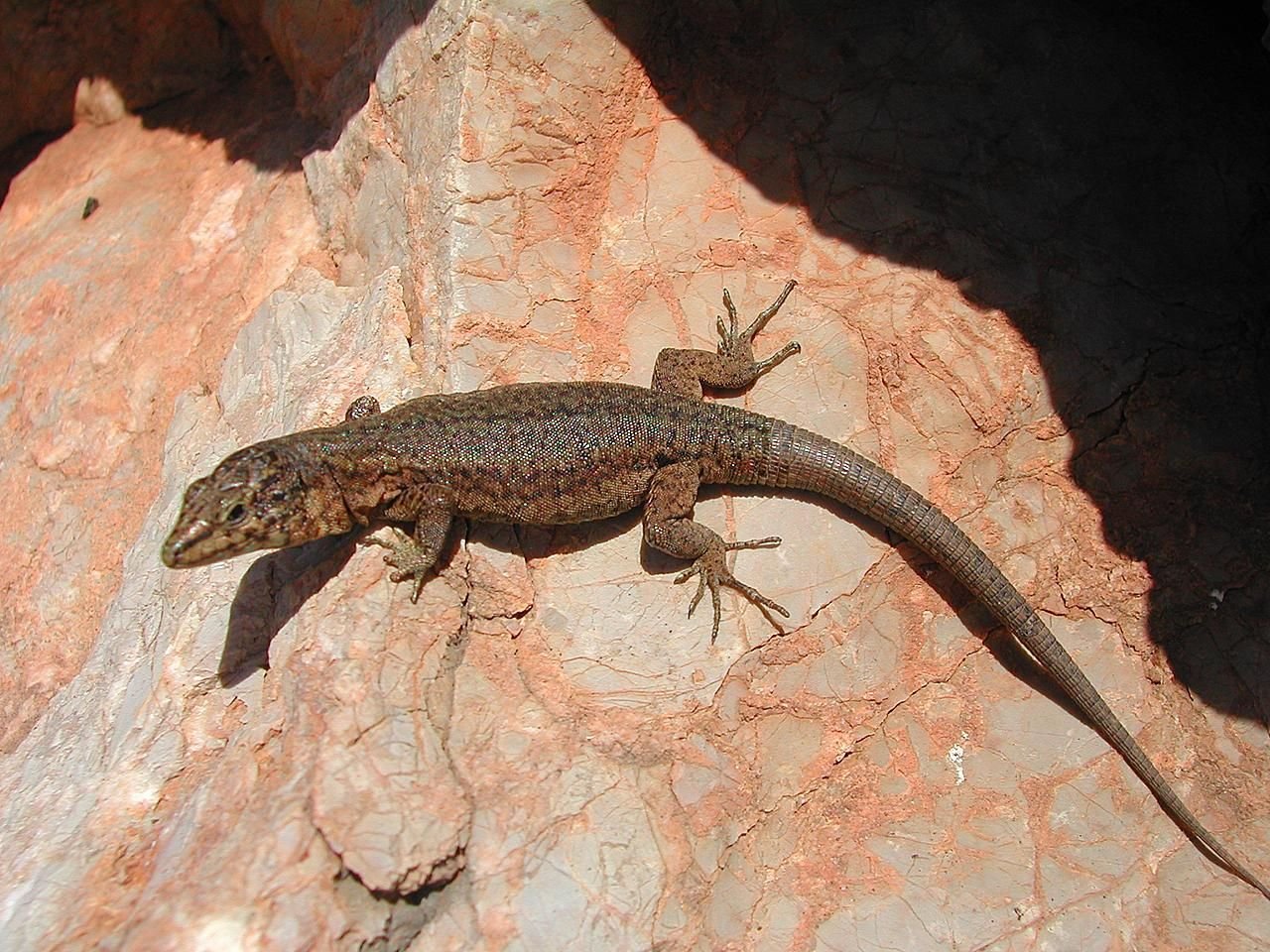
Lizards · Difficulty: Expert
Key facts and care guidance for Lilford's wall lizard (Podarcis lilfordi) (origin: Endemic to the Gymnesian Islands (the Cabrera archipelago and small rocky islets around Mallorca and Menorca); extinct on the main islands, IUCN: endangered). Adult size around SVL ~7–8 cm, total length ~18–20 cm (varies with the island). Life expectancy approx. 8–12 years. The values below are carefully researched guidance.
Short answers
Lilford's wall lizard: How big does the enclosure need to be?
100×50×50 cm (a pair or small group).
Lilford's wall lizard: What temperature does it need?
Daytime 24–30 °C (cooler zones around 22 °C), basking spot 35–40 °C, at night 18–20 °C.
Lilford's wall lizard: Does it need UVB lighting?
UVB: Essential; a sun-loving Mediterranean species, Ferguson zone 3–4 with a UV index of 3–4 at the basking spot.
Lilford's wall lizard: How long do they live?
Life expectancy: approx. 8–12 years.
Lilford's wall lizard: Is it suitable for beginners?
No – better suited to experienced keepers (difficulty: Expert).
Climate
- Daytime temperature
- 24–30 °C (cooler zones around 22 °C)
- Night temperature
- 18–20 °C
- Basking spot
- 35–40 °C
- Humidity
- 50–70 %
- UVB
- Essential; a sun-loving Mediterranean species, Ferguson zone 3–4 with a UV index of 3–4 at the basking spot
Enclosure
- Minimum size
- 100×50×50 cm (a pair or small group)
- Substrate
- A sand and soil mix with plenty of stones and rock crevices, Mediterranean planting
Feeding
- Food
- Omnivorous – insects plus plant food (flowers, fruit, nectar, soft vegetation); island populations are strongly plant-eating
- Feeding interval
- adults insects 2–3×/week (plus plant food always available), juveniles daily
Key facts
- Adult size
- SVL ~7–8 cm, total length ~18–20 cm (varies with the island)
- Life expectancy
- approx. 8–12 years
- Origin
- Endemic to the Gymnesian Islands (the Cabrera archipelago and small rocky islets around Mallorca and Menorca); extinct on the main islands, IUCN: endangered
- Protection status
- Habitats Directive Annexes II and IV plus Bern Convention Appendix II → strictly protected; wild collection is prohibited, only documented captive-bred animals with proof of origin plus registration; hardly ever legally in the trade
- Brumation
- A mild winter rest of ~6–8 weeks at ~8–12 °C (a Mediterranean island climate)
- Cohabitation
- One male plus several females is possible; NEVER keep males together (territorial). In the wild densities are locally high, but in a terrarium they still form territories
Notes
A strictly protected island endemic, legally available almost only as a documented captive-bred animal. Markedly omnivorous (nectar, fruit, flowers) – offer plant food. Some husbandry figures are derived from the genus and climate.
Do you keep this species?
Add your animal to Reptoria – Reptoria reminds you about feeding and shedding. Add your animal for free →
Look for Lilford's wall lizard (Podarcis lilfordi) in the marketplace →
Related species
- Aeolian wall lizard (Podarcis raffonei) – Expert
- Erhard's wall lizard (Podarcis erhardii) – Beginner to intermediate
- Bocage's wall lizard (Podarcis bocagei) – Beginner with some knowledge
- Carbonell's wall lizard (Podarcis carbonelli) – Beginner with some knowledge
- Geniez's wall lizard (Podarcis virescens) – Beginner with some knowledge
- Guadarrama wall lizard (Podarcis guadarramae) – Beginner with some knowledge
- Ionian wall lizard (Podarcis ionicus) – Beginner with some knowledge
- Italian wall lizard (Podarcis siculus campestris) – Intermediate
What you need to start
To keep Lilford's wall lizard (Podarcis lilfordi) you typically need: a suitable enclosure (100×50×50 cm (a pair or small group)), substrate (A sand and soil mix with plenty of stones and rock crevices, Mediterranean planting), a heat source with a thermostat, UVB lighting, thermometer and hygrometer, a water dish and hides. You will find equipment in the Reptoria marketplace.
The complete, interactive care database is in the Reptoria app.
Last updated: 9 October 2026 · Editor: Reptoria editorial team · Sources include: en.wikipedia.org, journals.plos.org (PLOS ONE), gutachten.txt (BML 1997, lokal), eunis.eea.europa.eu, eu_annex.txt (lokal)
All values are non-binding guidance and do not replace expert advice. Research thoroughly from several sources before acquiring and keeping an animal, and observe the applicable law (species and animal protection in particular).