Meller's chameleon (Trioceros melleri)
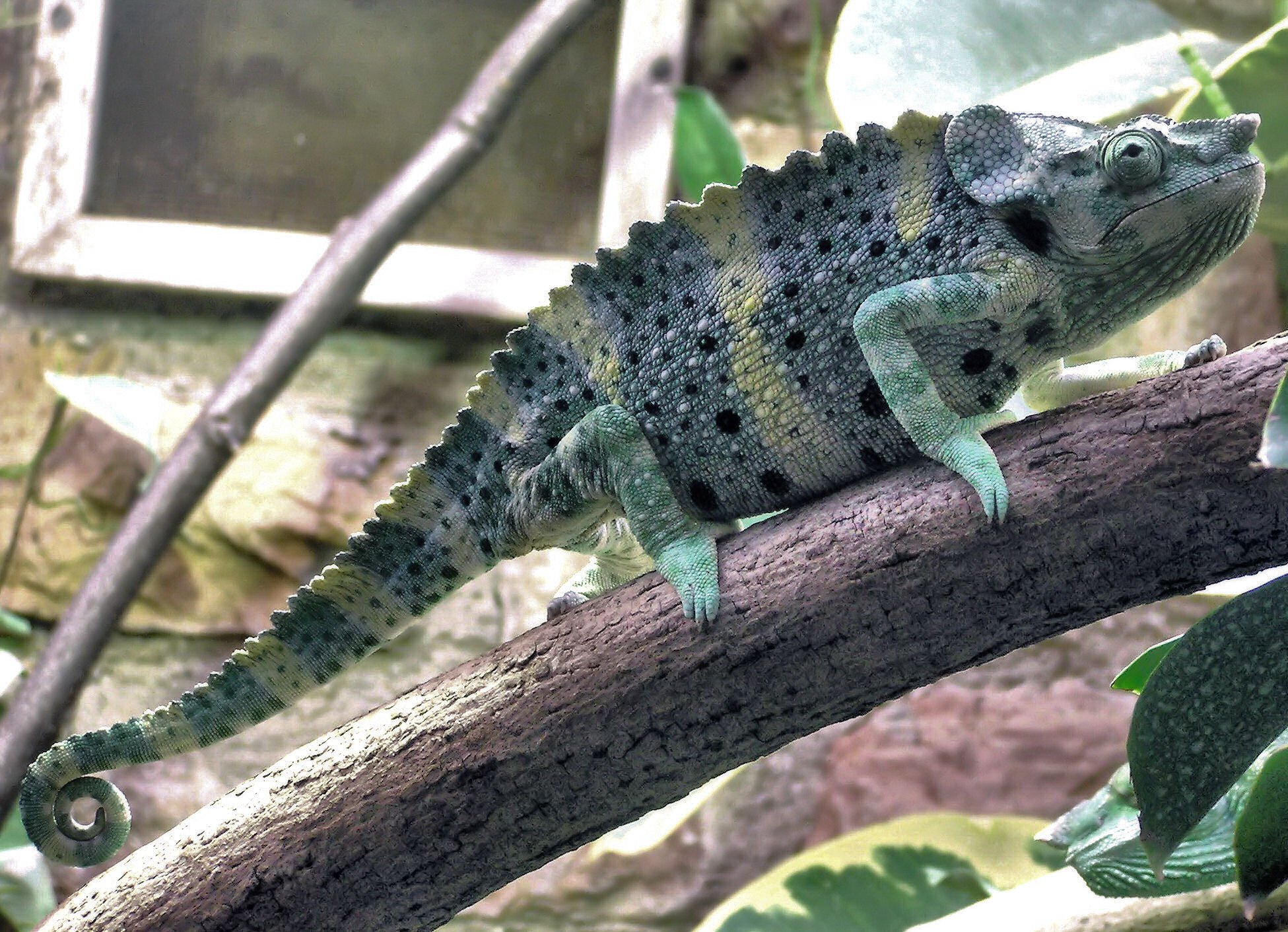
Chameleons · Difficulty: Expert
Key facts and care guidance for Meller's chameleon (Trioceros melleri) (origin: East Africa – Tanzania, Malawi, Mozambique (montane forest and savannah)). Adult size around 45–60 cm including tail (one of the largest mainland chameleons; exceptionally up to ~76 cm). Life expectancy up to ~12 years in captivity (usually less). The values below are carefully researched guidance.
Short answers
Meller's chameleon: How big does the enclosure need to be?
150×90×150 cm (a large, heavily ventilated enclosure; for adults better 180×100×180 cm).
Meller's chameleon: What temperature does it need?
Daytime 25–30 °C (ambient 22–27 °C), basking spot 32–40 °C, at night 18–22 °C.
Meller's chameleon: Does it need UVB lighting?
UVB: UVB needed (Ferguson zone 2–3, UV index 2–4).
Meller's chameleon: How long do they live?
Life expectancy: up to ~12 years in captivity (usually less).
Meller's chameleon: Is it suitable for beginners?
No – better suited to experienced keepers (difficulty: Expert).
Climate
- Daytime temperature
- 25–30 °C (ambient 22–27 °C)
- Night temperature
- 18–22 °C
- Basking spot
- 32–40 °C
- Humidity
- 50–70 % by day, up to 80–90 % at night
- UVB
- UVB needed (Ferguson zone 2–3, UV index 2–4)
Enclosure
- Minimum size
- 150×90×150 cm (a large, heavily ventilated enclosure; for adults better 180×100×180 cm)
- Substrate
- Loose, slightly damp substrate (soil, coco humus and leaf litter) with good drainage
Feeding
- Food
- Large insects: locusts, migratory locusts, roaches, large crickets or house crickets, occasionally wax moths – well gut-loaded and dusted with calcium
- Feeding interval
- adults 3–4 feeder insects every other day, juveniles daily
Key facts
- Adult size
- 45–60 cm including tail (one of the largest mainland chameleons; exceptionally up to ~76 cm)
- Life expectancy
- up to ~12 years in captivity (usually less)
- Origin
- East Africa – Tanzania, Malawi, Mozambique (montane forest and savannah)
- Protection status
- CITES Appendix II / EU Regulation Annex B; proof of origin needed, usually wild-caught
- Brumation
- No real winter rest; a slight night-time or seasonal drop in temperature
- Cohabitation
- Keep them singly – territorial and aggressive towards each other; never keep males together (several sources advise strictly against communal keeping)
Notes
A very high need for fresh air (gauze sides, air circulation); it prefers to drink moving water (a drip feeder or a small waterfall); sensitive to heat build-up and drying out. Usually wild-caught → quarantine and a faecal sample and deworming. Not for beginners.
Do you keep this species?
Add your animal to Reptoria – Reptoria reminds you about feeding and shedding. Add your animal for free →
Look for Meller's chameleon (Trioceros melleri) in the marketplace →
Related species
- Affinis chameleon (Trioceros affinis) – Expert
- Bale two-horned chameleon (Trioceros balebicornutus) – Expert
- Usambara three-horned chameleon (Trioceros deremensis) – Intermediate to expert
- Elliot's chameleon (Trioceros ellioti) – Intermediate
- Fea's chameleon (Trioceros feae) – Expert
- Goetze's chameleon (Trioceros goetzei) – Expert
- Harenna chameleon (Trioceros harennae) – Expert
- Von Höhnel's chameleon (Trioceros hoehnelii) – Intermediate
What you need to start
To keep Meller's chameleon (Trioceros melleri) you typically need: a suitable enclosure (150×90×150 cm (a large, heavily ventilated enclosure; for adults better 180×100×180 cm)), substrate (Loose, slightly damp substrate (soil, coco humus and leaf litter) with good drainage), a heat source with a thermostat, UVB lighting, thermometer and hygrometer, a water dish and hides. You will find equipment in the Reptoria marketplace.
The complete, interactive care database is in the Reptoria app.
Last updated: 30 October 2026 · Editor: Reptoria editorial team · Sources include: https://en.wikipedia.org/wiki/Meller%27s_chameleon, https://reptile-database.reptarium.cz/species?genus=Trioceros&species=melleri
All values are non-binding guidance and do not replace expert advice. Research thoroughly from several sources before acquiring and keeping an animal, and observe the applicable law (species and animal protection in particular).