Nchisi pygmy chameleon (Rhampholeon nchisiensis)
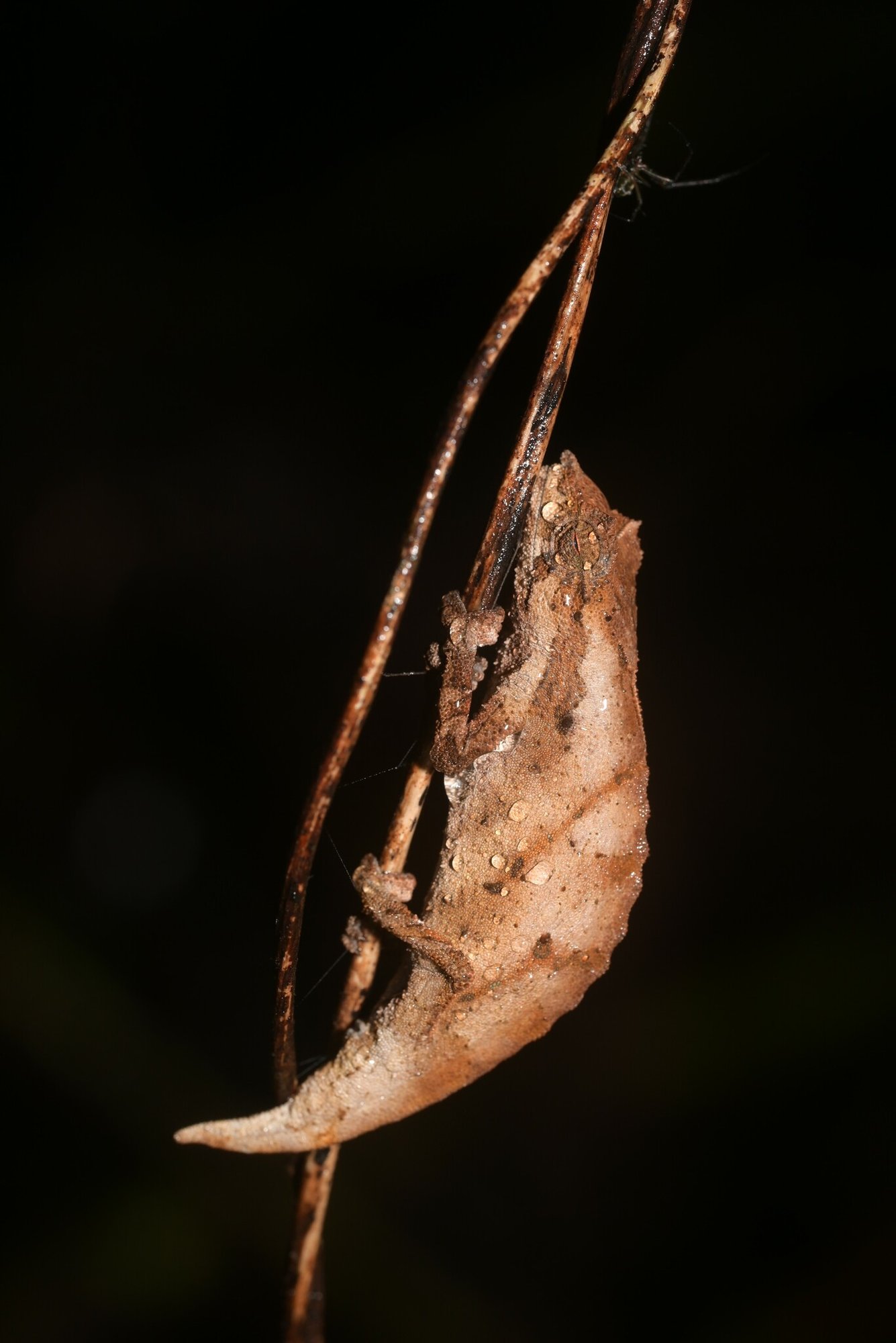
Chameleons · Difficulty: Expert
Key facts and care guidance for Nchisi pygmy chameleon (Rhampholeon nchisiensis) (origin: Malawi and Tanzania). Adult size around 5–8 cm. Life expectancy 3–5 years. The values below are carefully researched guidance.
Short answers
Nchisi pygmy chameleon: How big does the enclosure need to be?
40×40×40 cm for a pair — floor area matters, not height.
Nchisi pygmy chameleon: What temperature does it need?
Daytime 20–25 °C, basking spot No basking spot — these species avoid direct sun, at night 16–19 °C.
Nchisi pygmy chameleon: Does it need UVB lighting?
UVB: Weak UVB is enough (UVB 2.0–5.0), a ground-dweller living in shade.
Nchisi pygmy chameleon: How long do they live?
Life expectancy: 3–5 years.
Nchisi pygmy chameleon: Is it suitable for beginners?
No – better suited to experienced keepers (difficulty: Expert).
Climate
- Daytime temperature
- 20–25 °C
- Night temperature
- 16–19 °C
- Basking spot
- No basking spot — these species avoid direct sun
- Humidity
- 75–95 %, mist daily
- UVB
- Weak UVB is enough (UVB 2.0–5.0), a ground-dweller living in shade
Enclosure
- Minimum size
- 40×40×40 cm for a pair — floor area matters, not height
- Substrate
- A deep layer of leaf litter on damp forest floor, plus moss and low twigs
Feeding
- Food
- Small insects such as fruit flies, firebrats and micro crickets, dusted regularly with calcium and vitamins
- Feeding interval
- adults daily to every other day
Key facts
- Adult size
- 5–8 cm
- Life expectancy
- 3–5 years
- Origin
- Malawi and Tanzania
- Protection status
- CITES II — proof of origin required
- Brumation
- No winter rest
- Cohabitation
- Pairing possible, never males together. The reason: several males fight over territory and the best hiding places until one is injured or permanently confined to a corner. This applies to both sexes: two females don't work together either. Chameleons do not seek company, and an animal that constantly sees another eats less and becomes ill.
Notes
A montane forest dweller. It needs to stay below 25 °C permanently.
Do you keep this species?
Add your animal to Reptoria – Reptoria reminds you about feeding and shedding. Add your animal for free →
Look for Nchisi pygmy chameleon (Rhampholeon nchisiensis) in the marketplace →
Related species
- Boulenger's pygmy chameleon (Rhampholeon boulengeri) – Expert
- Chapman's pygmy chameleon (Rhampholeon chapmanorum) – Expert
- Gorongosa pygmy chameleon (Rhampholeon gorongosae) – Expert
- Green pygmy chameleon (Rhampholeon viridis) – Intermediate
- Marshall's pygmy chameleon (Rhampholeon marshalli) – Expert
- Moyer's pygmy chameleon (Rhampholeon moyeri) – Expert
- Nguru pygmy chameleon (Rhampholeon acuminatus) – Expert
- Western pygmy chameleon (Rhampholeon spectrum) – Intermediate
What you need to start
To keep Nchisi pygmy chameleon (Rhampholeon nchisiensis) you typically need: a suitable enclosure (40×40×40 cm for a pair — floor area matters, not height), substrate (A deep layer of leaf litter on damp forest floor, plus moss and low twigs), a heat source with a thermostat, UVB lighting, thermometer and hygrometer, a water dish and hides. You will find equipment in the Reptoria marketplace.
The complete, interactive care database is in the Reptoria app.
Last updated: 30 October 2026 · Editor: Reptoria editorial team · Sources include: https://en.wikipedia.org/wiki/Rhampholeon, https://en.wikipedia.org/wiki/Rhampholeon_nchisiensis
All values are non-binding guidance and do not replace expert advice. Research thoroughly from several sources before acquiring and keeping an animal, and observe the applicable law (species and animal protection in particular).