Parson's chameleon (Calumma parsonii)
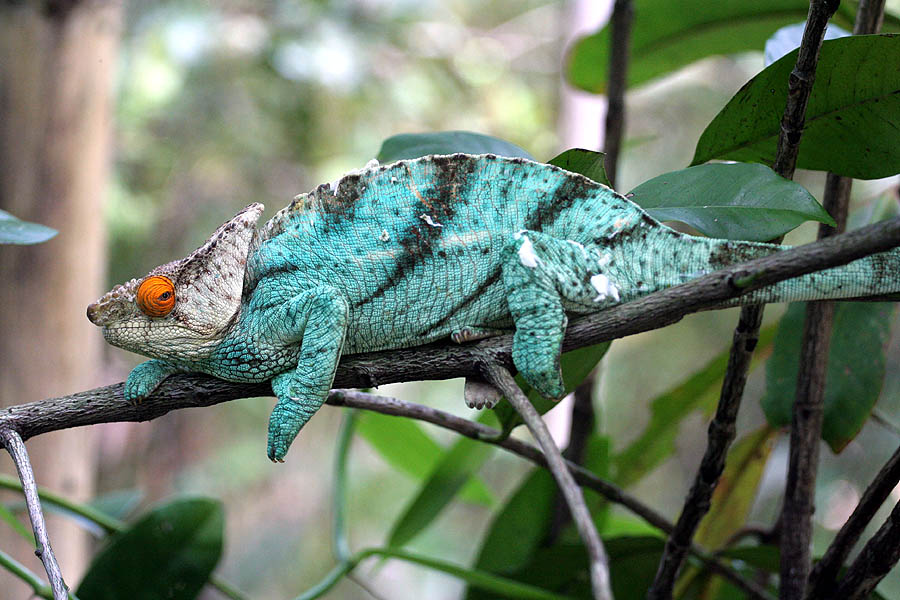
Chameleons · Difficulty: Expert
Key facts and care guidance for Parson's chameleon (Calumma parsonii) (origin: Eastern and north-eastern Madagascar, humid (montane) rainforest). Adult size around approx. 50–68 cm total length (males; one of the largest chameleons in the world). Life expectancy approx. 10–20+ years (very long-lived, a long-term commitment). The values below are carefully researched guidance.
Short answers
Parson's chameleon: How big does the enclosure need to be?
120×80×150 cm for one adult animal (at least 120×60×120 cm; a giant species, larger is always better).
Parson's chameleon: What temperature does it need?
Daytime 22–26 °C (seasonally 18–27 °C), basking spot 26–30 °C (moderate, do not overheat), at night 15–20 °C (ideally below 18 °C).
Parson's chameleon: Does it need UVB lighting?
UVB: UVB needed (Ferguson zone 2–3, UV index 3).
Parson's chameleon: How long do they live?
Life expectancy: approx. 10–20+ years (very long-lived, a long-term commitment).
Parson's chameleon: Is it suitable for beginners?
No – better suited to experienced keepers (difficulty: Expert).
Climate
- Daytime temperature
- 22–26 °C (seasonally 18–27 °C)
- Night temperature
- 15–20 °C (ideally below 18 °C)
- Basking spot
- 26–30 °C (moderate, do not overheat)
- Humidity
- 60–80 % during the day, close to 100 % at night (fogging)
- UVB
- UVB needed (Ferguson zone 2–3, UV index 3)
Enclosure
- Minimum size
- 120×80×150 cm for one adult animal (at least 120×60×120 cm; a giant species, larger is always better)
- Substrate
- Rainforest substrate (humus, leaf litter), very sturdy climbing branches, large plants; strong air movement and ventilation (a canopy climate)
Feeding
- Food
- Insects: large crickets, locusts, roaches; insects only, no fruit or vegetables; dusted with calcium and vitamins
- Feeding interval
- adults 2–3×/week or every other day, juveniles daily (eats a lot, grows slowly)
Key facts
- Adult size
- approx. 50–68 cm total length (males; one of the largest chameleons in the world)
- Life expectancy
- approx. 10–20+ years (very long-lived, a long-term commitment)
- Origin
- Eastern and north-eastern Madagascar, humid (montane) rainforest
- Protection status
- CITES Appendix II / EU Regulation Annex B – specially protected: proof of origin plus registration required; IUCN "Near Threatened", with export heavily restricted or temporarily blocked – prefer captive-bred animals
- Brumation
- No brumation; cooler nights (below 18 °C) and a moderate seasonal drop matter; it copes badly with heat
- Cohabitation
- Keep them singly. Territorial and solitary – "should generally be housed separately". Only briefly and under supervision for breeding. NEVER keep males together
Notes
Robust, but very demanding because of its size, space requirement, cool nights, strong air movement and a 20-plus-year commitment. A heavy drinker – automatic misting or fogging is needed. Conditions that are too warm or stuffy are the commonest mistake.
Do you keep this species?
Add your animal to Reptoria – Reptoria reminds you about feeding and shedding. Add your animal for free →
Look for Parson's chameleon (Calumma parsonii) in the marketplace →
Related species
- Amber Mountain chameleon (Calumma ambreense) – Expert
- Andringitra chameleon (Calumma andringitraense) – Expert
- Side-striped chameleon (Calumma gastrotaenia) – Intermediate
- Amber Mountain chameleon (Calumma amber) – Intermediate to expert
- Boettger's chameleon (Calumma boettgeri) – Intermediate
- Capuron's chameleon (Calumma capuroni) – Expert
- Forked chameleon (Calumma furcifer) – Expert
- Glaw's chameleon (Calumma glawi) – Expert
What you need to start
To keep Parson's chameleon (Calumma parsonii) you typically need: a suitable enclosure (120×80×150 cm for one adult animal (at least 120×60×120 cm; a giant species, larger is always better)), substrate (Rainforest substrate (humus, leaf litter), very sturdy climbing branches, large plants; strong air movement and ventilation (a canopy climate)), a heat source with a thermostat, UVB lighting, thermometer and hygrometer, a water dish and hides. You will find equipment in the Reptoria marketplace.
The complete, interactive care database is in the Reptoria app.
Last updated: 9 October 2026 · Editor: Reptoria editorial team · Sources include: https://de.wikipedia.org/wiki/Parsons_Cham%C3%A4leon, https://reptile-database.reptarium.cz/species?genus=Calumma&species=parsonii
All values are non-binding guidance and do not replace expert advice. Research thoroughly from several sources before acquiring and keeping an animal, and observe the applicable law (species and animal protection in particular).