Peruvian blue tarantula (Thrixopelma cyaneolum)
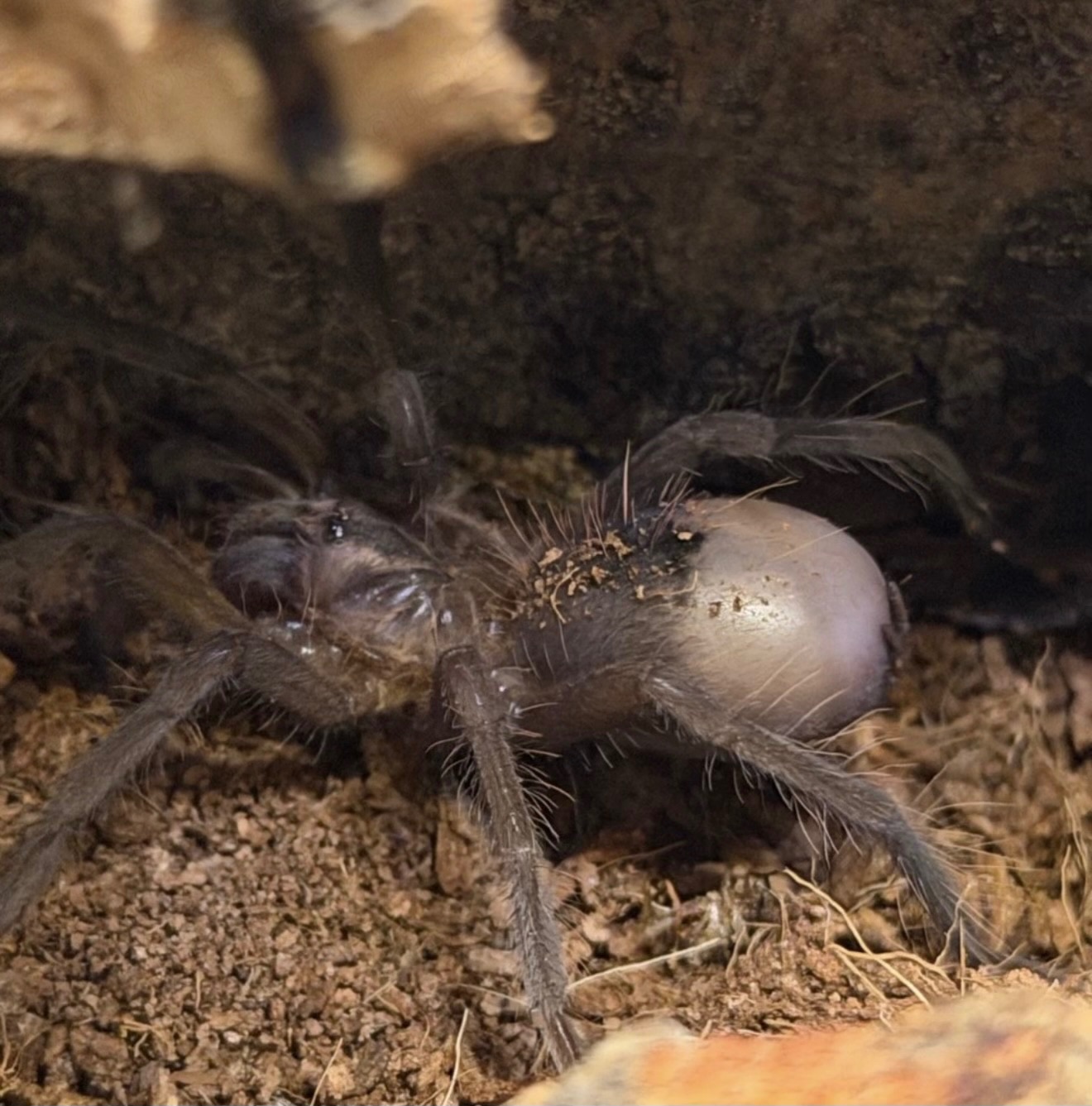
Invertebrates · Difficulty: Beginner
Key facts and care guidance for Peruvian blue tarantula (Thrixopelma cyaneolum) (origin: Peru). Adult size around leg span 11–13 cm. Life expectancy females 12–15 years, males 3–4 years. The values below are carefully researched guidance.
Short answers
Peruvian blue tarantula: How big does the enclosure need to be?
From 30×30×25 cm.
Peruvian blue tarantula: What temperature does it need?
Daytime 22–26 °C, at night 18–20 °C.
Peruvian blue tarantula: Does it need UVB lighting?
UVB: Not required.
Peruvian blue tarantula: How long do they live?
Life expectancy: females 12–15 years, males 3–4 years.
Peruvian blue tarantula: Is it suitable for beginners?
Yes – it is considered suitable for beginners (difficulty: Beginner).
Climate
- Daytime temperature
- 22–26 °C
- Night temperature
- 18–20 °C
- Humidity
- 65–75 %
- UVB
- Not required
Enclosure
- Minimum size
- from 30×30×25 cm
- Substrate
- A loose mix of coco fibre and unfertilised soil, 8–13 cm deep, so the animal can burrow; plus a flat piece of cork as a hide and a shallow water dish. Keep the bottom lightly moist and let the surface dry out.
Feeding
- Food
- Insects
- Feeding interval
- Adults 1×/week
Key facts
- Adult size
- leg span 11–13 cm
- Life expectancy
- females 12–15 years, males 3–4 years
- Origin
- Peru
- Protection status
- —
- Brumation
- No
- Cohabitation
- Keep them singly — tarantulas are cannibals. The reason is not fighting but feeding: these animals take anything that fits in the mouth, and a second animal in the enclosure counts.
Notes
A quiet ground species with a blue sheen, good for getting started. To be kept cooler than tropical species — it comes from the Andes.
Do you keep this species?
Add your animal to Reptoria – Reptoria reminds you about feeding and shedding. Add your animal for free →
Look for Peruvian blue tarantula (Thrixopelma cyaneolum) in the marketplace →
Related species
- Amazon birdeater (Iridopelma hirsutum) – Intermediate
- Arizona blonde tarantula (Aphonopelma chalcodes) – Beginner
- Pinktoe tarantula (Avicularia avicularia) – Beginner
- Cobalt blue tarantula (Cyriopagopus lividus) – Expert
- Gooty sapphire ornamental tarantula (Poecilotheria metallica) – Expert
- Singapore blue tarantula (Omothymus violaceopes) – Expert
- Blue foot baboon tarantula (Idiothele mira) – Intermediate
- Bolivian blue leg birdeater (Pamphobeteus antinous) – Intermediate
What you need to start
To keep Peruvian blue tarantula (Thrixopelma cyaneolum) you typically need: a suitable enclosure (from 30×30×25 cm), substrate (A loose mix of coco fibre and unfertilised soil, 8–13 cm deep, so the animal can burrow; plus a flat piece of cork as a hide and a shallow water dish. Keep the bottom lightly moist and let the surface dry out.), a heat source with a thermostat, thermometer and hygrometer, a water dish and hides. You will find equipment in the Reptoria marketplace.
The complete, interactive care database is in the Reptoria app.
Last updated: 2 November 2026 · Editor: Reptoria editorial team · Sources include: Wikispecies, eu_annex.txt (lokal), thedefiantforest.com, thespidershop.co.uk, wsc.nmbe.ch (World Spider Catalog)
All values are non-binding guidance and do not replace expert advice. Research thoroughly from several sources before acquiring and keeping an animal, and observe the applicable law (species and animal protection in particular).