Prairie kingsnake (Lampropeltis calligaster)
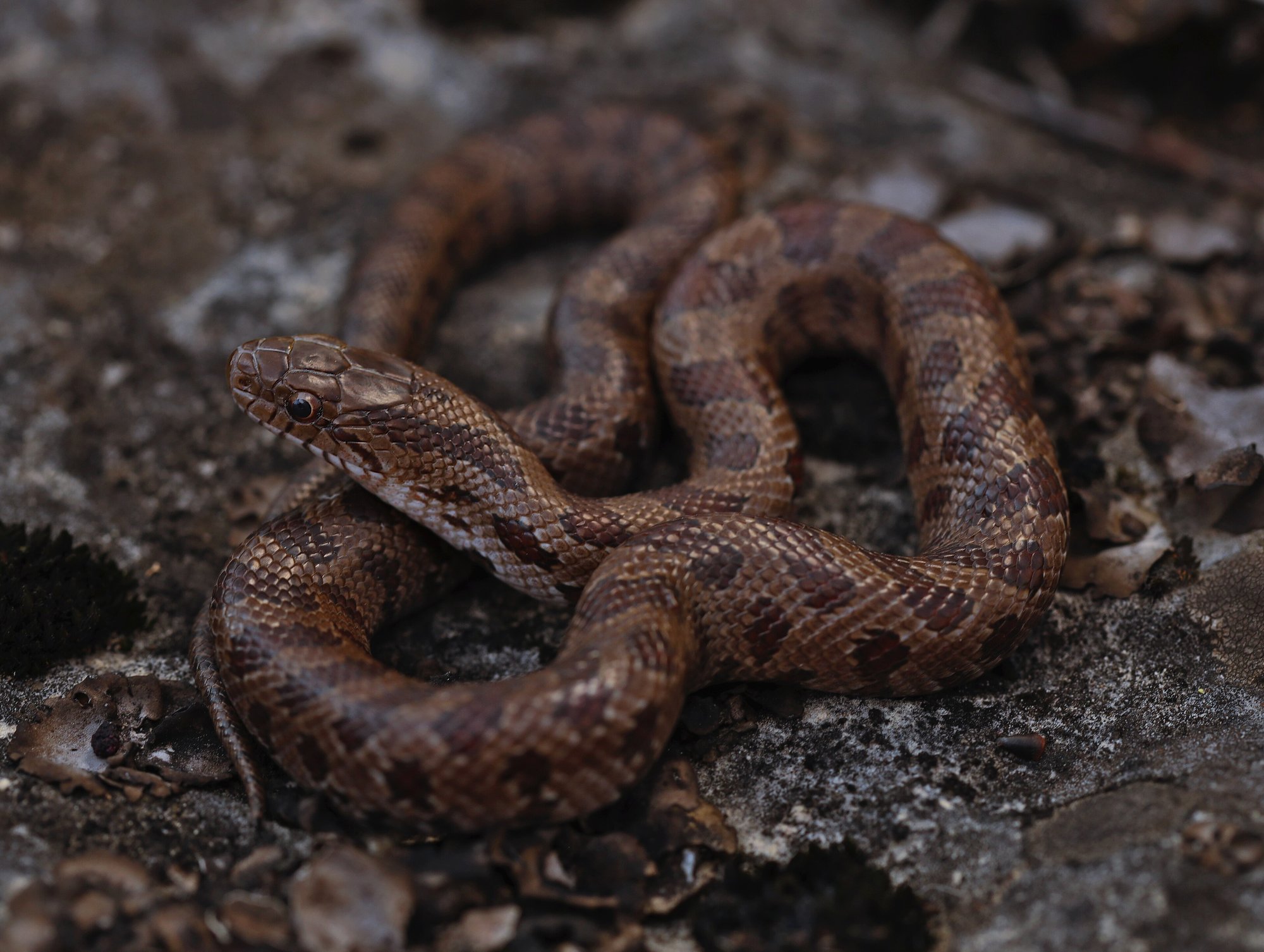
Snakes · Difficulty: Intermediate
Key facts and care guidance for Prairie kingsnake (Lampropeltis calligaster) (origin: The central to south-eastern USA (prairies, grassland, open woodland)). Adult size around approx. 75–110 cm. Life expectancy 12–20 years in captivity. The values below are carefully researched guidance.
Short answers
Prairie kingsnake: How big does the enclosure need to be?
From 110×55×55 cm (minimum size according to the 1997 expert report, kingsnakes, 1 adult animal).
Prairie kingsnake: What temperature does it need?
Daytime 24–28 °C, basking spot 29–31 °C, at night 18–21 °C.
Prairie kingsnake: Does it need UVB lighting?
UVB: UVB not strictly needed; low UVB (Ferguson zone 1) optional.
Prairie kingsnake: How long do they live?
Life expectancy: 12–20 years in captivity.
Prairie kingsnake: Is it suitable for beginners?
Rather not – it is considered an intermediate species (difficulty: Intermediate).
Climate
- Daytime temperature
- 24–28 °C
- Night temperature
- 18–21 °C
- Basking spot
- 29–31 °C
- Humidity
- 40–55 %
- UVB
- UVB not strictly needed; low UVB (Ferguson zone 1) optional
Enclosure
- Minimum size
- from 110×55×55 cm (minimum size according to the 1997 expert report, kingsnakes, 1 adult animal)
- Substrate
- Substrate they can dig in (a soil, coco and bark mulch mix), as they half-burrow; hides and room to dig
Feeding
- Food
- Thawed frozen mice; in the wild also lizards, small mammals and eggs
- Feeding interval
- adults every 7–14 days, juveniles every 5–7 days
Key facts
- Adult size
- approx. 75–110 cm
- Life expectancy
- 12–20 years in captivity
- Origin
- The central to south-eastern USA (prairies, grassland, open woodland)
- Protection status
- Not listed under CITES, not relevant under German species protection law; prefer captive-bred animals
- Brumation
- A winter rest of 2–3 months at ~10–15 °C helps (health and breeding); October to March in its range
- Cohabitation
- Keep them singly. Kingsnakes are ophiophagous and cannibalistic – no groups or pairs; put them together only under supervision for breeding.
Notes
A semi-burrowing, rather secretive species, less common in the trade than other kingsnakes; wild-caught animals can be reluctant feeders – choose captive-bred ones. A powerful constrictor, docile. Mistakes: terrariums that are too damp or too cramped and unstructured.
Do you keep this species?
Add your animal to Reptoria – Reptoria reminds you about feeding and shedding. Add your animal for free →
Look for Prairie kingsnake (Lampropeltis calligaster) in the marketplace →
Related species
- Andean milk snake (Lampropeltis micropholis) – Intermediate
- Sonoran mountain kingsnake (Lampropeltis pyromelana) – Intermediate
- Isla Todos Santos kingsnake (Lampropeltis herrerae) – Expert
- California mountain kingsnake (Lampropeltis zonata) – Intermediate
- Chihuahuan mountain kingsnake (Lampropeltis knoblochi) – Intermediate
- Desert kingsnake (Lampropeltis splendida) – Beginner
- Florida kingsnake (Lampropeltis getula floridana) – Beginner
- Eastern kingsnake (Lampropeltis getula getula) – Beginner
What you need to start
To keep Prairie kingsnake (Lampropeltis calligaster) you typically need: a suitable enclosure (from 110×55×55 cm (minimum size according to the 1997 expert report, kingsnakes, 1 adult animal)), substrate (Substrate they can dig in (a soil, coco and bark mulch mix), as they half-burrow; hides and room to dig), a heat source with a thermostat, UVB lighting, thermometer and hygrometer, a water dish and hides. You will find equipment in the Reptoria marketplace.
The complete, interactive care database is in the Reptoria app.
Last updated: 9 October 2026 · Editor: Reptoria editorial team · Sources include: https://en.wikipedia.org/wiki/Lampropeltis_calligaster, https://reptile-database.reptarium.cz/species?genus=Lampropeltis&species=calligaster
All values are non-binding guidance and do not replace expert advice. Research thoroughly from several sources before acquiring and keeping an animal, and observe the applicable law (species and animal protection in particular).