Schreiber's green lizard (Lacerta schreiberi)
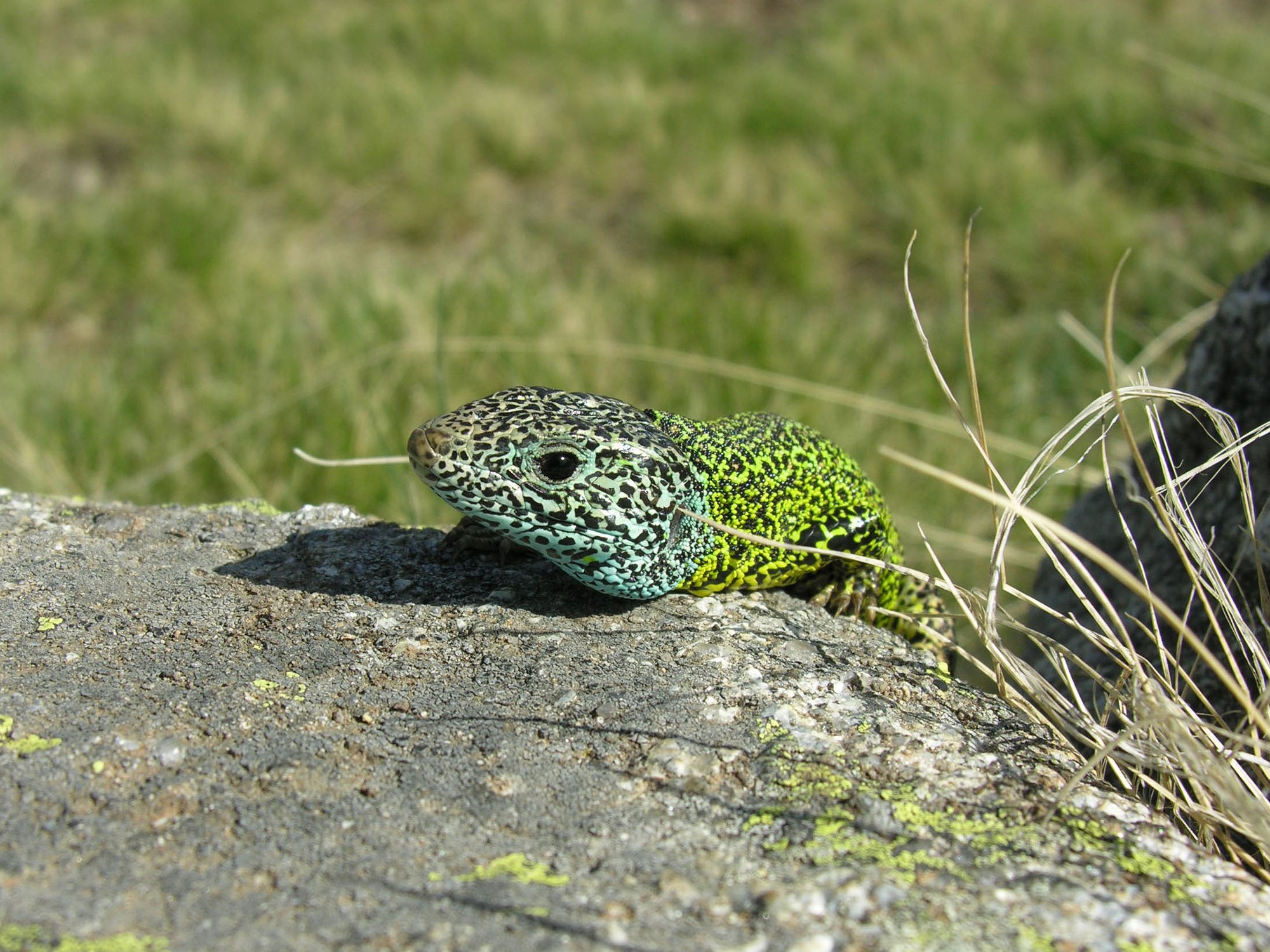
Lizards · Difficulty: Intermediate
Key facts and care guidance for Schreiber's green lizard (Lacerta schreiberi) (origin: The north-western Iberian Peninsula (northern Portugal, north-western Spain), humid, cool water and mountain habitats). Adult size around total length up to ~40 cm (SVL ~12 cm). Life expectancy 8–12 years. The values below are carefully researched guidance.
Short answers
Schreiber's green lizard: How big does the enclosure need to be?
One animal from approx. 80×50×70 cm; a pair 100×50×80 cm (very active, climbs).
Schreiber's green lizard: What temperature does it need?
Daytime 22–28 °C, basking spot 35–40 °C (basking spot), at night 15–18 °C.
Schreiber's green lizard: Does it need UVB lighting?
UVB: UVB needed (Ferguson zone 2–3, UV index 3–5) plus a basking spot.
Schreiber's green lizard: How long do they live?
Life expectancy: 8–12 years.
Schreiber's green lizard: Is it suitable for beginners?
Rather not – it is considered an intermediate species (difficulty: Intermediate).
Climate
- Daytime temperature
- 22–28 °C
- Night temperature
- 15–18 °C
- Basking spot
- 35–40 °C (basking spot)
- Humidity
- 60–80 % (humid mountain stream biotope)
- UVB
- UVB needed (Ferguson zone 2–3, UV index 3–5) plus a basking spot
Enclosure
- Minimum size
- one animal from approx. 80×50×70 cm; a pair 100×50×80 cm (very active, climbs)
- Substrate
- A soil, sand and gravel mix with damp areas, green plants and roots; a stream or a large water dish
Feeding
- Food
- Insects (house crickets, locusts, roaches, wax moths), occasionally berries; calcium and vitamins
- Feeding interval
- adults 2–3×/week, juveniles daily
Key facts
- Adult size
- total length up to ~40 cm (SVL ~12 cm)
- Life expectancy
- 8–12 years
- Origin
- The north-western Iberian Peninsula (northern Portugal, north-western Spain), humid, cool water and mountain habitats
- Protection status
- Habitats Directive Annexes II and IV → strictly protected in Germany; proof of origin and registration with the nature conservation authority are required.
- Brumation
- A winter rest of 2–3 months at 5–10 °C
- Cohabitation
- A pair (1.1) is the most natural option - according to Wikipedia males and females mostly live in pairs during the breeding season; a harem (one male with several females) also works in a large, structured enclosure with sight barriers, but never two males together.
Notes
A species fond of cool, humid conditions that tolerates no permanent heat – cool zones (water, planting) matter. A common mistake: too dry or too warm. The figures are cross-checked against several keeper sources.
Do you keep this species?
Add your animal to Reptoria – Reptoria reminds you about feeding and shedding. Add your animal for free →
Look for Schreiber's green lizard (Lacerta schreiberi) in the marketplace →
Related species
- Pamphylian green lizard (Lacerta pamphylica) – Intermediate
- Balkan green lizard (Lacerta trilineata) – Intermediate
- Caspian green lizard (Lacerta strigata) – Intermediate
- Caucasian green lizard (Lacerta media) – Intermediate
- Eastern green lizard (Lacerta viridis viridis) – Intermediate
- European green lizard (Lacerta viridis) – Beginner to intermediate
- Western green lizard (Lacerta bilineata) – Intermediate
- Sand lizard (Lacerta agilis) – Intermediate
What you need to start
To keep Schreiber's green lizard (Lacerta schreiberi) you typically need: a suitable enclosure (one animal from approx. 80×50×70 cm; a pair 100×50×80 cm (very active, climbs)), substrate (A soil, sand and gravel mix with damp areas, green plants and roots; a stream or a large water dish), a heat source with a thermostat, UVB lighting, thermometer and hygrometer, a water dish and hides. You will find equipment in the Reptoria marketplace.
The complete, interactive care database is in the Reptoria app.
Last updated: 9 October 2026 · Editor: Reptoria editorial team · Sources include: https://de.wikipedia.org/wiki/Iberische_Smaragdeidechse, https://reptile-database.reptarium.cz/species?genus=Lacerta&species=schreiberi
All values are non-binding guidance and do not replace expert advice. Research thoroughly from several sources before acquiring and keeping an animal, and observe the applicable law (species and animal protection in particular).