Thick-tailed gecko (Underwoodisaurus milii)
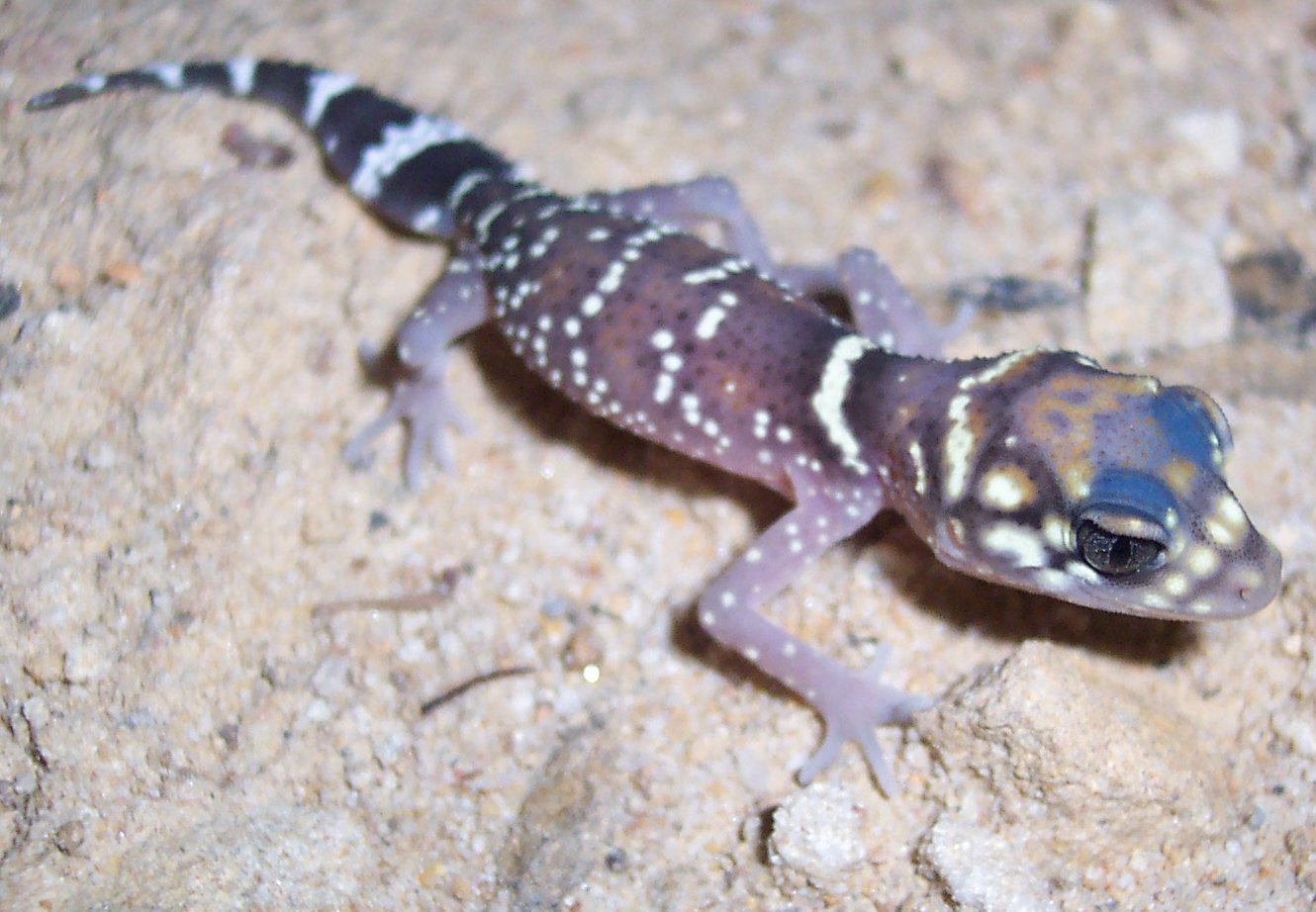
Geckos · Difficulty: Beginner to intermediate
Key facts and care guidance for Thick-tailed gecko (Underwoodisaurus milii) (origin: Southern half of Australia: from central Queensland through New South Wales, northern Victoria and South Australia to Western Australia (Shark Bay); dry and more humid forest areas). Adult size around up to approx. 15 cm total length. Life expectancy 10–15 years (up to ~20). The values below are carefully researched guidance.
Short answers
Thick-tailed gecko: How big does the enclosure need to be?
From 70×50×50 cm for one animal or a pair (ground-dwelling gecko, structured back and side walls).
Thick-tailed gecko: What temperature does it need?
Daytime 22–30 °C, basking spot small warm spot ~30–32 °C in one corner, at night 18–20 °C.
Thick-tailed gecko: Does it need UVB lighting?
UVB: Optional (crepuscular/nocturnal).
Thick-tailed gecko: How long do they live?
Life expectancy: 10–15 years (up to ~20).
Thick-tailed gecko: Is it suitable for beginners?
Partly – manageable with some prior knowledge (difficulty: Beginner to intermediate).
Climate
- Daytime temperature
- 22–30 °C
- Night temperature
- 18–20 °C
- Basking spot
- small warm spot ~30–32 °C in one corner
- Humidity
- 40–60 %, plus a humid hide
- UVB
- Optional (crepuscular/nocturnal)
Enclosure
- Minimum size
- from 70×50×50 cm for one animal or a pair (ground-dwelling gecko, structured back and side walls)
- Substrate
- A sand-loam mix, bark, cork tubes, plant-pot shards
Feeding
- Food
- Insects (crickets, house crickets, roaches)
- Feeding interval
- 2–3×/week
Key facts
- Adult size
- up to approx. 15 cm total length
- Life expectancy
- 10–15 years (up to ~20)
- Origin
- Southern half of Australia: from central Queensland through New South Wales, northern Victoria and South Australia to Western Australia (Shark Bay); dry and more humid forest areas
- Protection status
- No CITES; an Australian export ban → captive-bred animals only
- Brumation
- Winter dormancy of 2 months at around 15–18 °C (promotes breeding; a faecal check beforehand is recommended)
- Cohabitation
- A pair or harem; do not keep males together. The reason: several males fight over territory and the warm spot until one is injured or spends its life in a corner. Females usually get on, but each needs its own warm spot and hide; feed them separately once they differ in size.
Notes
It does not like heat (above 30 °C means stress) and prefers cooler temperatures. Ground-dwelling and crepuscular; it "barks" when threatened, and a wet box matters.
Do you keep this species?
Add your animal to Reptoria – Reptoria reminds you about feeding and shedding. Add your animal for free →
Look for Thick-tailed gecko (Underwoodisaurus milii) in the marketplace →
Related species
- Eastern thick-tailed gecko (Underwoodisaurus husbandi) – Beginner to intermediate
- Broad-tailed gecko (Phyllurus platurus) – Intermediate
- Fat-tailed diplodactylus (Diplodactylus conspicillatus) – Intermediate
- Delean's knob-tailed gecko (Nephrurus deleani) – Intermediate
- Jewelled gecko (Strophurus elderi) – Intermediate
- Ranges stone gecko (Diplodactylus furcosus) – Beginner to intermediate
- Banded knob-tailed gecko (Nephrurus cinctus) – Intermediate
- Eastern stone gecko (Diplodactylus vittatus) – Intermediate
What you need to start
To keep Thick-tailed gecko (Underwoodisaurus milii) you typically need: a suitable enclosure (from 70×50×50 cm for one animal or a pair (ground-dwelling gecko, structured back and side walls)), substrate (A sand-loam mix, bark, cork tubes, plant-pot shards), a heat source with a thermostat, UVB lighting, thermometer and hygrometer, a water dish and hides. You will find equipment in the Reptoria marketplace.
The complete, interactive care database is in the Reptoria app.
Last updated: 9 October 2026 · Editor: Reptoria editorial team · Sources include: tropic-shop.de, reptile-care.de, magic-leopardgeckos.com, Wikipedia EN, egernia.info
All values are non-binding guidance and do not replace expert advice. Research thoroughly from several sources before acquiring and keeping an animal, and observe the applicable law (species and animal protection in particular).