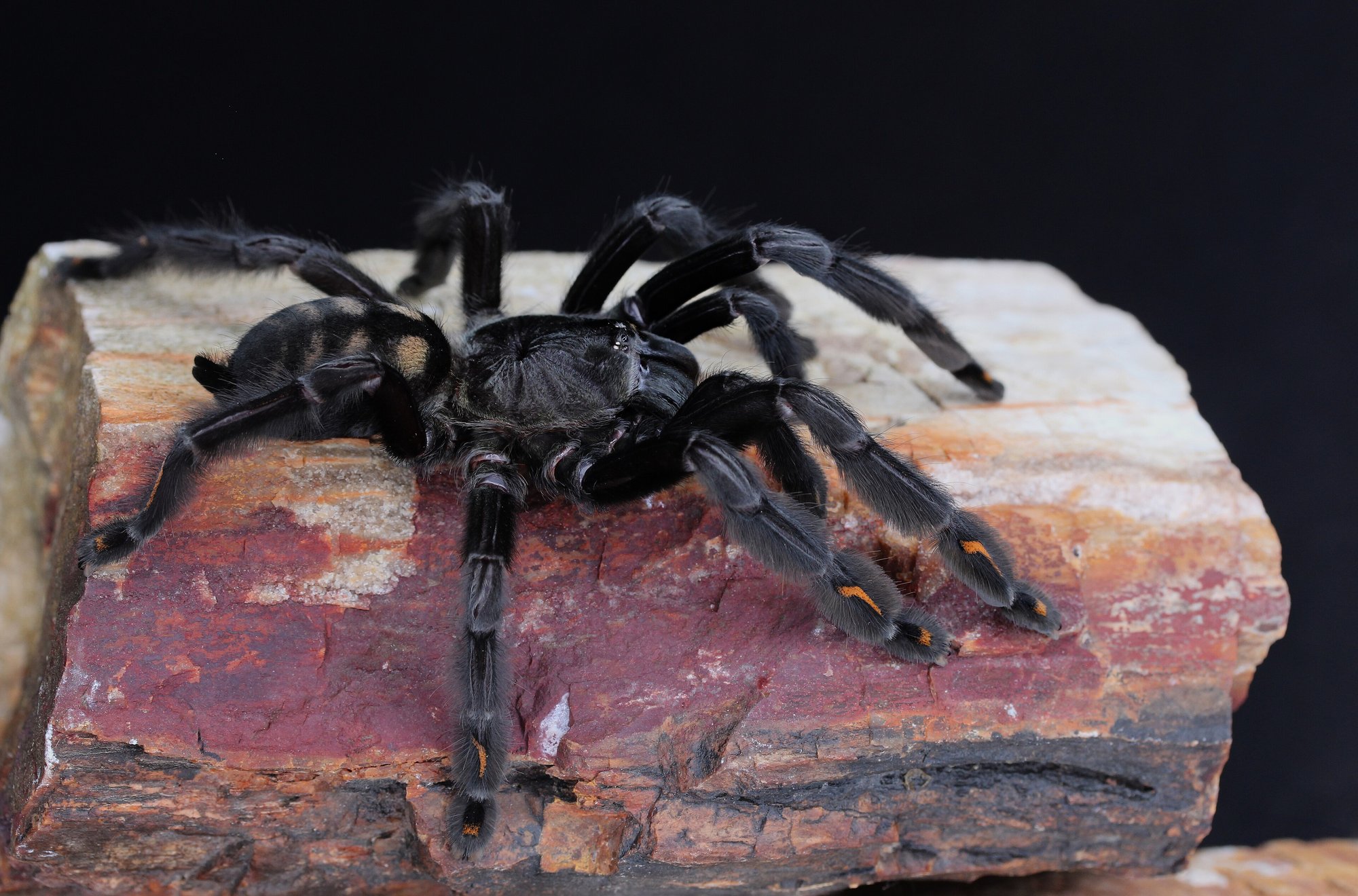
Venezuelan suntiger tarantula (Psalmopoeus irminia)
Invertebrates · Difficulty: Intermediate
Key facts and care guidance for Venezuelan suntiger tarantula (Psalmopoeus irminia) (origin: Venezuela, Guyana and adjacent northern Brazil (tropical rainforest)). Adult size around 13–15 cm leg span. Life expectancy females approx. 10–12 years, males approx. 3 years. The values below are carefully researched guidance.
Short answers
Venezuelan suntiger tarantula: How big does the enclosure need to be?
30×30×40 cm tall enclosure (arboreal, front-opening is recommended).
Venezuelan suntiger tarantula: What temperature does it need?
Daytime 24–28 °C, at night 20–22 °C.
Venezuelan suntiger tarantula: Does it need UVB lighting?
UVB: No UVB needed (nocturnal).
Venezuelan suntiger tarantula: How long do they live?
Life expectancy: females approx. 10–12 years, males approx. 3 years.
Venezuelan suntiger tarantula: Is it suitable for beginners?
Rather not – it is considered an intermediate species (difficulty: Intermediate).
Climate
- Daytime temperature
- 24–28 °C
- Night temperature
- 20–22 °C
- Basking spot
- —
- Humidity
- 70–80 %
- UVB
- No UVB needed (nocturnal)
Enclosure
- Minimum size
- 30×30×40 cm tall enclosure (arboreal, front-opening is recommended)
- Substrate
- Coco humus (slightly damp), about 5 cm; a vertical cork tube for them to web up; good ventilation
Feeding
- Food
- Insects (house crickets, roaches, crickets, locusts)
- Feeding interval
- adults approx. 1×/week or every 10–14 days, juveniles 2–3×/week
Key facts
- Adult size
- 13–15 cm leg span
- Life expectancy
- females approx. 10–12 years, males approx. 3 years
- Origin
- Venezuela, Guyana and adjacent northern Brazil (tropical rainforest)
- Protection status
- Not listed under CITES; no special registration duties
- Brumation
- None
- Cohabitation
- Solitary housing. The species is solitary and cannibalistic; a second animal in the enclosure sooner or later ends with a dead animal. Juveniles are also separated as soon as they leave the egg sac and disperse — better a little too early than too late. Males and females only come together briefly for mating, and under supervision.
Notes
A strikingly black-and-orange New World arboreal tarantula without urticating hairs, very fast and defensive (it usually hides) with noticeable venom – not one for beginners, and no handling. The slings are prone to desiccation: slightly damp plus good ventilation. A front-opening enclosure is recommended.
Do you keep this species?
Add your animal to Reptoria – Reptoria reminds you about feeding and shedding. Add your animal for free →
Venezuelan suntiger tarantula (Psalmopoeus irminia) currently offered
- Psalmopoeus irminia – Hardisleben · 10 €
Related species
- Costa Rican orangemouth tarantula (Psalmopoeus reduncus) – Intermediate
- Panama blonde tarantula (Psalmopoeus pulcher) – Intermediate
- Trinidad chevron tarantula (Psalmopoeus cambridgei) – Intermediate
- Amazon birdeater (Iridopelma hirsutum) – Intermediate
- Arizona blonde tarantula (Aphonopelma chalcodes) – Beginner
- Pinktoe tarantula (Avicularia avicularia) – Beginner
- Cobalt blue tarantula (Cyriopagopus lividus) – Expert
- Gooty sapphire ornamental tarantula (Poecilotheria metallica) – Expert
What you need to start
To keep Venezuelan suntiger tarantula (Psalmopoeus irminia) you typically need: a suitable enclosure (30×30×40 cm tall enclosure (arboreal, front-opening is recommended)), substrate (Coco humus (slightly damp), about 5 cm; a vertical cork tube for them to web up; good ventilation), a heat source with a thermostat, UVB lighting, thermometer and hygrometer, a water dish and hides. You will find equipment in the Reptoria marketplace.
The complete, interactive care database is in the Reptoria app.
Last updated: 9 October 2026 · Editor: Reptoria editorial team · Sources include: vogelspinnen.info, thetarantulacollective.com, einrichtungsbeispiele.de, eur-lex.europa.eu, vogelspinnen-info.de
All values are non-binding guidance and do not replace expert advice. Research thoroughly from several sources before acquiring and keeping an animal, and observe the applicable law (species and animal protection in particular).