African fat-tailed gecko (Hemitheconyx caudicinctus)
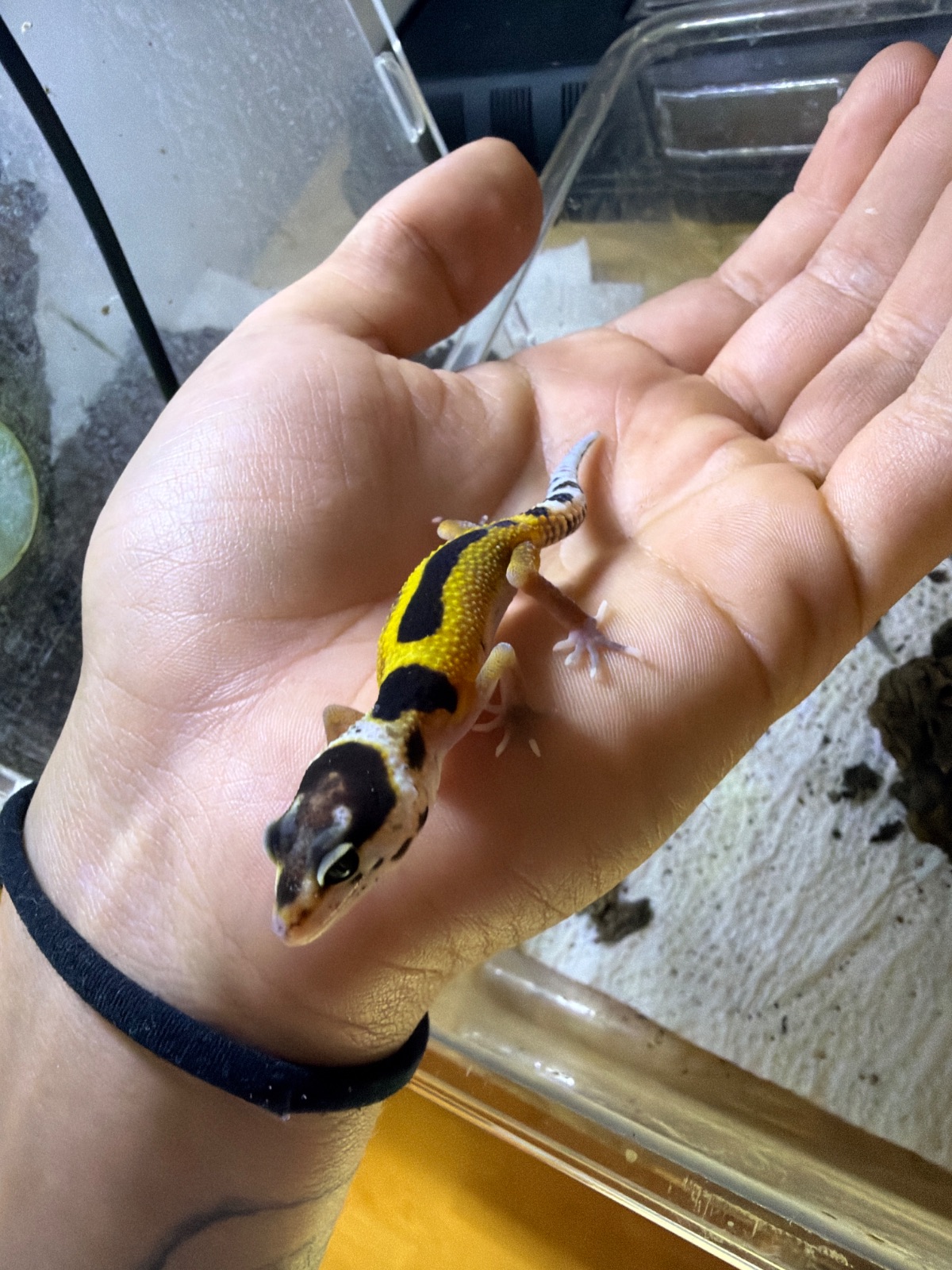
Geckos · Difficulty: Beginner
Key facts and care guidance for African fat-tailed gecko (Hemitheconyx caudicinctus) (origin: West Africa (savannah and dry forest)). Adult size around ♂ up to 24 cm, ♀ up to ~20 cm. Life expectancy 15–25 years. The values below are carefully researched guidance.
Short answers
African fat-tailed gecko: How big does the enclosure need to be?
From 80×40×40 cm for one animal; for a pair from 90×40×40 cm (15 % more floor space per additional animal, as in the 1997 expert report).
African fat-tailed gecko: What temperature does it need?
Daytime 26–30 °C, basking spot Warm floor zone ~30–32 °C, at night 19–23 °C.
African fat-tailed gecko: Does it need UVB lighting?
UVB: Optional (weak UVB is beneficial).
African fat-tailed gecko: How long do they live?
Life expectancy: 15–25 years.
African fat-tailed gecko: Is it suitable for beginners?
Yes – it is considered suitable for beginners (difficulty: Beginner).
Climate
- Daytime temperature
- 26–30 °C
- Night temperature
- 19–23 °C
- Basking spot
- Warm floor zone ~30–32 °C
- Humidity
- 50–60 % (by day), ~70 % at night; a humid box
- UVB
- Optional (weak UVB is beneficial)
Enclosure
- Minimum size
- from 80×40×40 cm for one animal; for a pair from 90×40×40 cm (15 % more floor space per additional animal, as in the 1997 expert report)
- Substrate
- Diggable and absorbent (soil, loam and sand), a humid hide box
Feeding
- Food
- Insects (house crickets, crickets, roaches, meal or wax worms)
- Feeding interval
- Adults 2–3×/week, juveniles daily
Key facts
- Adult size
- ♂ up to 24 cm, ♀ up to ~20 cm
- Life expectancy
- 15–25 years
- Origin
- West Africa (savannah and dry forest)
- Protection status
- —
- Brumation
- An optional slight cool spell of ~4–8 weeks (to stimulate breeding)
- Cohabitation
- Keeping them singly is the least stressful option; the species is solitary in the wild. A pair or harem (1 male + several females) is possible, but every animal needs its own warm spot and hide, and animals of different sizes must be fed separately. Males are incompatible — several males fight over territory and the basking spot until one is injured or sits permanently in a corner.
Notes
A robust, nocturnal ground gecko; a damp hide box for shedding matters. Not pure sand as substrate (risk of impaction). A good beginner's gecko.
Do you keep this species?
Add your animal to Reptoria – Reptoria reminds you about feeding and shedding. Add your animal for free →
Look for African fat-tailed gecko (Hemitheconyx caudicinctus) in the marketplace →
Related species
- Taylor's fat-tailed gecko (Hemitheconyx taylori) – Intermediate
- Bawangling leopard gecko (Goniurosaurus bawanglingensis) – Intermediate
- Cave gecko – Araneus (Goniurosaurus araneus) – Intermediate
- Cave gecko – Cat Ba (Goniurosaurus catbaensis) – Expert
- Cave gecko – Hainan (Goniurosaurus hainanensis) – Intermediate
- Cave gecko – Kuroiwa (Goniurosaurus kuroiwae) – Intermediate
- Cave gecko – Lichtenfelder (Goniurosaurus lichtenfelderi) – Intermediate
- Cave gecko – Lui (Goniurosaurus luii) – Intermediate
What you need to start
To keep African fat-tailed gecko (Hemitheconyx caudicinctus) you typically need: a suitable enclosure (from 80×40×40 cm for one animal; for a pair from 90×40×40 cm (15 % more floor space per additional animal, as in the 1997 expert report)), substrate (Diggable and absorbent (soil, loam and sand), a humid hide box), a heat source with a thermostat, UVB lighting, thermometer and hygrometer, a water dish and hides. You will find equipment in the Reptoria marketplace.
The complete, interactive care database is in the Reptoria app.
Last updated: 24 September 2026 · Editor: Reptoria editorial team · Sources include: interaquaristik.de, reptile-storm.de, aqualog.de, terraon.de
All values are non-binding guidance and do not replace expert advice. Research thoroughly from several sources before acquiring and keeping an animal, and observe the applicable law (species and animal protection in particular).