Argentine boa (Boa constrictor occidentalis)
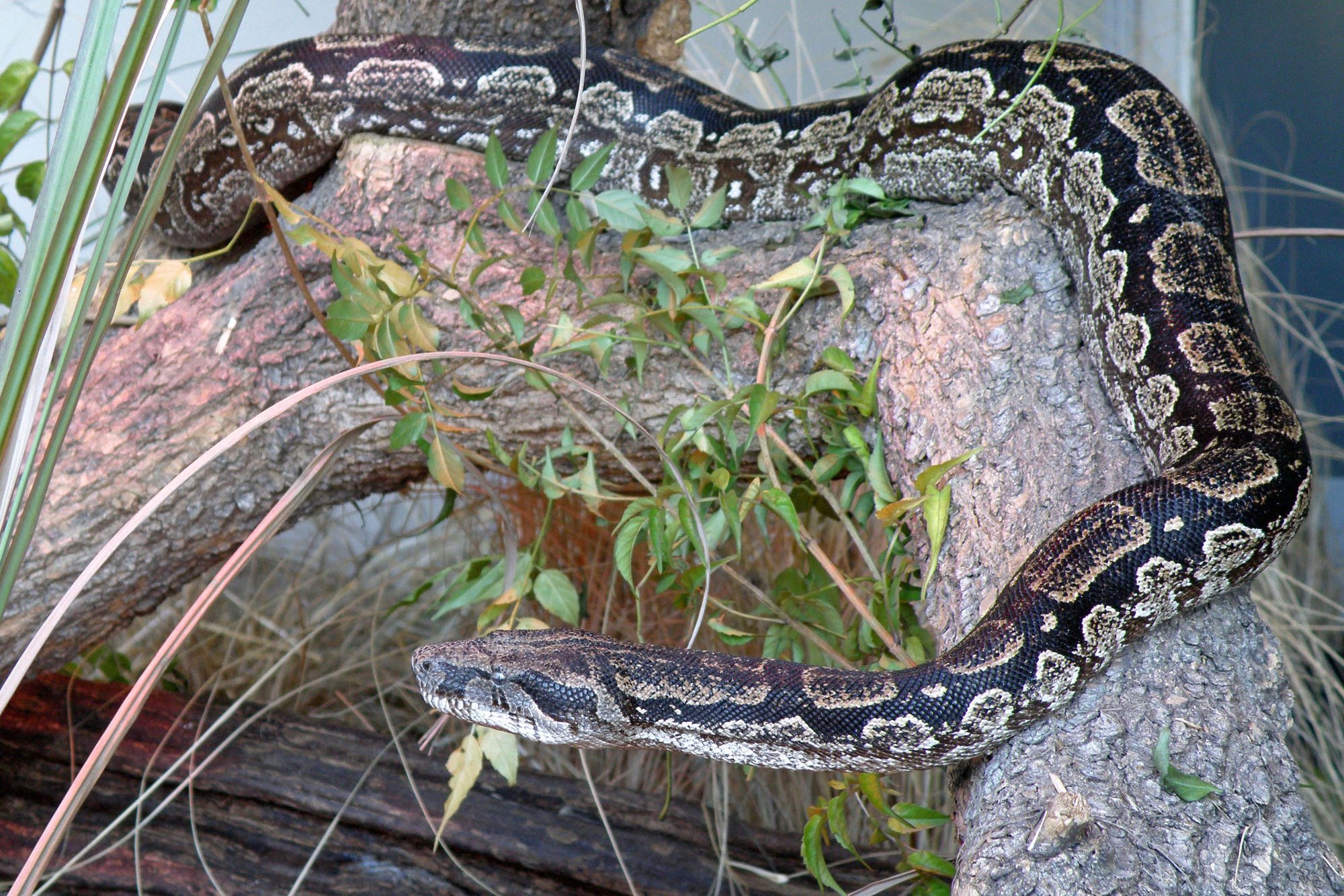
Snakes · Difficulty: Intermediate
Key facts and care guidance for Argentine boa (Boa constrictor occidentalis) (origin: Northern Argentina, Paraguay and southeast Bolivia; dry and thorn forests of the Gran Chaco). Adult size around males 1.8–2.4 m, females 2.4–3 m, individual females larger still. Life expectancy 20–30 years. The values below are carefully researched guidance.
Short answers
Argentine boa: How big does the enclosure need to be?
From 300×150×200 cm for an adult animal. The official 1997 expert report sets 0.75 × 0.5 × 0.75 of total length for American boas over 1.5 m and caps the height at 2.00 m regardless of the calculation — for a 3 m female that gives 225×150×200 cm as the lower limit.
Argentine boa: What temperature does it need?
Daytime 25–30 °C ambient temperature with a clear gradient toward the cool side, basking spot 32–35 °C at the warmest spot, at night 20–25 °C.
Argentine boa: Does it need UVB lighting?
UVB: Optional (a low dose is recommended).
Argentine boa: How long do they live?
Life expectancy: 20–30 years.
Argentine boa: Is it suitable for beginners?
Rather not – it is considered an intermediate species (difficulty: Intermediate).
Climate
- Daytime temperature
- 25–30 °C ambient temperature with a clear gradient toward the cool side
- Night temperature
- 20–25 °C
- Basking spot
- 32–35 °C at the warmest spot
- Humidity
- 60–70 %
- UVB
- Optional (a low dose is recommended)
Enclosure
- Minimum size
- from 300×150×200 cm for an adult animal. The official 1997 expert report sets 0.75 × 0.5 × 0.75 of total length for American boas over 1.5 m and caps the height at 2.00 m regardless of the calculation — for a 3 m female that gives 225×150×200 cm as the lower limit
- Substrate
- Bark mulch or coco humus, a large water basin
Feeding
- Food
- Rodents or rats; large animals also take rabbits (frozen-thawed)
- Feeding interval
- Adults every 2–3 weeks (a slow metabolism)
Key facts
- Adult size
- males 1.8–2.4 m, females 2.4–3 m, individual females larger still
- Life expectancy
- 20–30 years
- Origin
- Northern Argentina, Paraguay and southeast Bolivia; dry and thorn forests of the Gran Chaco
- Protection status
- CITES Appendix I / EU A – proof of origin and registration are mandatory
- Brumation
- A cooler rest period of ~6–8 weeks (for breeding, a slight drop)
- Cohabitation
- Single housing; only put together for mating and under supervision. Feeding is always done individually, ideally in separate boxes — two snakes striking at the same prey at the same time injure each other, and in the worst case one swallows the other.
Notes
Non-venomous, but a powerful, large-growing constrictor – not one for beginners. A strictly protected CITES I local form, lawful to keep only with unbroken papers.
Do you keep this species?
Add your animal to Reptoria – Reptoria reminds you about feeding and shedding. Add your animal for free →
Look for Argentine boa (Boa constrictor occidentalis) in the marketplace →
Related species
- True red-tailed boa – Guyana (Boa constrictor constrictor) – Intermediate
- True red-tailed boa – Peru (Boa constrictor constrictor) – Intermediate
- True red-tailed boa – Suriname (Boa constrictor constrictor) – Intermediate
- True red-tailed boa (Boa constrictor constrictor) – Intermediate
- Hog Island boa (Boa constrictor imperator) – Intermediate
- Common boa – Costa Rica (Boa constrictor imperator) – Intermediate
- Common boa – Honduras (Boa constrictor imperator) – Intermediate
- Common boa – Colombia (Boa constrictor imperator) – Intermediate
What you need to start
To keep Argentine boa (Boa constrictor occidentalis) you typically need: a suitable enclosure (from 300×150×200 cm for an adult animal. The official 1997 expert report sets 0.75 × 0.5 × 0.75 of total length for American boas over 1.5 m and caps the height at 2.00 m regardless of the calculation — for a 3 m female that gives 225×150×200 cm as the lower limit), substrate (Bark mulch or coco humus, a large water basin), a heat source with a thermostat, UVB lighting, thermometer and hygrometer, a water dish and hides. You will find equipment in the Reptoria marketplace.
The complete, interactive care database is in the Reptoria app.
Last updated: 9 October 2026 · Editor: Reptoria editorial team · Sources include: reptile-database.reptarium.cz, en.wikipedia.org, boa-constrictors.com, aspe-institut.de (Rechtliche Regelungen zu Gift- und Gefahrtieren in den Ländern), einrichtungsbeispiele.de
All values are non-binding guidance and do not replace expert advice. Research thoroughly from several sources before acquiring and keeping an animal, and observe the applicable law (species and animal protection in particular).