Common boa – Honduras (Boa constrictor imperator)
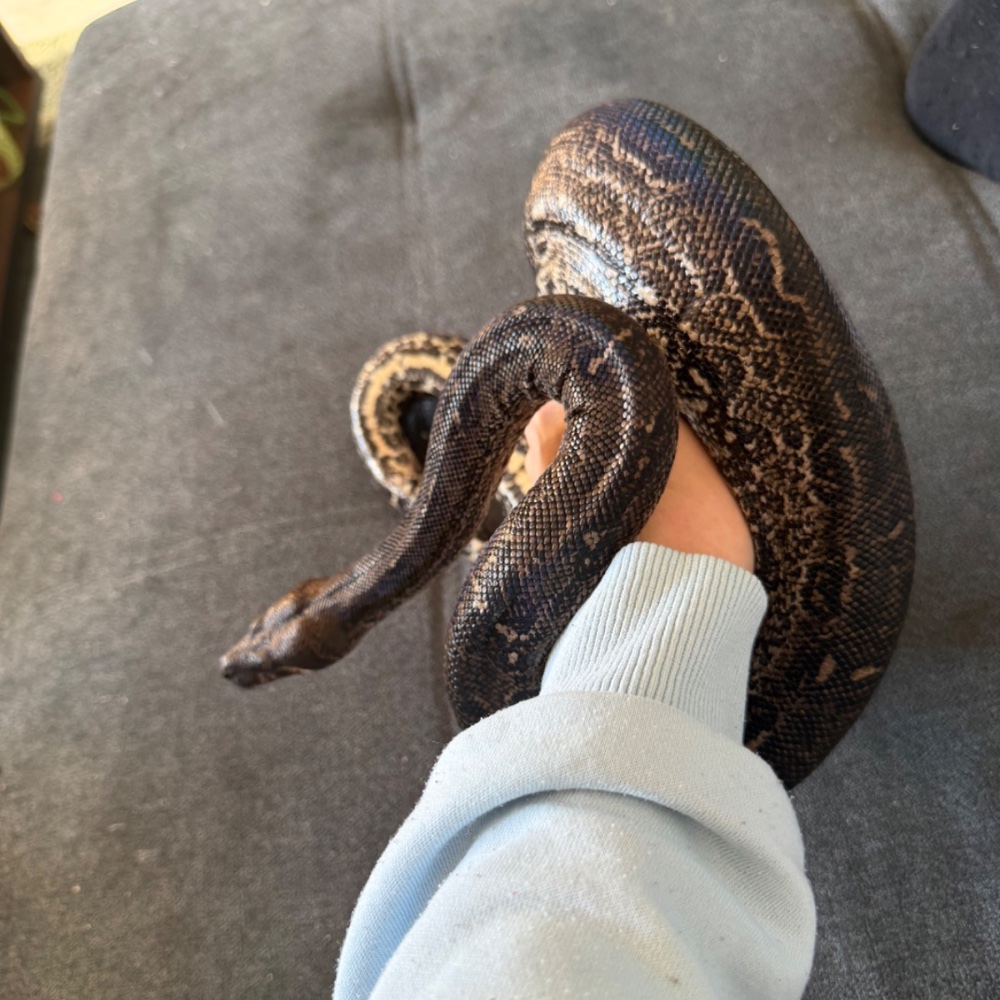
Snakes · Difficulty: Intermediate
Key facts and care guidance for Common boa – Honduras (Boa constrictor imperator) (origin: Honduras (Central America) – the northern or common boa (BCI)). Adult size around 1.5–2.2 m; females larger. Life expectancy 25–30 years. The values below are carefully researched guidance.
Short answers
Common boa – Honduras: How big does the enclosure need to be?
From 220×110×165 cm (minimum size per the 1997 expert report, American boas, BCI); more for large females.
Common boa – Honduras: What temperature does it need?
Daytime 28–30 °C (gradient; cool zone 24–26 °C), basking spot 32–35 °C (local warm spot), at night 22–24 °C.
Common boa – Honduras: Does it need UVB lighting?
UVB: UVB not essential; low-dose UVB optional and recommended.
Common boa – Honduras: How long do they live?
Life expectancy: 25–30 years.
Common boa – Honduras: Is it suitable for beginners?
Rather not – it is considered an intermediate species (difficulty: Intermediate).
Climate
- Daytime temperature
- 28–30 °C (gradient; cool zone 24–26 °C)
- Night temperature
- 22–24 °C
- Basking spot
- 32–35 °C (local warm spot)
- Humidity
- 60–80 % (higher for shedding)
- UVB
- UVB not essential; low-dose UVB optional and recommended
Enclosure
- Minimum size
- from 220×110×165 cm (minimum size per the 1997 expert report, American boas, BCI); more for large females
- Substrate
- Pine bark, terrarium humus or beech chips; a large water basin, climbing branches, hides
Feeding
- Food
- Frozen food – rats of a suitable size
- Feeding interval
- adults every 2–3 weeks (avoid obesity), juveniles every 7–10 days
Key facts
- Adult size
- 1.5–2.2 m; females larger
- Life expectancy
- 25–30 years
- Origin
- Honduras (Central America) – the northern or common boa (BCI)
- Protection status
- CITES Appendix II / EU Regulation Annex B; B. c. imperator is listed in Annex 5 of the BArtSchV -> exempt from the registration requirement since 2005, but proof of origin is mandatory.
- Brumation
- No real winter rest; a slight cooling period to stimulate breeding is possible
- Cohabitation
- Keep them singly – a loner, with a risk of stress and injury; only for supervised breeding
Notes
The Honduran boa (BCI), a little smaller and slimmer than BCC, robust and popular (many colour morphs come from this locality). Obesity through overfeeding is the commonest mistake. Localities in the trade are often not pure ("locality mutts").
Do you keep this species?
Add your animal to Reptoria – Reptoria reminds you about feeding and shedding. Add your animal for free →
Look for Common boa – Honduras (Boa constrictor imperator) in the marketplace →
Related species
- Argentine boa (Boa constrictor occidentalis) – Intermediate
- True red-tailed boa – Guyana (Boa constrictor constrictor) – Intermediate
- True red-tailed boa – Peru (Boa constrictor constrictor) – Intermediate
- True red-tailed boa – Suriname (Boa constrictor constrictor) – Intermediate
- True red-tailed boa (Boa constrictor constrictor) – Intermediate
- Hog Island boa (Boa constrictor imperator) – Intermediate
- Common boa – Costa Rica (Boa constrictor imperator) – Intermediate
- Common boa – Colombia (Boa constrictor imperator) – Intermediate
What you need to start
To keep Common boa – Honduras (Boa constrictor imperator) you typically need: a suitable enclosure (from 220×110×165 cm (minimum size per the 1997 expert report, American boas, BCI); more for large females), substrate (Pine bark, terrarium humus or beech chips; a large water basin, climbing branches, hides), a heat source with a thermostat, UVB lighting, thermometer and hygrometer, a water dish and hides. You will find equipment in the Reptoria marketplace.
The complete, interactive care database is in the Reptoria app.
Last updated: 25 September 2026 · Editor: Reptoria editorial team · Sources include: https://en.wikipedia.org/wiki/Boa_constrictor, https://www.boa-constrictors.com/de/Informationen_ueber_Boas/haeufige_fragen_zur_boa, https://www.einrichtungsbeispiele.de/terrarium-tiere/suedamerika/boa-constrictor-slnk.html
All values are non-binding guidance and do not replace expert advice. Research thoroughly from several sources before acquiring and keeping an animal, and observe the applicable law (species and animal protection in particular).