Armadillo girdled lizard (Ouroborus cataphractus)
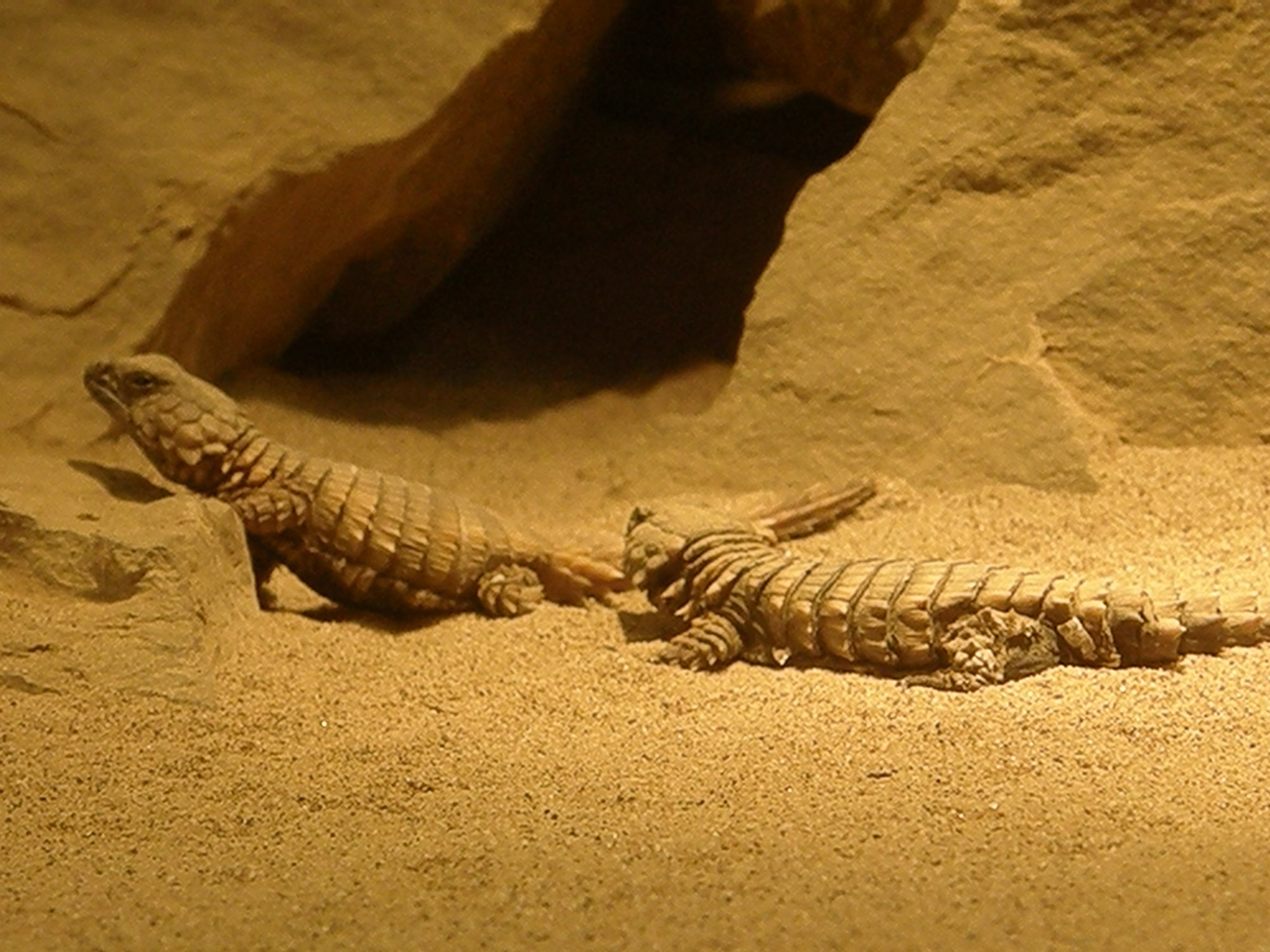
Lizards · Difficulty: Expert
Key facts and care guidance for Armadillo girdled lizard (Ouroborus cataphractus) (origin: Western and Northern Cape, South Africa – rock outcrops of the Succulent Karoo (winter rainfall, hot and dry summers)). Adult size around 15–20 cm. Life expectancy 20–25 years. The values below are carefully researched guidance.
Short answers
Armadillo girdled lizard: How big does the enclosure need to be?
100×50×50 cm.
Armadillo girdled lizard: What temperature does it need?
Daytime 26–32 °C, basking spot 40 °C, at night 18–22 °C.
Armadillo girdled lizard: Does it need UVB lighting?
UVB: Essential (UVB 10.0).
Armadillo girdled lizard: How long do they live?
Life expectancy: 20–25 years.
Armadillo girdled lizard: Is it suitable for beginners?
No – better suited to experienced keepers (difficulty: Expert).
Climate
- Daytime temperature
- 26–32 °C
- Night temperature
- 18–22 °C
- Basking spot
- 40 °C
- Humidity
- 35–55 %, dry by day; mist lightly in the morning and evening
- UVB
- Essential (UVB 10.0)
Enclosure
- Minimum size
- 100×50×50 cm
- Substrate
- Sand-loam with densely layered rock crevices
Feeding
- Food
- Insects (termite substitutes, house crickets, roaches)
- Feeding interval
- adults 3×/week
Key facts
- Adult size
- 15–20 cm
- Life expectancy
- 20–25 years
- Origin
- Western and Northern Cape, South Africa – rock outcrops of the Succulent Karoo (winter rainfall, hot and dry summers)
- Protection status
- CITES II; wild populations are severely threatened – captive-bred animals only
- Brumation
- A cooler spell of 8–10 weeks (roughly mid-December to the end of February) at 12–18 °C without food; stop feeding two weeks before, offer water
- Cohabitation
- Group keeping is possible (they live socially). The reason: several males fight over territory and the warm spot until one is injured or spends its life in a corner. Females usually get on, but each needs its own warm spot and hide; feed them separately once they differ in size.
Notes
When threatened it rolls up and bites its own tail. One of the few socially living lizards – group keeping suits it. Very long-lived, extremely rare and expensive.
Do you keep this species?
Add your animal to Reptoria – Reptoria reminds you about feeding and shedding. Add your animal for free →
Look for Armadillo girdled lizard (Ouroborus cataphractus) in the marketplace →
Related species
- Drakensberg crag lizard (Pseudocordylus subviridis) – Intermediate
- Common crag lizard (Pseudocordylus melanotus) – Intermediate
- Jones' girdled lizard (Cordylus jonesii) – Beginner
- Cape girdled lizard (Cordylus cordylus) – Intermediate
- Graceful crag lizard (Hemicordylus capensis) – Intermediate
- Karoo girdled lizard (Karusasaurus polyzonus) – Intermediate
- Sungazer (Smaug giganteus) – Expert
- Black girdled lizard (Cordylus niger) – Intermediate
What you need to start
To keep Armadillo girdled lizard (Ouroborus cataphractus) you typically need: a suitable enclosure (100×50×50 cm), substrate (Sand-loam with densely layered rock crevices), a heat source with a thermostat, UVB lighting, thermometer and hygrometer, a water dish and hides. You will find equipment in the Reptoria marketplace.
The complete, interactive care database is in the Reptoria app.
Last updated: 5 November 2026 · Editor: Reptoria editorial team · Sources include: Exotics Keeper (Verstecke fest stapeln, Eingewöhnung dauert, abgelehnte Tiere herausnehmen, Stomatitis durch Schwanzstacheln, UVB) – https://exoticskeeper.com/blog/keeping-and-breeding-the-armadillo-girdled-lizard-in-captivity/, Reptile Advisor: Armadillo Lizard Care (nur ein Männchen, wenig anfassen, UV ungefiltert) – https://www.reptileadvisor.com/?p=2588, Exotics Keeper (Gruppen 1,2 oder 1,3; Technik: UVB 10.0, Wärmelampe) und Reptile Advisor (teurer, weil Ausfuhr nur mit Genehmigung); kein belegter Tierpreis – Kosten ohne Tier, Exotics Keeper: Captive Breeding and Husbandry of the Armadillo Girdled Lizard (Felsspalten der Sukkulenten-Karoo, Gruppen, ein Junges je Saison, CITES II) – https://exoticskeeper.com/blog/keeping-and-breeding-the-armadillo-girdled-lizard-in-captivity/, Wikipedia EN: Armadillo girdled lizard (Sukkulenten-Karoo, bis 20 cm, Ring mit Schwanz im Maul, Gruppen bis 30–60 Tiere, Termiten, 1–2 lebende Junge höchstens einmal im Jahr, Fang für den Handel verboten) – https://en.wikipedia.org/wiki/Armadillo_girdled_lizard
All values are non-binding guidance and do not replace expert advice. Research thoroughly from several sources before acquiring and keeping an animal, and observe the applicable law (species and animal protection in particular).