Armenian rock lizard (Darevskia armeniaca)
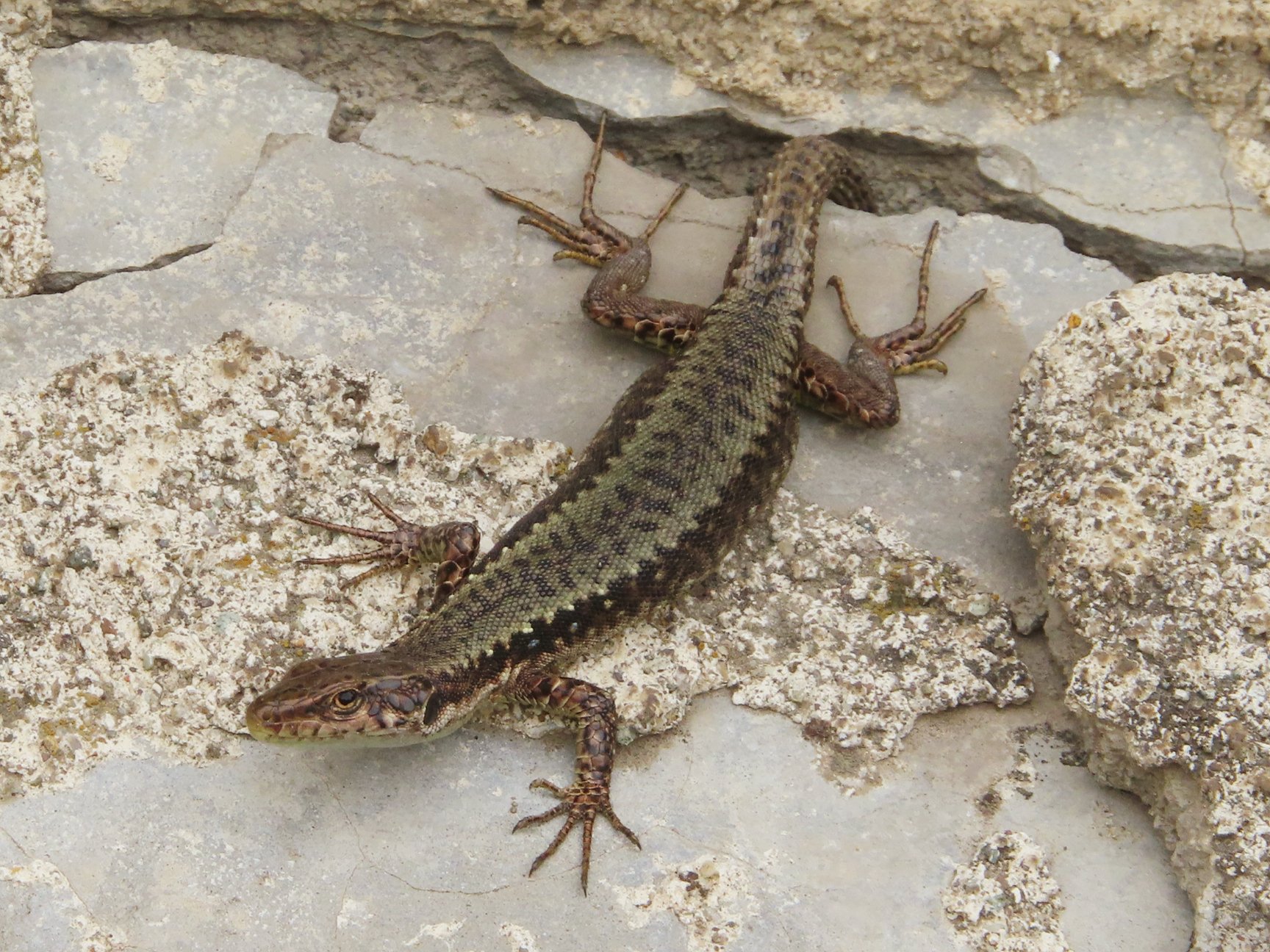
Lizards · Difficulty: Beginner with some knowledge
Key facts and care guidance for Armenian rock lizard (Darevskia armeniaca) (origin: Lesser Caucasus: northern and northwest Armenia, southern Georgia, western Azerbaijan, northeast and northwest Turkey; introduced populations in Ukraine). Adult size around 18–20 cm total length (snout–vent length about 6–7 cm, tail roughly twice as long). Life expectancy 5–10 years. The values below are carefully researched guidance.
Short answers
Armenian rock lizard: How big does the enclosure need to be?
100×50×60 cm for a group.
Armenian rock lizard: What temperature does it need?
Daytime 18–25 °C ambient temperature, basking spot Basking spot 38–45 °C, at night 12–18 °C.
Armenian rock lizard: Does it need UVB lighting?
UVB: Essential (UVB 10.0 — these species bask for hours).
Armenian rock lizard: How long do they live?
Life expectancy: 5–10 years.
Armenian rock lizard: Is it suitable for beginners?
Partly – manageable with some prior knowledge (difficulty: Beginner with some knowledge).
Climate
- Daytime temperature
- 18–25 °C ambient temperature
- Night temperature
- 12–18 °C
- Basking spot
- Basking spot 38–45 °C
- Humidity
- 40–60 %
- UVB
- Essential (UVB 10.0 — these species bask for hours)
Enclosure
- Minimum size
- 100×50×60 cm for a group
- Substrate
- A sand-loam mix with stone slabs, a dry-stone wall and a few plants
Feeding
- Food
- Crickets, house crickets, roaches, wax moths and the occasional fruit, dusted regularly with calcium and vitamins
- Feeding interval
- adults 3–4×/week
Key facts
- Adult size
- 18–20 cm total length (snout–vent length about 6–7 cm, tail roughly twice as long)
- Life expectancy
- 5–10 years
- Origin
- Lesser Caucasus: northern and northwest Armenia, southern Georgia, western Azerbaijan, northeast and northwest Turkey; introduced populations in Ukraine
- Protection status
- Bern Convention Appendix II — proof of origin required
- Brumation
- A winter rest of 10–14 weeks at 5–10 °C — without it there is no breeding and a markedly shorter life
- Cohabitation
- All-female groups, because the species consists only of females — males practically do not exist in this species, only as very rare exceptions. Three to five animals get along well in a sufficiently large enclosure, and territorial fights over females do not occur. Each animal still needs its own basking and hiding spot, and feed separately if sizes differ. Because the females reproduce without a partner, a group grows on its own — collect the eggs if no offspring are wanted.
Notes
An all-female species: reproduction runs without males. For keeping, that means a group of females will multiply without conflict.
Do you keep this species?
Add your animal to Reptoria – Reptoria reminds you about feeding and shedding. Add your animal for free →
Look for Armenian rock lizard (Darevskia armeniaca) in the marketplace →
Related species
- Artvin lizard (Darevskia derjugini) – Intermediate
- Dahl's rock lizard (Darevskia dahli) – Beginner with some knowledge
- White-bellied rock lizard (Darevskia unisexualis) – Beginner with some knowledge
- Caucasian rock lizard (Darevskia saxicola) – Beginner with some knowledge
- Caucasian rock lizard (Darevskia caucasica) – Intermediate
- Caucasian rock lizard (Darevskia rudis) – Beginner with some knowledge
- Portschinsky's rock lizard (Darevskia portschinskii) – Beginner with some knowledge
- Radde's rock lizard (Darevskia raddei) – Beginner with some knowledge
What you need to start
To keep Armenian rock lizard (Darevskia armeniaca) you typically need: a suitable enclosure (100×50×60 cm for a group), substrate (A sand-loam mix with stone slabs, a dry-stone wall and a few plants), a heat source with a thermostat, UVB lighting, thermometer and hygrometer, a water dish and hides. You will find equipment in the Reptoria marketplace.
The complete, interactive care database is in the Reptoria app.
Last updated: 2 November 2026 · Editor: Reptoria editorial team · Sources include: Wikipedia DE, Wikipedia EN, reptile-database.reptarium.cz, biozoojournals.ro, eu_annex.txt (lokal)
All values are non-binding guidance and do not replace expert advice. Research thoroughly from several sources before acquiring and keeping an animal, and observe the applicable law (species and animal protection in particular).