Artvin lizard (Darevskia derjugini)
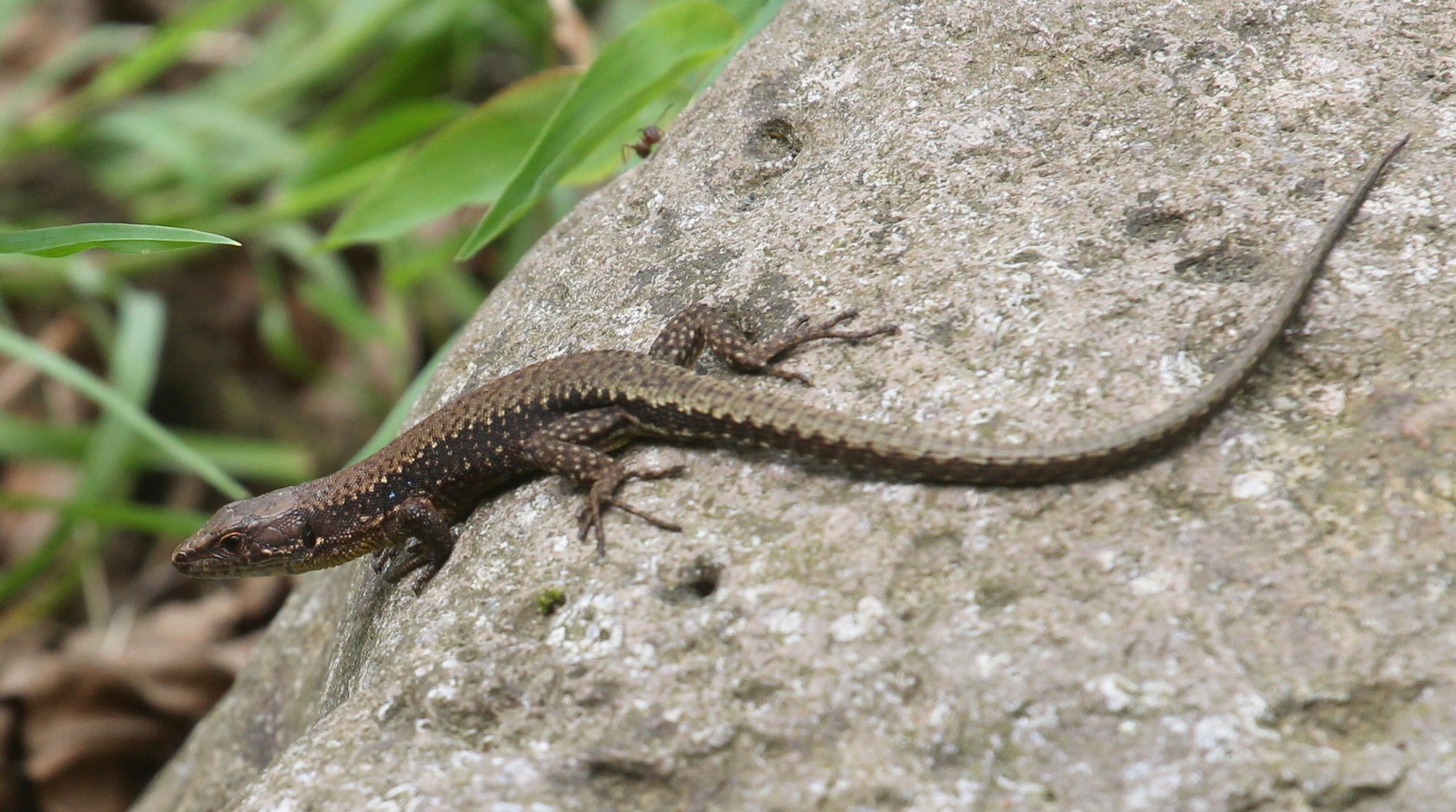
Lizards · Difficulty: Intermediate
Key facts and care guidance for Artvin lizard (Darevskia derjugini) (origin: The Black Sea slope of the Caucasus: Georgia, northeast Turkey (Artvin, Rize, Trabzon, Giresun), southwest Russia and northwest Azerbaijan; montane forests between 600 and 1700 m). Adult size around 15–19 cm. Life expectancy 5–10 years. The values below are carefully researched guidance.
Short answers
Artvin lizard: How big does the enclosure need to be?
100×50×60 cm for a small group, set up as a woodland enclosure: a layer of leaf litter, deadwood, ferns and moss on the floor, plus a small lit basking spot. The minimum size per the official expert report for Caucasian lizards would be 6 × 4 × 4 times snout–vent length, i.e. around 40×26×26 cm for a pair.
Artvin lizard: What temperature does it need?
Daytime 18–25 °C ambient temperature, basking spot Basking spot 38–45 °C, at night 12–18 °C.
Artvin lizard: Does it need UVB lighting?
UVB: Needed, but moderate (UVB 5.0 over the basking spot, with shade alongside).
Artvin lizard: How long do they live?
Life expectancy: 5–10 years.
Artvin lizard: Is it suitable for beginners?
Rather not – it is considered an intermediate species (difficulty: Intermediate).
Climate
- Daytime temperature
- 18–25 °C ambient temperature
- Night temperature
- 12–18 °C
- Basking spot
- Basking spot 38–45 °C
- Humidity
- 65–80 %, substrate layer permanently lightly moist, mist in the morning
- UVB
- Needed, but moderate (UVB 5.0 over the basking spot, with shade alongside)
Enclosure
- Minimum size
- 100×50×60 cm for a small group, set up as a woodland enclosure: a layer of leaf litter, deadwood, ferns and moss on the floor, plus a small lit basking spot. The minimum size per the official expert report for Caucasian lizards would be 6 × 4 × 4 times snout–vent length, i.e. around 40×26×26 cm for a pair.
- Substrate
- Loose forest-floor substrate of coco fibre and leaf mould with a layer of leaf litter, moss cushions, deadwood and pieces of bark, plus ferns and low plants; one corner kept permanently damp. A few flat stones and a piece of root as a basking spot are enough — this species doesn't need a dry-stone wall.
Feeding
- Food
- Crickets, house crickets, roaches, wax moths and the occasional fruit, dusted regularly with calcium and vitamins
- Feeding interval
- adults 3–4×/week
Key facts
- Adult size
- 15–19 cm
- Life expectancy
- 5–10 years
- Origin
- The Black Sea slope of the Caucasus: Georgia, northeast Turkey (Artvin, Rize, Trabzon, Giresun), southwest Russia and northwest Azerbaijan; montane forests between 600 and 1700 m
- Protection status
- Bern Convention Appendix II — proof of origin required
- Brumation
- A winter rest of 10–14 weeks at 5–10 °C — without it there is no breeding and a markedly shorter life
- Cohabitation
- 1.2 or 1.3; never keep males together. The reason: several males fight over territory and the warm spot until one is injured or spends its life in a corner. Females usually get on, but each needs its own warm spot and hide; feed them separately once they differ in size.
Notes
A forest and meadow species from a humid climate — not a dry terrarium.
Do you keep this species?
Add your animal to Reptoria – Reptoria reminds you about feeding and shedding. Add your animal for free →
Look for Artvin lizard (Darevskia derjugini) in the marketplace →
Related species
- Armenian rock lizard (Darevskia armeniaca) – Beginner with some knowledge
- Dahl's rock lizard (Darevskia dahli) – Beginner with some knowledge
- White-bellied rock lizard (Darevskia unisexualis) – Beginner with some knowledge
- Caucasian rock lizard (Darevskia saxicola) – Beginner with some knowledge
- Caucasian rock lizard (Darevskia caucasica) – Intermediate
- Caucasian rock lizard (Darevskia rudis) – Beginner with some knowledge
- Portschinsky's rock lizard (Darevskia portschinskii) – Beginner with some knowledge
- Radde's rock lizard (Darevskia raddei) – Beginner with some knowledge
What you need to start
To keep Artvin lizard (Darevskia derjugini) you typically need: a suitable enclosure (100×50×60 cm for a small group, set up as a woodland enclosure: a layer of leaf litter, deadwood, ferns and moss on the floor, plus a small lit basking spot. The minimum size per the official expert report for Caucasian lizards would be 6 × 4 × 4 times snout–vent length, i.e. around 40×26×26 cm for a pair.), substrate (Loose forest-floor substrate of coco fibre and leaf mould with a layer of leaf litter, moss cushions, deadwood and pieces of bark, plus ferns and low plants; one corner kept permanently damp. A few flat stones and a piece of root as a basking spot are enough — this species doesn't need a dry-stone wall.), a heat source with a thermostat, UVB lighting, thermometer and hygrometer, a water dish and hides. You will find equipment in the Reptoria marketplace.
The complete, interactive care database is in the Reptoria app.
Last updated: 9 October 2026 · Editor: Reptoria editorial team · Sources include: Wikipedia EN, researchgate.net (Habitat Preferences of Derjugin's Lizard, 2025), reptile-database.reptarium.cz, Animal Biology 71 (2021) – Altersstruktur zweier Populationen, eu_annex.txt (lokal)
All values are non-binding guidance and do not replace expert advice. Research thoroughly from several sources before acquiring and keeping an animal, and observe the applicable law (species and animal protection in particular).