Banded knob-tailed gecko (Nephrurus wheeleri)
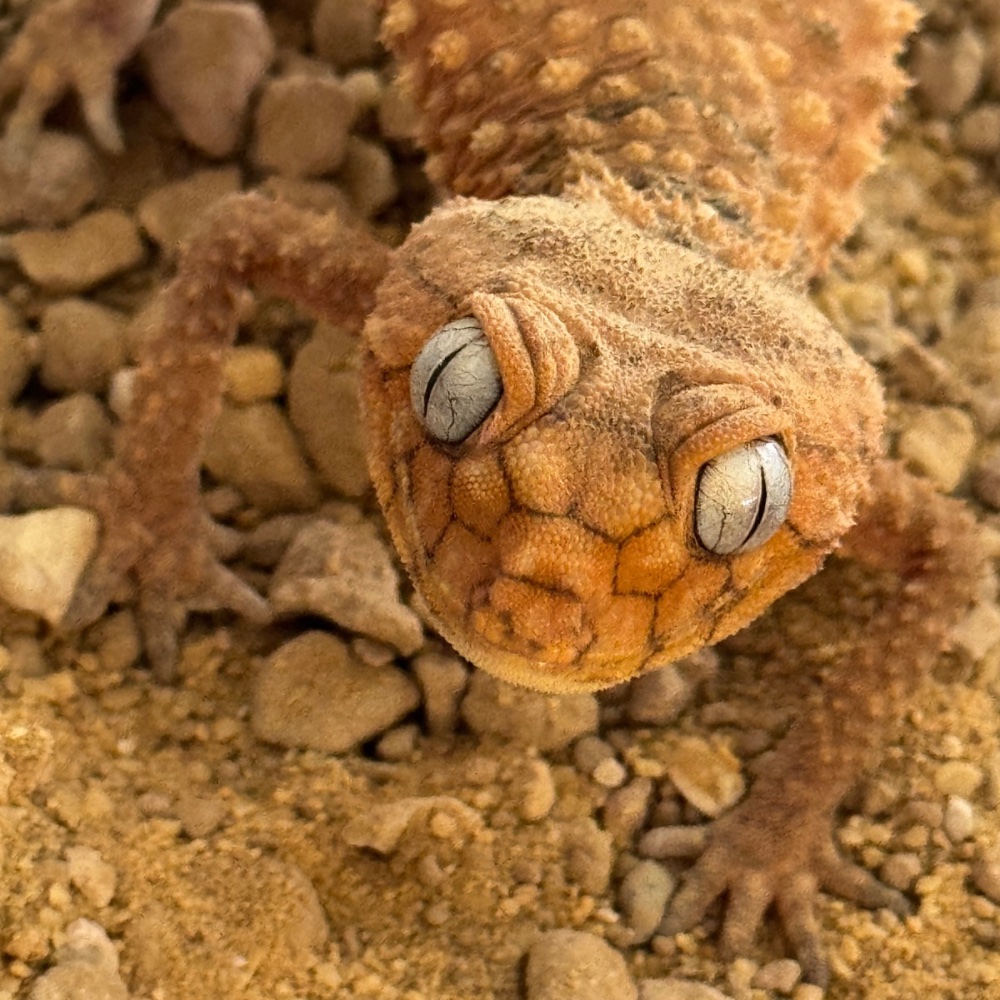
Geckos · Difficulty: Intermediate
Key facts and care guidance for Banded knob-tailed gecko (Nephrurus wheeleri) (origin: Western Australia (arid regions)). Adult size around approx. 12–14 cm total length (SVL ~10 cm). Life expectancy approx. 10–15 years (an estimate; still relatively new in the trade, little long-term data). The values below are carefully researched guidance.
Short answers
Banded knob-tailed gecko: How big does the enclosure need to be?
50×40×30 cm for one animal (ground-dwelling, floor area matters more than height).
Banded knob-tailed gecko: What temperature does it need?
Daytime warm side 30–32 °C, cool side 24–26 °C, basking spot 30–32 °C floor warming zone (no basking spot or spot lamp needed – floor heat), at night 20–24 °C.
Banded knob-tailed gecko: Does it need UVB lighting?
UVB: UVB not essential (nocturnal), a low dose does no harm.
Banded knob-tailed gecko: How long do they live?
Life expectancy: approx. 10–15 years (an estimate; still relatively new in the trade, little long-term data).
Banded knob-tailed gecko: Is it suitable for beginners?
Rather not – it is considered an intermediate species (difficulty: Intermediate).
Climate
- Daytime temperature
- warm side 30–32 °C, cool side 24–26 °C
- Night temperature
- 20–24 °C
- Basking spot
- 30–32 °C floor warming zone (no basking spot or spot lamp needed – floor heat)
- Humidity
- 30–50 % (dry; a humid hide or moist box is essential)
- UVB
- UVB not essential (nocturnal), a low dose does no harm
Enclosure
- Minimum size
- 50×40×30 cm for one animal (ground-dwelling, floor area matters more than height)
- Substrate
- A sand-loam mix, mostly dry; a damp zone under a hide
Feeding
- Food
- Insects (crickets, small roaches, mealworms); robust feeders
- Feeding interval
- adults 2–3×/week, juveniles daily to every other day
Key facts
- Adult size
- approx. 12–14 cm total length (SVL ~10 cm)
- Life expectancy
- approx. 10–15 years (an estimate; still relatively new in the trade, little long-term data)
- Origin
- Western Australia (arid regions)
- Protection status
- No CITES; Australia prohibits the export of wild-caught animals → only captive-bred animals in the trade; no special protection in Germany
- Brumation
- A slight cool or rest period in winter (dropping the temperature and photoperiod) to stimulate breeding; no true brumation
- Cohabitation
- Keeping animals singly is the least stressful option; every animal eats in peace. A pair or one male with two females works in a larger enclosure with several hides – the drawback: competition for food, separate feeding is necessary, and the male harasses the females. Never keep two males together.
Notes
A knob-tailed gecko; it can NOT shed its tail, and hisses or barks when threatened. Rack keeping with floor heat is usual. Considered one of the more beginner-friendly Nephrurus species, but still a specialist.
Do you keep this species?
Add your animal to Reptoria – Reptoria reminds you about feeding and shedding. Add your animal for free →
Look for Banded knob-tailed gecko (Nephrurus wheeleri) in the marketplace →
Related species
- Delean's knob-tailed gecko (Nephrurus deleani) – Intermediate
- Banded knob-tailed gecko (Nephrurus cinctus) – Intermediate
- Rough knob-tailed gecko (Nephrurus asper) – Intermediate
- Smooth knob-tailed gecko (Nephrurus levis) – Intermediate
- Starred knob-tailed gecko (Nephrurus stellatus) – Intermediate
- Centralian knob-tailed gecko (Nephrurus amyae) – Intermediate
- Smooth knob-tailed gecko (Nephrurus laevissimus) – Intermediate
- Thick-tailed gecko (Underwoodisaurus milii) – Beginner to intermediate
What you need to start
To keep Banded knob-tailed gecko (Nephrurus wheeleri) you typically need: a suitable enclosure (50×40×30 cm for one animal (ground-dwelling, floor area matters more than height)), substrate (A sand-loam mix, mostly dry; a damp zone under a hide), a heat source with a thermostat, UVB lighting, thermometer and hygrometer, a water dish and hides. You will find equipment in the Reptoria marketplace.
The complete, interactive care database is in the Reptoria app.
Last updated: 24 September 2026 · Editor: Reptoria editorial team · Sources include: http://reptilesofaustralia.com/lizards/geckos/namyae.htm, http://www.reptile-care.de/species/Gekkota/Carphodactylidae/Nephrurus-wheeleri.html, https://en.wikipedia.org/wiki/Nephrurus_wheeleri, https://reptile-database.reptarium.cz/species?genus=Nephrurus&species=wheeleri, https://reptilesmagazine.com/knob-tailed-gecko-care-sheet/
All values are non-binding guidance and do not replace expert advice. Research thoroughly from several sources before acquiring and keeping an animal, and observe the applicable law (species and animal protection in particular).