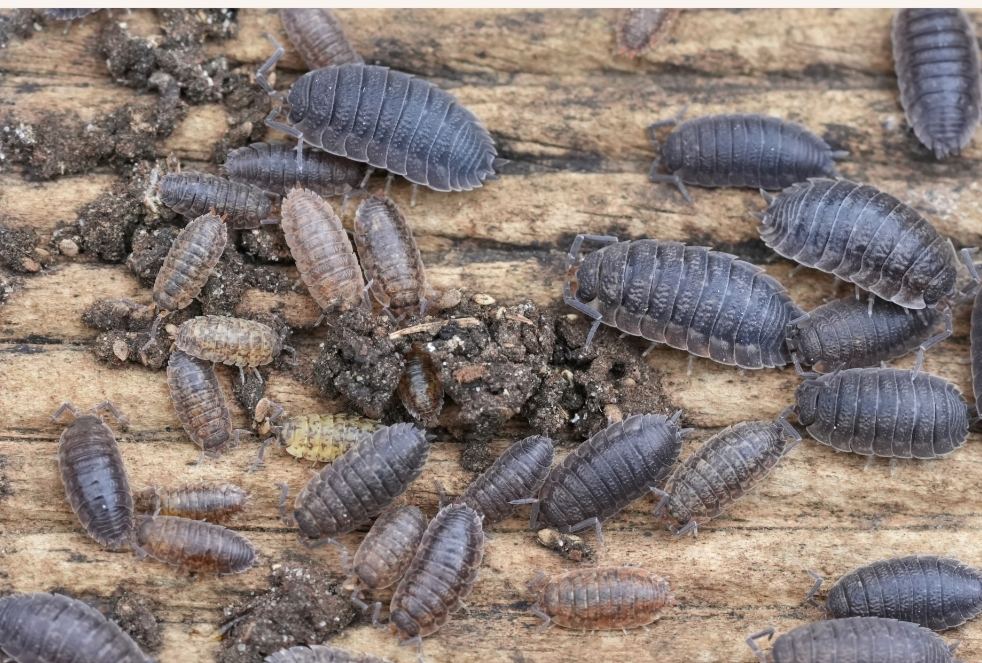
Bolivar's isopod (Porcellio bolivari)
Invertebrates · Difficulty: Intermediate
Key facts and care guidance for Bolivar's isopod (Porcellio bolivari) (origin: South-eastern Spain (caves and arid regions), endemic). Adult size around ca. 2–3 cm (große Art). Life expectancy approx. 2–3 years. The values below are carefully researched guidance.
Short answers
Bolivar's isopod: How big does the enclosure need to be?
A box from 30×20×20 cm with very good ventilation for a colony (a large species).
Bolivar's isopod: What temperature does it need?
Daytime 20–26 °C, at night 16–20 °C.
Bolivar's isopod: Does it need UVB lighting?
UVB: No UVB needed.
Bolivar's isopod: How long do they live?
Life expectancy: approx. 2–3 years.
Bolivar's isopod: Is it suitable for beginners?
Rather not – it is considered an intermediate species (difficulty: Intermediate).
Climate
- Daytime temperature
- 20–26 °C
- Night temperature
- 16–20 °C
- Basking spot
- —
- Humidity
- 45–60 % (mostly dry, one small humid corner)
- UVB
- No UVB needed
Enclosure
- Minimum size
- a box from 30×20×20 cm with very good ventilation for a colony (a large species)
- Substrate
- Mostly dry (about three quarters dry, one quarter damp), soil or sand with leaf litter, pale wood and limestone; very good air circulation
Feeding
- Food
- Fallen leaves, pale wood, vegetables and fruit; a higher protein share twice a week, calcium
- Feeding interval
- protein 2×/week, leaf litter and wood always available
Key facts
- Adult size
- ca. 2–3 cm (große Art)
- Life expectancy
- approx. 2–3 years
- Origin
- South-eastern Spain (caves and arid regions), endemic
- Protection status
- Not protected (no CITES, no German Federal Nature Conservation Act listing)
- Brumation
- None
- Cohabitation
- Colony. Isopods are gregarious and are kept as a group – about 10 animals to start, with plenty of flat-stacked bark as hides. Only this one species per tub: other species crowd it out or, when protein is short, get nibbled as freshly moulted animals.
Notes
A "skeleton" pattern. The most important keeping mistake is too much wet and poor ventilation – it needs a dry, very airy setup with just one damp corner. Calcium for moulting. Not suitable for the standard damp isopod box.
Do you keep this species?
Add your animal to Reptoria – Reptoria reminds you about feeding and shedding. Add your animal for free →
Look for Bolivar's isopod (Porcellio bolivari) in the marketplace →
Related species
- Giant canyon isopod (Porcellio dilatatus) – Beginner
- Dairy cow isopod (Porcellio laevis) – Beginner
- Giant Spanish isopod (Porcellio expansus) – Beginner to intermediate
- Yellow-bordered woodlouse (Porcellio flavomarginatus) – Beginner
- Porcellio haasi isopod (Porcellio haasi) – Beginner to intermediate
- Orange isopod (Porcellio ornatus) – Beginner to intermediate
- Porcellio succinctus isopod (Porcellio succinctus) – Intermediate
- Greek shield isopod (Porcellio werneri) – Beginner to intermediate
What you need to start
To keep Bolivar's isopod (Porcellio bolivari) you typically need: a suitable enclosure (a box from 30×20×20 cm with very good ventilation for a colony (a large species)), substrate (Mostly dry (about three quarters dry, one quarter damp), soil or sand with leaf litter, pale wood and limestone; very good air circulation), a heat source with a thermostat, UVB lighting, thermometer and hygrometer, a water dish and hides. You will find equipment in the Reptoria marketplace.
The complete, interactive care database is in the Reptoria app.
Last updated: 30 October 2026 · Editor: Reptoria editorial team · Sources include: https://exuvium.net/porcellio-bolivari/, https://insektenliebe.com/en/keeping-reports/porcellio-bolivari/, https://postpods.co.uk/blogs/isopods-useful-articles/iant-spanish-porcellio-care-guide, https://postpods.co.uk/blogs/isopods-useful-articles/keeping-different-isopods-together, https://www.smug-bug.com/post/misconceptions-in-giant-isopod-care
All values are non-binding guidance and do not replace expert advice. Research thoroughly from several sources before acquiring and keeping an animal, and observe the applicable law (species and animal protection in particular).