Orange isopod (Porcellio ornatus)
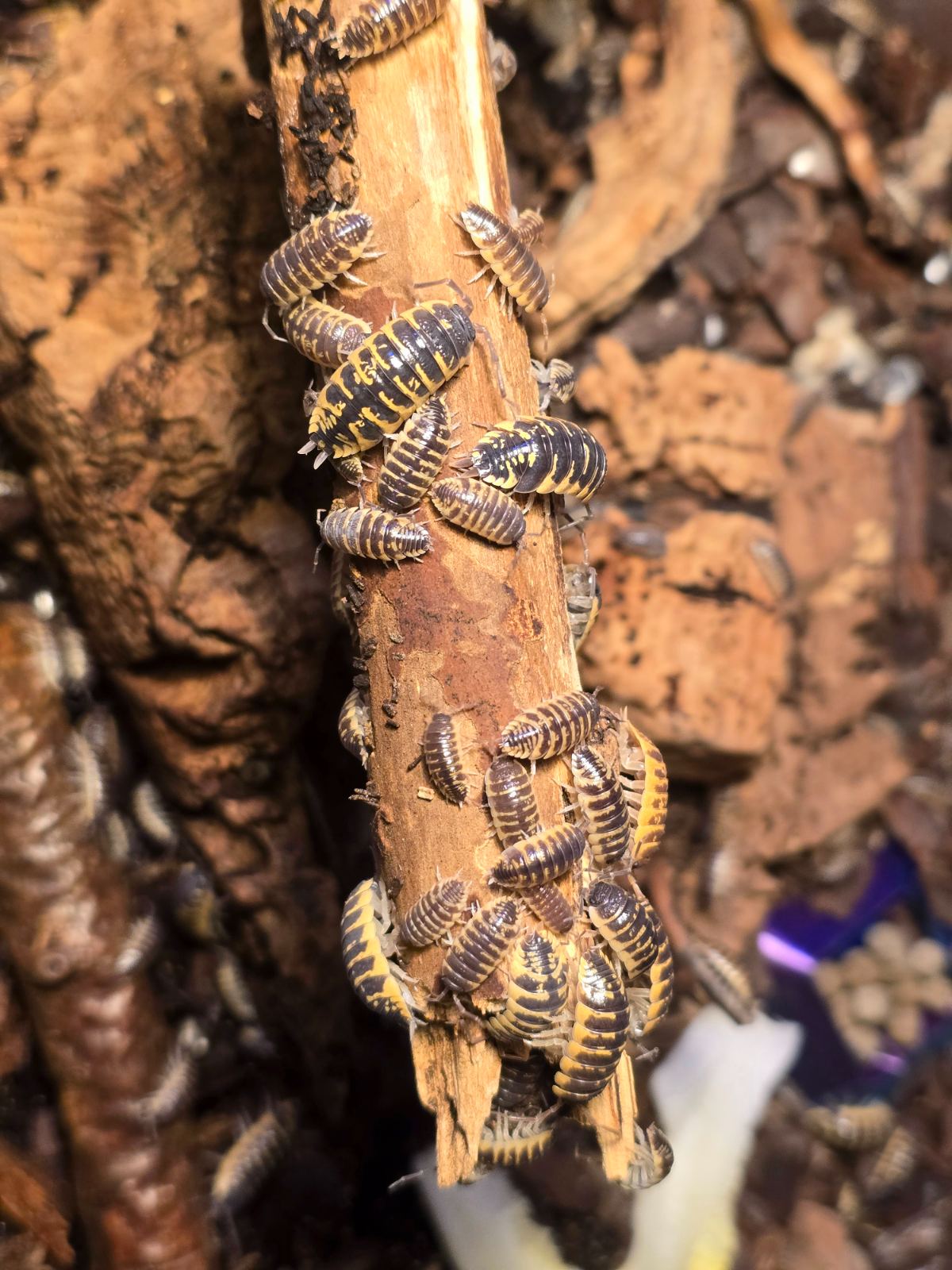
Invertebrates · Difficulty: Beginner to intermediate
Key facts and care guidance for Orange isopod (Porcellio ornatus) (origin: The Mediterranean (Spain, North Africa)). Adult size around ~1,8–2 cm. Life expectancy 2–3 years. The values below are carefully researched guidance.
Short answers
Orange isopod: How big does the enclosure need to be?
A box of ~20 x 15 cm or larger, medium to high ventilation.
Orange isopod: What temperature does it need?
Daytime 18–26 °C.
Orange isopod: Does it need UVB lighting?
UVB: No.
Orange isopod: How long do they live?
Life expectancy: 2–3 years.
Orange isopod: Is it suitable for beginners?
Partly – manageable with some prior knowledge (difficulty: Beginner to intermediate).
Climate
- Daytime temperature
- 18–26 °C
- Night temperature
- —
- Basking spot
- —
- Humidity
- 50–60 %, a very dry zone plus a small humid corner
- UVB
- No
Enclosure
- Minimum size
- a box of ~20 x 15 cm or larger, medium to high ventilation
- Substrate
- Mediterranean substrate (soil, sand and lime), leaf litter, cork bark
Feeding
- Food
- Leaf litter, rotten wood, vegetables, plenty of protein (dried insects or fish flakes), calcium
- Feeding interval
- 1–2×/week, protein regularly
Key facts
- Adult size
- ~1,8–2 cm
- Life expectancy
- 2–3 years
- Origin
- The Mediterranean (Spain, North Africa)
- Protection status
- —
- Brumation
- None
- Cohabitation
- Colony keeping; no constant moisture. These animals naturally live in groups. One colony per enclosure, and don’t merge colonies from different sources — that way you don’t introduce mites or pathogens and don’t mix breeding lines.
Notes
It does not tolerate constantly high humidity (a Mediterranean species) – good ventilation and a clear humidity gradient are needed. Fond of protein.
Do you keep this species?
Add your animal to Reptoria – Reptoria reminds you about feeding and shedding. Add your animal for free →
Orange isopod (Porcellio ornatus) currently offered
- Asseln – Kalefeld · 123 €
- Porcellio ornatus – Wien · 25 €
Related species
- Giant canyon isopod (Porcellio dilatatus) – Beginner
- Dairy cow isopod (Porcellio laevis) – Beginner
- Bolivar's isopod (Porcellio bolivari) – Intermediate
- Giant Spanish isopod (Porcellio expansus) – Beginner to intermediate
- Yellow-bordered woodlouse (Porcellio flavomarginatus) – Beginner
- Porcellio haasi isopod (Porcellio haasi) – Beginner to intermediate
- Porcellio succinctus isopod (Porcellio succinctus) – Intermediate
- Greek shield isopod (Porcellio werneri) – Beginner to intermediate
What you need to start
To keep Orange isopod (Porcellio ornatus) you typically need: a suitable enclosure (a box of ~20 x 15 cm or larger, medium to high ventilation), substrate (Mediterranean substrate (soil, sand and lime), leaf litter, cork bark), a heat source with a thermostat, thermometer and hygrometer, a water dish and hides. You will find equipment in the Reptoria marketplace.
The complete, interactive care database is in the Reptoria app.
Last updated: 30 October 2026 · Editor: Reptoria editorial team · Sources include: garnelio.de, insektenliebe.com, lovelyinsects.com, terraristikladen.de, world-of-isopods.de
All values are non-binding guidance and do not replace expert advice. Research thoroughly from several sources before acquiring and keeping an animal, and observe the applicable law (species and animal protection in particular).