Brazilian red rump tarantula (Grammostola actaeon)
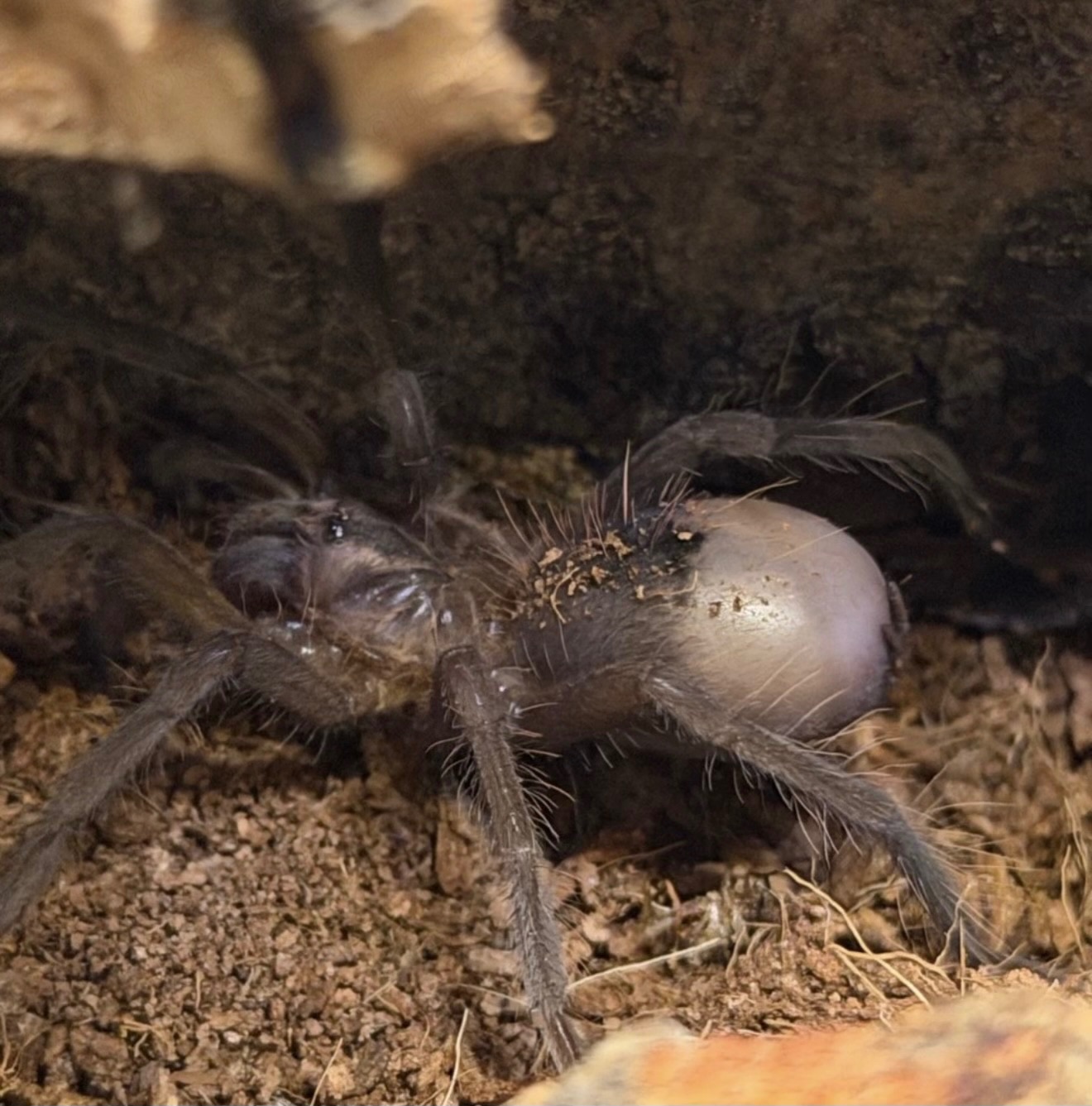
Invertebrates · Difficulty: Beginner
Key facts and care guidance for Brazilian red rump tarantula (Grammostola actaeon) (origin: Southern Brazil and Uruguay). Adult size around 15–17 cm leg span (body ~6–7 cm). Life expectancy females 20–25 years, males 4–6 years. The values below are carefully researched guidance.
Short answers
Brazilian red rump tarantula: How big does the enclosure need to be?
40×30×30 cm (floor area matters more than height).
Brazilian red rump tarantula: What temperature does it need?
Daytime 22–27 °C, at night 20–22 °C.
Brazilian red rump tarantula: Does it need UVB lighting?
UVB: No UVB needed (nocturnal).
Brazilian red rump tarantula: How long do they live?
Life expectancy: females 20–25 years, males 4–6 years.
Brazilian red rump tarantula: Is it suitable for beginners?
Yes – it is considered suitable for beginners (difficulty: Beginner).
Climate
- Daytime temperature
- 22–27 °C
- Night temperature
- 20–22 °C
- Basking spot
- —
- Humidity
- 60–70 %
- UVB
- No UVB needed (nocturnal)
Enclosure
- Minimum size
- 40×30×30 cm (floor area matters more than height)
- Substrate
- A coco humus or soil mix they can dig in, 8–12 cm deep; a cork hide, a water bowl
Feeding
- Food
- Insects (house crickets, roaches, crickets, locusts)
- Feeding interval
- adults approx. 1×/week or every 10–14 days, juveniles 2–3×/week
Key facts
- Adult size
- 15–17 cm leg span (body ~6–7 cm)
- Life expectancy
- females 20–25 years, males 4–6 years
- Origin
- Southern Brazil and Uruguay
- Protection status
- Not listed under CITES; no special registration duties
- Brumation
- None
- Cohabitation
- Single housing. Solitary and cannibalistic; no pair/group housing. The reason is not conflict but predation: these animals take anything that fits in their mouths, and a second animal in the enclosure is included.
Notes
Black with a reddish abdomen. Calm and slow like the other Grammostola, though it may well show a threat posture when disturbed. It grows slowly.
Do you keep this species?
Add your animal to Reptoria – Reptoria reminds you about feeding and shedding. Add your animal for free →
Look for Brazilian red rump tarantula (Grammostola actaeon) in the marketplace →
Related species
- Chaco golden knee tarantula (Grammostola pulchripes) – Beginner
- Chilean rose tarantula (Grammostola porteri) – Beginner
- Entre Rios tarantula (Grammostola iheringi) – Intermediate
- Chilean rose tarantula (Grammostola rosea) – Beginner
- Brazilian black tarantula (Grammostola pulchra) – Beginner
- Amazon birdeater (Iridopelma hirsutum) – Intermediate
- Arizona blonde tarantula (Aphonopelma chalcodes) – Beginner
- Pinktoe tarantula (Avicularia avicularia) – Beginner
What you need to start
To keep Brazilian red rump tarantula (Grammostola actaeon) you typically need: a suitable enclosure (40×30×30 cm (floor area matters more than height)), substrate (A coco humus or soil mix they can dig in, 8–12 cm deep; a cork hide, a water bowl), a heat source with a thermostat, UVB lighting, thermometer and hygrometer, a water dish and hides. You will find equipment in the Reptoria marketplace.
The complete, interactive care database is in the Reptoria app.
Last updated: 25 September 2026 · Editor: Reptoria editorial team · Sources include: https://davethebugguy.org/2026/02/05/grammostola-actaeon-the-brazilian-red-rump-tarantula/, https://en.wikipedia.org/wiki/Grammostola_actaeon, https://sites.google.com/site/creaturesofenigma/tarantula-care-sheet/grammostola/grammostola-actaeon
All values are non-binding guidance and do not replace expert advice. Research thoroughly from several sources before acquiring and keeping an animal, and observe the applicable law (species and animal protection in particular).