Chilean rose tarantula (Grammostola rosea)
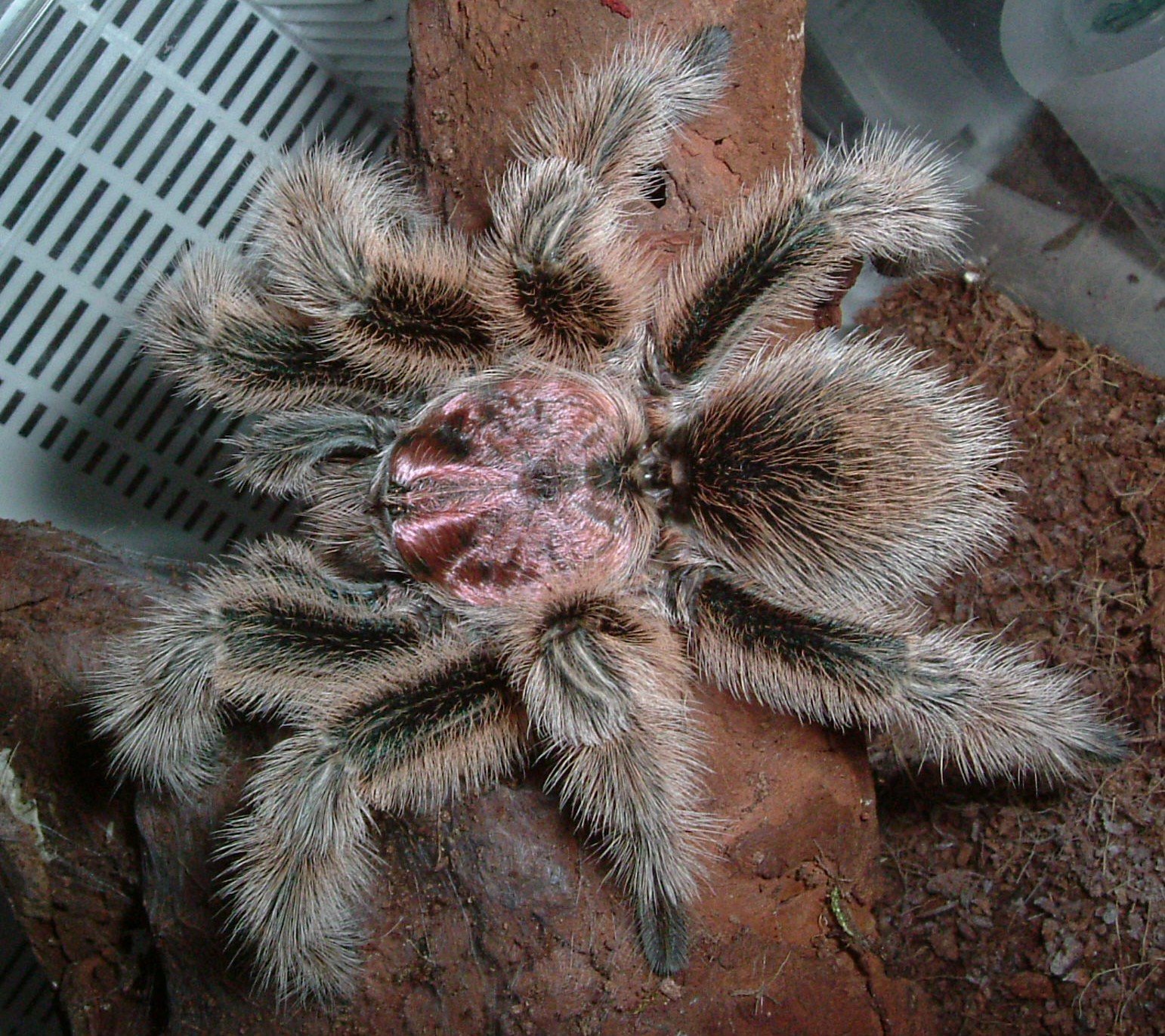
Invertebrates · Difficulty: Beginner
Key facts and care guidance for Chilean rose tarantula (Grammostola rosea) (origin: Chile (semi-desert-like arid regions)). Adult size around 13–15 cm leg span. Life expectancy females approx. 15–20+ years, males approx. 5 years. The values below are carefully researched guidance.
Short answers
Chilean rose tarantula: How big does the enclosure need to be?
30×30×25 cm (floor area matters more than height).
Chilean rose tarantula: What temperature does it need?
Daytime 22–26 °C, at night 18–20 °C.
Chilean rose tarantula: Does it need UVB lighting?
UVB: No UVB needed (nocturnal).
Chilean rose tarantula: How long do they live?
Life expectancy: females approx. 15–20+ years, males approx. 5 years.
Chilean rose tarantula: Is it suitable for beginners?
Yes – it is considered suitable for beginners (difficulty: Beginner).
Climate
- Daytime temperature
- 22–26 °C
- Night temperature
- 18–20 °C
- Basking spot
- —
- Humidity
- 50–60 % (keep dry, water bowl)
- UVB
- No UVB needed (nocturnal)
Enclosure
- Minimum size
- 30×30×25 cm (floor area matters more than height)
- Substrate
- A dry, diggable soil and sand or coco humus mix, 8–10 cm, a cork hide, a water bowl
Feeding
- Food
- Insects (house crickets, roaches, crickets); it often goes off food for a while
- Feeding interval
- adults approx. every 1–2 weeks, juveniles 1–2×/week; long gaps between meals are normal
Key facts
- Adult size
- 13–15 cm leg span
- Life expectancy
- females approx. 15–20+ years, males approx. 5 years
- Origin
- Chile (semi-desert-like arid regions)
- Protection status
- Not listed under CITES; no special registration duties
- Brumation
- Not essential; a slight winter drop (to about 18 °C) is natural, but no real winter rest
- Cohabitation
- Single housing. Solitary and cannibalistic; no pair/group housing. The reason is not conflict but predation: these animals take anything that fits in their mouths, and a second animal in the enclosure is included.
Notes
A classic beginner's species, very frugal and tolerant of dryness. Notorious for feeding breaks lasting months (no cause for concern as long as water is available). It can be nervous and prone to kicking at times; urticating hairs are present.
Do you keep this species?
Add your animal to Reptoria – Reptoria reminds you about feeding and shedding. Add your animal for free →
Look for Chilean rose tarantula (Grammostola rosea) in the marketplace →
Related species
- Brazilian red rump tarantula (Grammostola actaeon) – Beginner
- Chaco golden knee tarantula (Grammostola pulchripes) – Beginner
- Chilean rose tarantula (Grammostola porteri) – Beginner
- Entre Rios tarantula (Grammostola iheringi) – Intermediate
- Brazilian black tarantula (Grammostola pulchra) – Beginner
- Amazon birdeater (Iridopelma hirsutum) – Intermediate
- Arizona blonde tarantula (Aphonopelma chalcodes) – Beginner
- Pinktoe tarantula (Avicularia avicularia) – Beginner
What you need to start
To keep Chilean rose tarantula (Grammostola rosea) you typically need: a suitable enclosure (30×30×25 cm (floor area matters more than height)), substrate (A dry, diggable soil and sand or coco humus mix, 8–10 cm, a cork hide, a water bowl), a heat source with a thermostat, UVB lighting, thermometer and hygrometer, a water dish and hides. You will find equipment in the Reptoria marketplace.
The complete, interactive care database is in the Reptoria app.
Last updated: 9 October 2026 · Editor: Reptoria editorial team · Sources include: https://de.wikipedia.org/wiki/Grammostola_rosea, https://en.wikipedia.org/wiki/Grammostola_rosea, https://www.thetarantulacollective.com/caresheets/grammostola-rosea
All values are non-binding guidance and do not replace expert advice. Research thoroughly from several sources before acquiring and keeping an animal, and observe the applicable law (species and animal protection in particular).