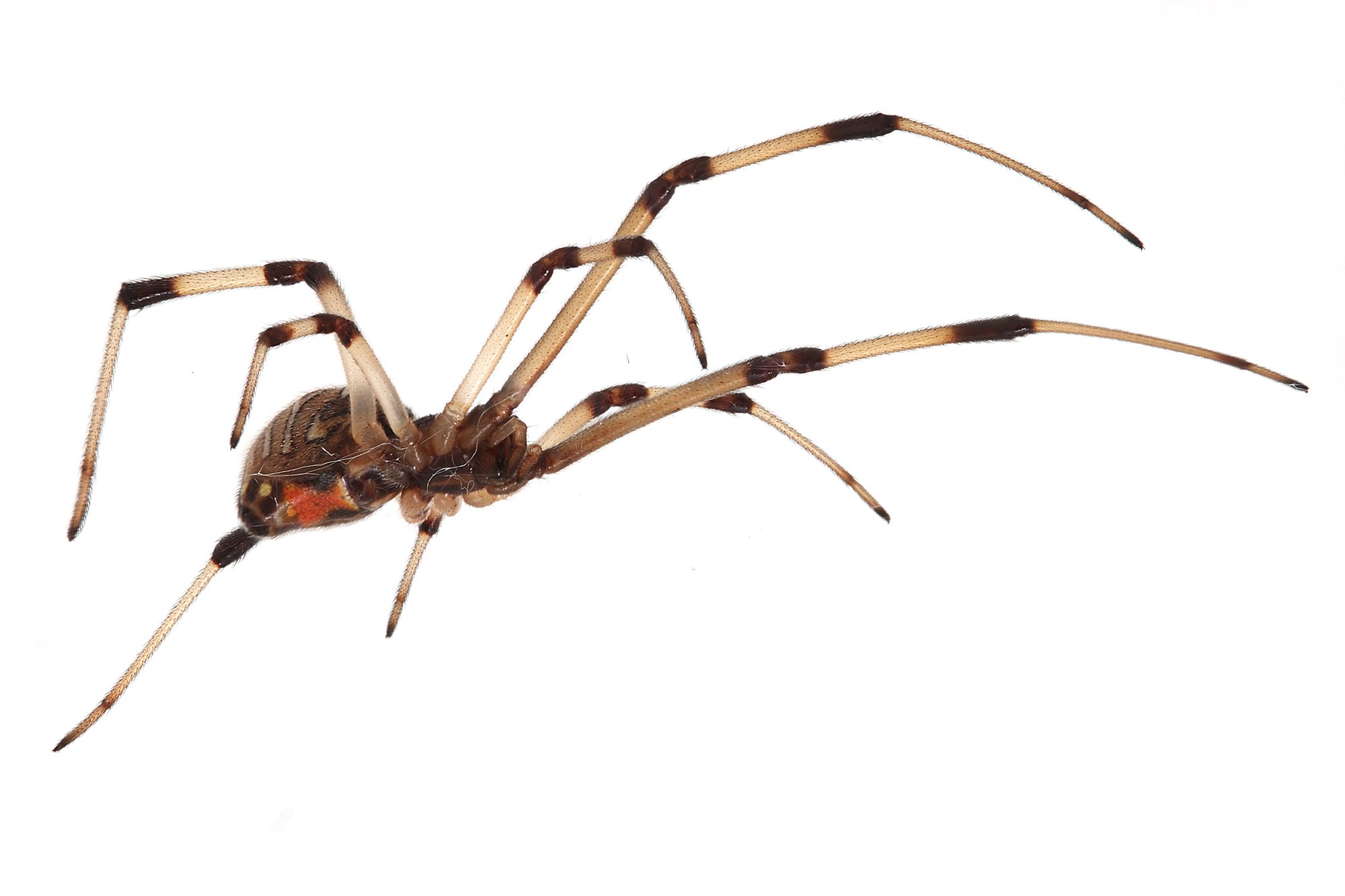
Brown widow (Latrodectus geometricus)
Invertebrates · Difficulty: Expert
Key facts and care guidance for Brown widow (Latrodectus geometricus) (origin: Pantropical and cosmopolitan (probably originating in southern Africa or South America), introduced worldwide). Adult size around females ~7–10 mm body (leg span 2.5–4 cm), males ~4 mm. Life expectancy females approx. 1.5–3 years in captivity, males considerably shorter. The values below are carefully researched guidance.
Short answers
Brown widow: How big does the enclosure need to be?
20×20×25 cm (tall; for one adult animal).
Brown widow: What temperature does it need?
Daytime 24–28 °C, at night 20–22 °C.
Brown widow: Does it need UVB lighting?
UVB: No UVB needed (nocturnal).
Brown widow: How long do they live?
Life expectancy: females approx. 1.5–3 years in captivity, males considerably shorter.
Brown widow: Is it suitable for beginners?
No – better suited to experienced keepers (difficulty: Expert).
Climate
- Daytime temperature
- 24–28 °C
- Night temperature
- 20–22 °C
- Basking spot
- —
- Humidity
- 50–70 %, well ventilated
- UVB
- No UVB needed (nocturnal)
Enclosure
- Minimum size
- 20×20×25 cm (tall; for one adult animal)
- Substrate
- A thin layer of slightly damp sphagnum or coco humus; twigs, cork and bark as anchor points for the web
Feeding
- Food
- Crickets, small roaches, flies; matched to their body size
- Feeding interval
- adults ~1×/week (every 7–10 days), juveniles 2×/week
Key facts
- Adult size
- females ~7–10 mm body (leg span 2.5–4 cm), males ~4 mm
- Life expectancy
- females approx. 1.5–3 years in captivity, males considerably shorter
- Origin
- Pantropical and cosmopolitan (probably originating in southern Africa or South America), introduced worldwide
- Protection status
- No CITES. But it is a medically relevant venomous spider (latrodectism): several German states apply dangerous-animal law – North Rhine-Westphalia's venomous-animal act, for example, bans keeping and acquiring it (with grandfathering and a registration duty), and Bavaria requires a permit. Check your state law before acquiring one.
- Brumation
- None (subtropical / tropical, warm all year)
- Cohabitation
- Keep them singly. Widows are solitary, opportunistic cannibals: a conspecific is eaten when food is scarce, and spiderlings eat their siblings soon after hatching. When animals are put together it is impossible to predict which one survives. For breeding, put the male in only briefly and under observation and separate them again afterwards.
Notes
Considered the most aggressive "true" widow when disturbed, though the venom is usually milder than L. mactans. Striking spiky egg sacs. Secure containers (with a safety catch) because of the venom. A common mistake: conditions that are too damp and poorly ventilated.
Do you keep this species?
Add your animal to Reptoria – Reptoria reminds you about feeding and shedding. Add your animal for free →
Look for Brown widow (Latrodectus geometricus) in the marketplace →
Related species
- Mediterranean black widow (Latrodectus tredecimguttatus) – Expert
- Northern black widow (Latrodectus variolus) – Expert
- Red widow (Latrodectus bishopi) – Expert
- Redback spider (Latrodectus hasselti) – Expert
- Southern black widow (Latrodectus mactans) – Expert
- Pale widow (Latrodectus pallidus) – Expert
- Western black widow (Latrodectus hesperus) – Expert
- Noble false widow (Steatoda nobilis) – Intermediate
What you need to start
To keep Brown widow (Latrodectus geometricus) you typically need: a suitable enclosure (20×20×25 cm (tall; for one adult animal)), substrate (A thin layer of slightly damp sphagnum or coco humus; twigs, cork and bark as anchor points for the web), a heat source with a thermostat, UVB lighting, thermometer and hygrometer, a water dish and hides. You will find equipment in the Reptoria marketplace.
The complete, interactive care database is in the Reptoria app.
Last updated: 8 November 2026 · Editor: Reptoria editorial team · Sources include: https://de.wikipedia.org/wiki/Braune_Witwe, https://en.wikipedia.org/wiki/Latrodectus, https://en.wikipedia.org/wiki/Latrodectus_geometricus
All values are non-binding guidance and do not replace expert advice. Research thoroughly from several sources before acquiring and keeping an animal, and observe the applicable law (species and animal protection in particular).