Noble false widow (Steatoda nobilis)
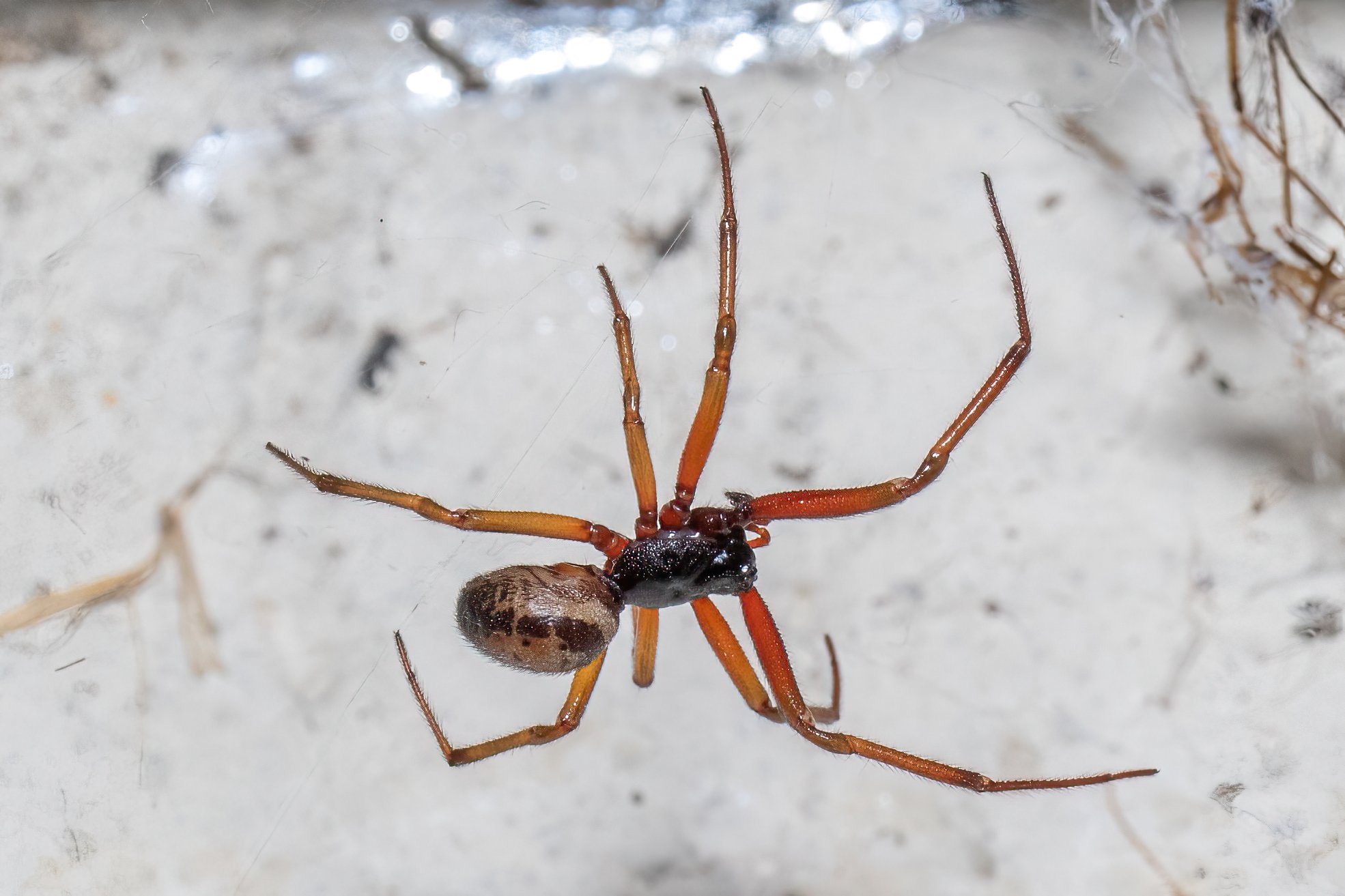
Invertebrates · Difficulty: Intermediate
Key facts and care guidance for Noble false widow (Steatoda nobilis) (origin: Originally Madeira and the Canaries; introduced into Europe (increasingly including Germany), Asia, North Africa and the Americas). Adult size around females 9.5–14 mm, males 7.0–11.0 mm. Life expectancy females live several years, ~2–5 years (individual reports up to 7). The values below are carefully researched guidance.
Short answers
Noble false widow: How big does the enclosure need to be?
20×20×25 cm (tall).
Noble false widow: What temperature does it need?
Daytime 20–25 °C (room temperature, very tolerant), at night 15–18 °C.
Noble false widow: Does it need UVB lighting?
UVB: No UVB needed.
Noble false widow: How long do they live?
Life expectancy: females live several years, ~2–5 years (individual reports up to 7).
Noble false widow: Is it suitable for beginners?
Rather not – it is considered an intermediate species (difficulty: Intermediate).
Climate
- Daytime temperature
- 20–25 °C (room temperature, very tolerant)
- Night temperature
- 15–18 °C
- Basking spot
- —
- Humidity
- 50–60 %, rather dry, well ventilated
- UVB
- No UVB needed
Enclosure
- Minimum size
- 20×20×25 cm (tall)
- Substrate
- Little or dry substrate (a thin layer of coco humus, or bare-bottomed); twigs and cork as anchors for the web
Feeding
- Food
- Crickets, flies, moths, isopods; it can fast for long periods
- Feeding interval
- adults every 7–10 days, juveniles weekly
Key facts
- Adult size
- females 9.5–14 mm, males 7.0–11.0 mm
- Life expectancy
- females live several years, ~2–5 years (individual reports up to 7)
- Origin
- Originally Madeira and the Canaries; introduced into Europe (increasingly including Germany), Asia, North Africa and the Americas
- Protection status
- No CITES, not specially protected. The venom is weaker than Latrodectus but contains α-latrotoxin-like components – a bite can be painful and act locally. No general dangerous-animal status, but take care all the same.
- Brumation
- Not essential; a cooler winter spell (10–15 °C) is tolerated
- Cohabitation
- Single housing, solitary and cannibalistic. No group housing. The reason is not conflict but predation: these animals take anything that fits in their mouths, and a second animal in the enclosure is included.
Notes
Very robust; it survives months with little food or water (hence its invasiveness). The "false widow". A common mistake: too damp. The life-expectancy figures come partly from close relatives and keeper reports – rated as medium.
Do you keep this species?
Add your animal to Reptoria – Reptoria reminds you about feeding and shedding. Add your animal for free →
Look for Noble false widow (Steatoda nobilis) in the marketplace →
Related species
- False black widow (Steatoda paykulliana) – Intermediate
- Cupboard spider (Steatoda grossa) – Intermediate
- Brown widow (Latrodectus geometricus) – Expert
- Mediterranean black widow (Latrodectus tredecimguttatus) – Expert
- Northern black widow (Latrodectus variolus) – Expert
- Red widow (Latrodectus bishopi) – Expert
- Redback spider (Latrodectus hasselti) – Expert
- Southern black widow (Latrodectus mactans) – Expert
What you need to start
To keep Noble false widow (Steatoda nobilis) you typically need: a suitable enclosure (20×20×25 cm (tall)), substrate (Little or dry substrate (a thin layer of coco humus, or bare-bottomed); twigs and cork as anchors for the web), a heat source with a thermostat, UVB lighting, thermometer and hygrometer, a water dish and hides. You will find equipment in the Reptoria marketplace.
The complete, interactive care database is in the Reptoria app.
Last updated: 9 October 2026 · Editor: Reptoria editorial team · Sources include: https://en.wikipedia.org/wiki/Steatoda, https://en.wikipedia.org/wiki/Steatoda_nobilis
All values are non-binding guidance and do not replace expert advice. Research thoroughly from several sources before acquiring and keeping an animal, and observe the applicable law (species and animal protection in particular).