Club-tailed iguana (Ctenosaura quinquecarinata)
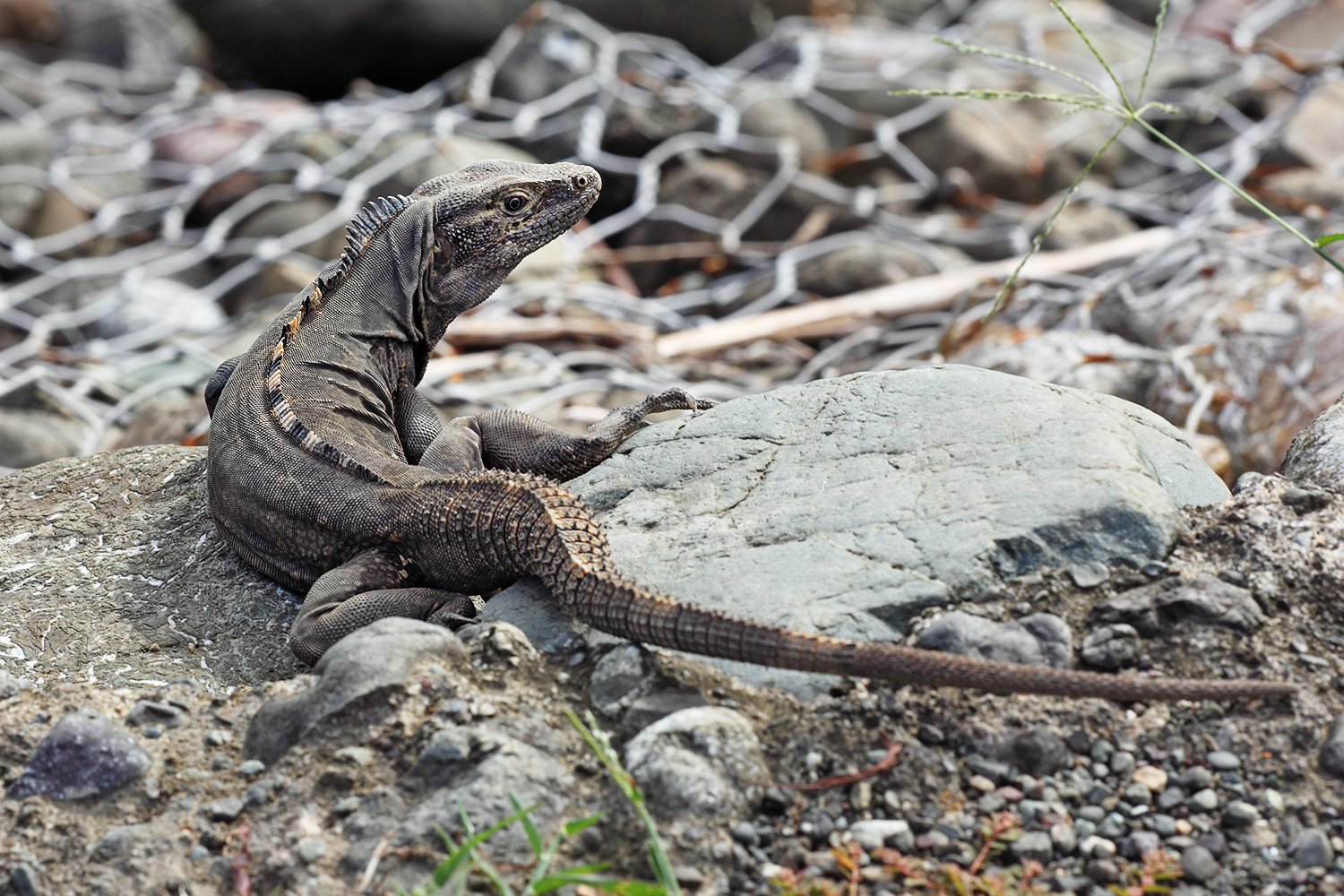
Iguanas · Difficulty: Expert
Key facts and care guidance for Club-tailed iguana (Ctenosaura quinquecarinata) (origin: The dry forests of Central America (including the Oaxaca region, Mexico)). Adult size around approx. 30–50 cm total length including the tail (SVL of males up to ~26–35 cm). Life expectancy approx. 15+ years. The values below are carefully researched guidance.
Short answers
Club-tailed iguana: How big does the enclosure need to be?
120×60×100 cm for one adult animal; a pair from ~150×70×120 cm.
Club-tailed iguana: What temperature does it need?
Daytime 28–32 °C (cooler area ~24–26 °C), basking spot 40–45 °C, at night 20–24 °C.
Club-tailed iguana: Does it need UVB lighting?
UVB: UVB essential, high (an open-country sun species, Ferguson zone 3).
Club-tailed iguana: How long do they live?
Life expectancy: approx. 15+ years.
Club-tailed iguana: Is it suitable for beginners?
No – better suited to experienced keepers (difficulty: Expert).
Climate
- Daytime temperature
- 28–32 °C (cooler area ~24–26 °C)
- Night temperature
- 20–24 °C
- Basking spot
- 40–45 °C
- Humidity
- 50–70 % (dry forest; briefly higher in the morning through misting)
- UVB
- UVB essential, high (an open-country sun species, Ferguson zone 3)
Enclosure
- Minimum size
- 120×60×100 cm for one adult animal; a pair from ~150×70×120 cm
- Substrate
- A sand and soil mix they can dig in, with stones; a climbing branch or cork tube (semi-arboreal, it uses tree hollows)
Feeding
- Food
- Omnivorous, with adults mainly plant-eating (leaves, flowers, vegetables) plus insects; juveniles take more insects
- Feeding interval
- adults plant food daily to every other day, insects 1–2×/week; juveniles insects more often
Key facts
- Adult size
- approx. 30–50 cm total length including the tail (SVL of males up to ~26–35 cm)
- Life expectancy
- approx. 15+ years
- Origin
- The dry forests of Central America (including the Oaxaca region, Mexico)
- Protection status
- Not listed under CITES, but IUCN "Endangered"; protected in the countries of origin → captive-bred animals are recommended, check the origin
- Brumation
- No real winter rest; a slightly cooler, drier rest period (a few weeks) to stimulate breeding is possible
- Cohabitation
- Keep singly or as a harem with one male and several females; with limited space, keep singly as a rule. Never house males together - they are strongly territorial and tolerate no rival.
Notes
A rare, specialised species (the smallest to medium-sized Ctenosaura). Semi-arboreal, using tree holes; a strong, armoured tail for defence. Taxonomically separated from C. flavidorsalis → the data are partly inconsistent. IUCN threatened.
Do you keep this species?
Add your animal to Reptoria – Reptoria reminds you about feeding and shedding. Add your animal for free →
Look for Club-tailed iguana (Ctenosaura quinquecarinata) in the marketplace →
Related species
- Cape spiny-tailed iguana (Ctenosaura hemilopha) – Intermediate
- Guatemalan spiny-tailed iguana (Ctenosaura palearis) – Expert
- Northeastern spiny-tailed iguana (Ctenosaura acanthura) – Expert
- Mexican spiny-tailed iguana (Ctenosaura pectinata) – Intermediate
- Oaxaca spiny-tailed iguana (Ctenosaura oaxacana) – Expert
- Roatán spiny-tailed iguana (Ctenosaura oedirhina) – Expert
- Black-chested spiny-tailed iguana (Ctenosaura melanosterna) – Expert
- Black spiny-tailed iguana (Ctenosaura similis) – Intermediate
What you need to start
To keep Club-tailed iguana (Ctenosaura quinquecarinata) you typically need: a suitable enclosure (120×60×100 cm for one adult animal; a pair from ~150×70×120 cm), substrate (A sand and soil mix they can dig in, with stones; a climbing branch or cork tube (semi-arboreal, it uses tree hollows)), a heat source with a thermostat, UVB lighting, thermometer and hygrometer, a water dish and hides. You will find equipment in the Reptoria marketplace.
The complete, interactive care database is in the Reptoria app.
Last updated: 2 November 2026 · Editor: Reptoria editorial team · Sources include: https://en.wikipedia.org/wiki/Ctenosaura, https://en.wikipedia.org/wiki/Ctenosaura_quinquecarinata, https://reptilesmagazine.com/spiny-tailed-iguana-care-sheet/, https://www.zoonewengland.org/stone-zoo/animals/reptiles-amphibians/spiny-tailed-iguana/
All values are non-binding guidance and do not replace expert advice. Research thoroughly from several sources before acquiring and keeping an animal, and observe the applicable law (species and animal protection in particular).