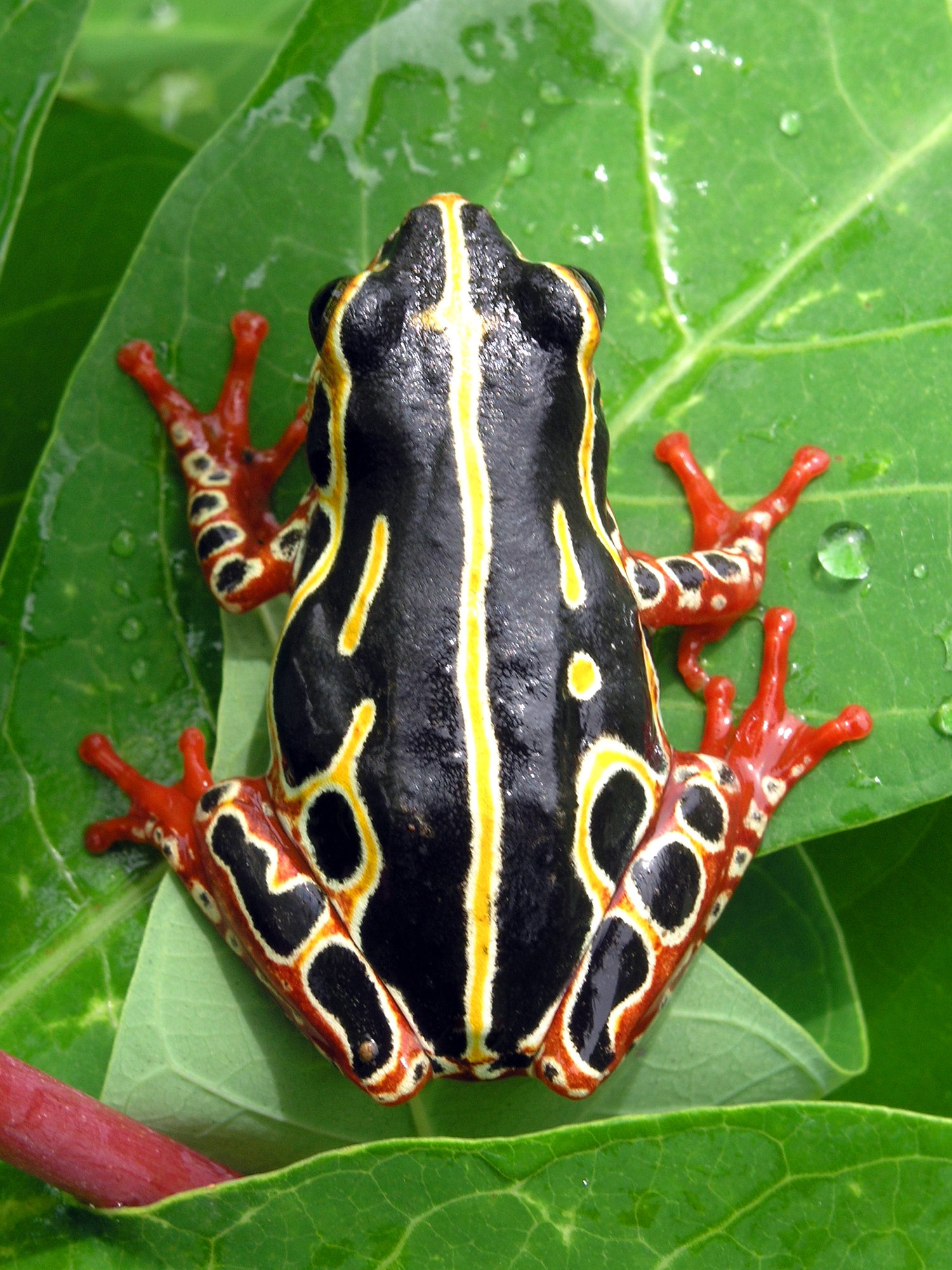
Common reed frog (Hyperolius viridiflavus)
Amphibians · Difficulty: Intermediate
Key facts and care guidance for Common reed frog (Hyperolius viridiflavus) (origin: Eastern and Central Africa). Adult size around 2,5–3,5 cm. Life expectancy 5–8 years. The values below are carefully researched guidance.
Short answers
Common reed frog: How big does the enclosure need to be?
45×45×60 cm.
Common reed frog: What temperature does it need?
Daytime 23–28 °C, basking spot No basking spot, at night 19–22 °C.
Common reed frog: Does it need UVB lighting?
UVB: Recommended (UVB 2–5 %).
Common reed frog: How long do they live?
Life expectancy: 5–8 years.
Common reed frog: Is it suitable for beginners?
Rather not – it is considered an intermediate species (difficulty: Intermediate).
Climate
- Daytime temperature
- 23–28 °C
- Night temperature
- 19–22 °C
- Basking spot
- No basking spot
- Humidity
- 70–85 %
- UVB
- Recommended (UVB 2–5 %)
Enclosure
- Minimum size
- 45×45×60 cm
- Substrate
- Coco humus, reeds and narrow-leaved plants, a water section
Feeding
- Food
- Fruit flies, micro crickets, small crickets
- Feeding interval
- daily to every other day
Key facts
- Adult size
- 2,5–3,5 cm
- Life expectancy
- 5–8 years
- Origin
- Eastern and Central Africa
- Protection status
- Not listed under CITES
- Brumation
- A dry spell of 6–8 weeks
- Cohabitation
- A group (6-12 animals). Raise juveniles separately from adults. Not because they would be eaten - these animals are far too small for that - but because the larger ones reach food first and the small ones fall behind. Offer enough hiding spots so each animal can retreat, and feed separately if sizes differ.
Notes
A brilliant yellow-and-black patterned reed frog. It changes colour markedly with the time of day. Small food (Drosophila) is essential.
Do you keep this species?
Add your animal to Reptoria – Reptoria reminds you about feeding and shedding. Add your animal for free →
Look for Common reed frog (Hyperolius viridiflavus) in the marketplace →
Related species
- Argus reed frog (Hyperolius argus) – Intermediate
- Water lily reed frog (Hyperolius pusillus) – Intermediate
- Spotted reed frog (Hyperolius puncticulatus) – Intermediate
- Marbled reed frog (Hyperolius marmoratus) – Intermediate
- Tinker reed frog (Hyperolius tuberilinguis) – Intermediate
- Yellow-spotted tree frog (Leptopelis flavomaculatus) – Intermediate
- Greater leaf-folding frog (Afrixalus fornasini) – Intermediate
- Red-legged running frog (Kassina maculata) – Intermediate
What you need to start
To keep Common reed frog (Hyperolius viridiflavus) you typically need: a suitable enclosure (45×45×60 cm), substrate (Coco humus, reeds and narrow-leaved plants, a water section), a heat source with a thermostat, UVB lighting, thermometer and hygrometer, a water dish and hides. You will find equipment in the Reptoria marketplace.
The complete, interactive care database is in the Reptoria app.
Last updated: 30 October 2026 · Editor: Reptoria editorial team · Sources include: https://en.wikipedia.org/wiki/Common_reed_frog, https://en.wikipedia.org/wiki/Hyperolius
All values are non-binding guidance and do not replace expert advice. Research thoroughly from several sources before acquiring and keeping an animal, and observe the applicable law (species and animal protection in particular).