Common wonder gecko (Teratoscincus scincus)
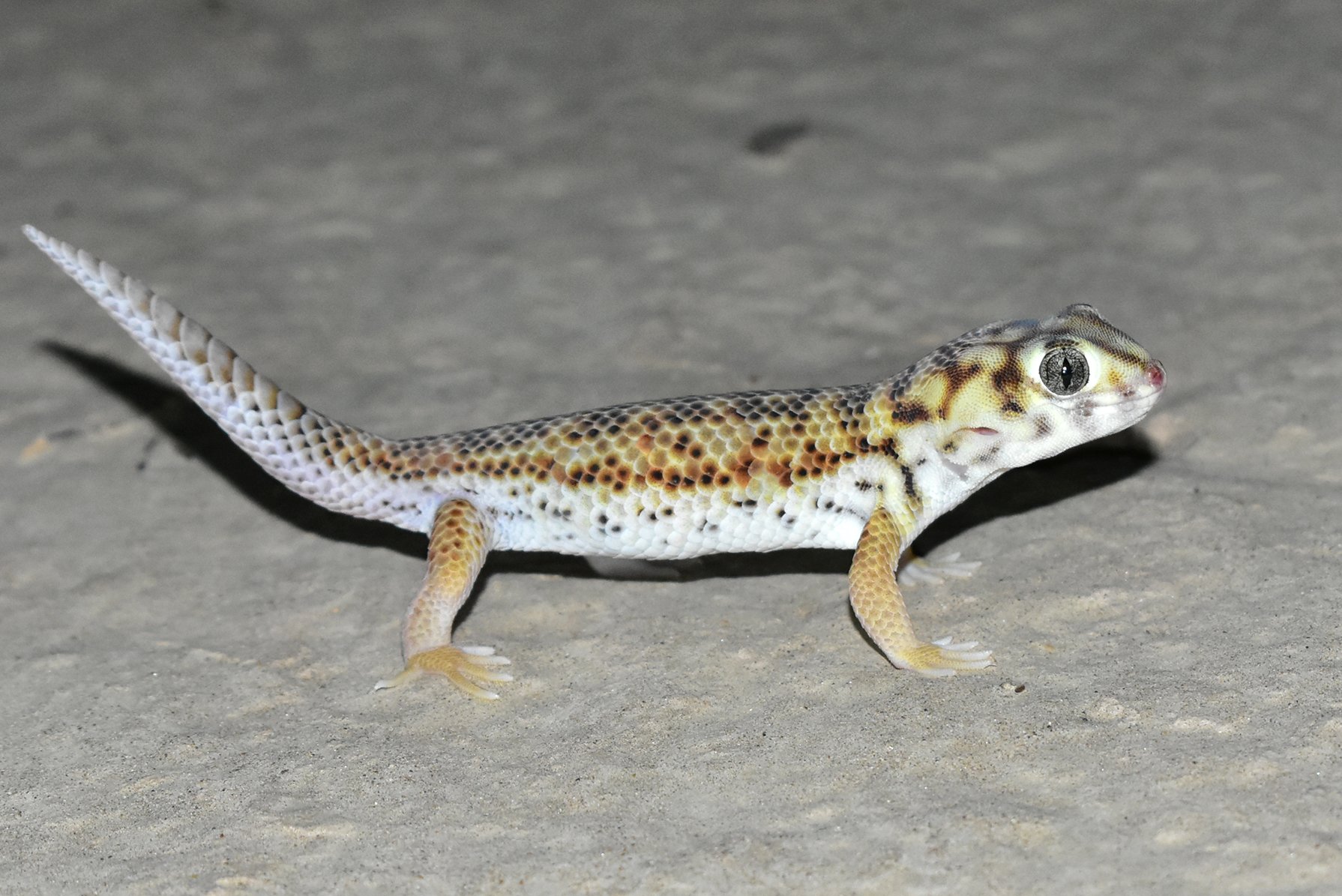
Geckos · Difficulty: Intermediate
Key facts and care guidance for Common wonder gecko (Teratoscincus scincus) (origin: Central and western Asia (Iran, Afghanistan, Pakistan, Turkmenistan; sandy deserts and semi-deserts)). Adult size around 18–20 cm total length (up to 24 cm). Life expectancy approx. 10 years (up to ~15). The values below are carefully researched guidance.
Short answers
Common wonder gecko: How big does the enclosure need to be?
80×50×50 cm for one animal; deep substrate they can dig in (at least 10–15 cm).
Common wonder gecko: What temperature does it need?
Daytime 26–30 °C, basking spot 32–35 °C (local warm spot), at night 18–22 °C.
Common wonder gecko: Does it need UVB lighting?
UVB: UVB not essential (crepuscular/nocturnal), a low dose does no harm.
Common wonder gecko: How long do they live?
Life expectancy: approx. 10 years (up to ~15).
Common wonder gecko: Is it suitable for beginners?
Rather not – it is considered an intermediate species (difficulty: Intermediate).
Climate
- Daytime temperature
- 26–30 °C
- Night temperature
- 18–22 °C
- Basking spot
- 32–35 °C (local warm spot)
- Humidity
- 40–60 % (mostly dry; one damp digging zone or hide)
- UVB
- UVB not essential (crepuscular/nocturnal), a low dose does no harm
Enclosure
- Minimum size
- 80×50×50 cm for one animal; deep substrate they can dig in (at least 10–15 cm)
- Substrate
- Desert sand they can dig in (a sand-loam mix), deep enough to burrow
Feeding
- Food
- Insects (crickets, roaches, locusts)
- Feeding interval
- adults 2–3×/week, juveniles every other day or daily
Key facts
- Adult size
- 18–20 cm total length (up to 24 cm)
- Life expectancy
- approx. 10 years (up to ~15)
- Origin
- Central and western Asia (Iran, Afghanistan, Pakistan, Turkmenistan; sandy deserts and semi-deserts)
- Protection status
- No CITES; only EU Annex D (concerns import only) – not specially protected, no registration duty
- Brumation
- Yes – a winter rest or brumation of 2–3 months at ~10–15 °C; they come from a continental climate, so it matters for health and breeding
- Cohabitation
- Keep them singly, or in a harem (1.1 or one male plus several females) in a large enough enclosure; NEVER keep males together (territorial). Groups only with plenty of space and visual barriers
Notes
Extremely delicate, easily torn skin (the large scales come away) – barely handleable. It needs deep digging substrate and dry conditions with a damp retreat. Plan for a winter rest.
Do you keep this species?
Add your animal to Reptoria – Reptoria reminds you about feeding and shedding. Add your animal for free →
Look for Common wonder gecko (Teratoscincus scincus) in the marketplace →
Related species
- Keyserling's wonder gecko (Teratoscincus keyserlingii) – Intermediate
- Przewalski's wonder gecko (Teratoscincus przewalskii) – Intermediate
- Roborowski's wonder gecko (Teratoscincus roborowskii) – Intermediate
- Agusan bent-toed gecko (Cyrtodactylus agusanensis) – Intermediate
- Common house gecko (Hemidactylus frenatus) – Beginner
- Chanhome's bent-toed gecko (Cyrtodactylus chanhomeae) – Intermediate
- Chinese gecko (Gekko chinensis) – Intermediate
- Termite hill gecko (Hemidactylus triedrus) – Intermediate
What you need to start
To keep Common wonder gecko (Teratoscincus scincus) you typically need: a suitable enclosure (80×50×50 cm for one animal; deep substrate they can dig in (at least 10–15 cm)), substrate (Desert sand they can dig in (a sand-loam mix), deep enough to burrow), a heat source with a thermostat, UVB lighting, thermometer and hygrometer, a water dish and hides. You will find equipment in the Reptoria marketplace.
The complete, interactive care database is in the Reptoria app.
Last updated: 5 November 2026 · Editor: Reptoria editorial team · Sources include: https://de.wikipedia.org/wiki/Wundergecko, https://en.wikipedia.org/wiki/Teratoscincus, https://geckotime.com/frog-eyed-gecko-care-sheet/, § 7 Abs. 2 Nr. 13 BNatSchG: besonders geschützt sind Arten aus Anhang A oder B der VO (EG) 338/97, FFH-Anhang IV, europäische Vögel, BArtSchV – Anhang D nicht – https://www.gesetze-im-internet.de/bnatschg_2009/__7.html, VO (EG) 338/97, konsolidierte Fassung (Anhang D, Gekkonidae: Teratoscincus microlepis, Teratoscincus scincus) – https://legislation.gov.uk/eur/1997/338/pdfs/eur_19970338_2017-02-04_en.pdf; laut Recherche 23.09.2026 unverändert in VO (EU) 2026/1383
All values are non-binding guidance and do not replace expert advice. Research thoroughly from several sources before acquiring and keeping an animal, and observe the applicable law (species and animal protection in particular).