Curly hair tarantula (Tliltocatl albopilosus)
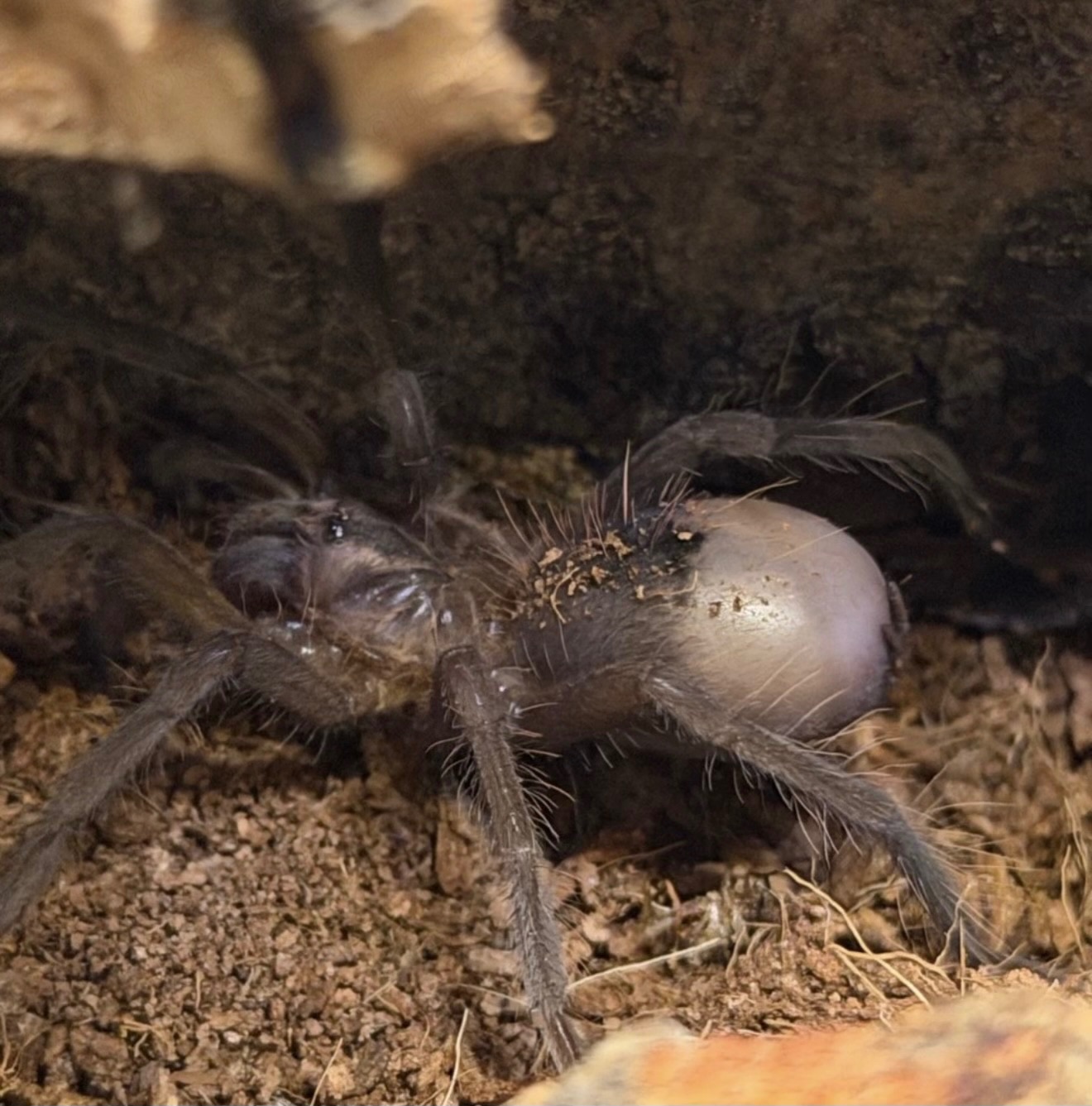
Invertebrates · Difficulty: Beginner
Key facts and care guidance for Curly hair tarantula (Tliltocatl albopilosus) (origin: Central America (Nicaragua, Costa Rica, Honduras)). Adult size around 13–16 cm leg span. Life expectancy females 15–20+ years, males 5–6 years. The values below are carefully researched guidance.
Short answers
Curly hair tarantula: How big does the enclosure need to be?
30×30×30 cm.
Curly hair tarantula: What temperature does it need?
Daytime 24–28 °C, at night 20–22 °C.
Curly hair tarantula: Does it need UVB lighting?
UVB: No UVB needed (nocturnal).
Curly hair tarantula: How long do they live?
Life expectancy: females 15–20+ years, males 5–6 years.
Curly hair tarantula: Is it suitable for beginners?
Yes – it is considered suitable for beginners (difficulty: Beginner).
Climate
- Daytime temperature
- 24–28 °C
- Night temperature
- 20–22 °C
- Basking spot
- —
- Humidity
- 65–75 %
- UVB
- No UVB needed (nocturnal)
Enclosure
- Minimum size
- 30×30×30 cm
- Substrate
- Slightly damp coco humus, 5–8 cm (an opportunistic digger); a cork or bark hide
Feeding
- Food
- Insects (house crickets, roaches, crickets)
- Feeding interval
- adults 1×/week, juveniles 2–3×/week
Key facts
- Adult size
- 13–16 cm leg span
- Life expectancy
- females 15–20+ years, males 5–6 years
- Origin
- Central America (Nicaragua, Costa Rica, Honduras)
- Protection status
- CITES Appendix II / EU Annex B (the protected status was retained when it was split off from Brachypelma) – proof of origin required (the proof requirement under the German Federal Species Protection Ordinance)
- Brumation
- None
- Cohabitation
- Keep them singly. Solitary and cannibalistic – keep them on their own. The reason is not fighting but feeding: these animals take anything that fits in the mouth, and a second animal in the enclosure counts.
Notes
A classic beginner's species: calm, robust and long-lived; named for its long "curly" hairs. A New World species with urticating hairs. Formerly Brachypelma albopilosum; almost all animals are captive-bred. Substrate slightly damp, not wet.
Do you keep this species?
Add your animal to Reptoria – Reptoria reminds you about feeding and shedding. Add your animal for free →
Look for Curly hair tarantula (Tliltocatl albopilosus) in the marketplace →
Related species
- Mexican red rump tarantula (Tliltocatl vagans) – Beginner
- Schroeder's red rump tarantula (Tliltocatl schroederi) – Beginner
- Verdez' red rump tarantula (Tliltocatl verdezi) – Beginner
- Amazon birdeater (Iridopelma hirsutum) – Intermediate
- Arizona blonde tarantula (Aphonopelma chalcodes) – Beginner
- Pinktoe tarantula (Avicularia avicularia) – Beginner
- Cobalt blue tarantula (Cyriopagopus lividus) – Expert
- Gooty sapphire ornamental tarantula (Poecilotheria metallica) – Expert
What you need to start
To keep Curly hair tarantula (Tliltocatl albopilosus) you typically need: a suitable enclosure (30×30×30 cm), substrate (Slightly damp coco humus, 5–8 cm (an opportunistic digger); a cork or bark hide), a heat source with a thermostat, UVB lighting, thermometer and hygrometer, a water dish and hides. You will find equipment in the Reptoria marketplace.
The complete, interactive care database is in the Reptoria app.
Last updated: 25 September 2026 · Editor: Reptoria editorial team · Sources include: https://bantam.earth/curly-hair-tarantula-tliltocatl-albopilosus/, https://dubiaroaches.com/blogs/invert-care/curly-hair-tarantula-care-sheet, https://en.wikipedia.org/wiki/Tliltocatl_albopilosus, https://www.thetarantulacollective.com/caresheets/tliltocatl-albopilosus
All values are non-binding guidance and do not replace expert advice. Research thoroughly from several sources before acquiring and keeping an animal, and observe the applicable law (species and animal protection in particular).