Dark-lipped arboreal alligator lizard (Abronia fuscolabialis)
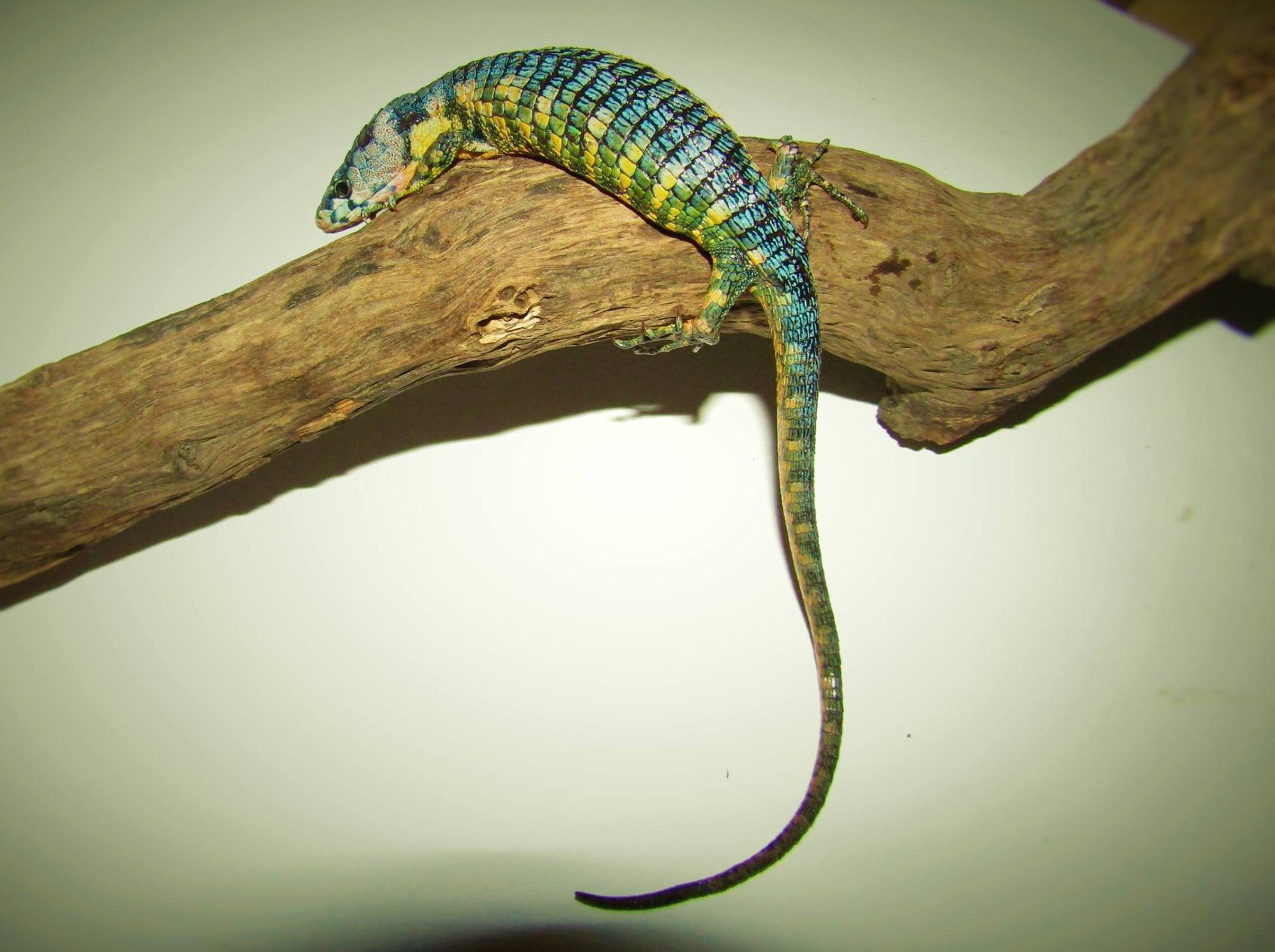
Lizards · Difficulty: Expert
Key facts and care guidance for Dark-lipped arboreal alligator lizard (Abronia fuscolabialis) (origin: Mexico, endemic to Oaxaca (the Sierra de Juárez / Cerro San Felipe); cloud and pine-oak forest ~1,500–3,000 m). Adult size around approx. 28–32 cm total length (SVL 118 mm or more, a rather large species). Life expectancy approx. 10–15 years (a genus figure, based on A. graminea). The values below are carefully researched guidance.
Short answers
Dark-lipped arboreal alligator lizard: How big does the enclosure need to be?
At least 60×50×80 cm (L×W×H, height matters more than floor area), well ventilated / mesh.
Dark-lipped arboreal alligator lizard: What temperature does it need?
Daytime 20–26 °C, basking spot small basking spot ~26–28 °C, NEVER above 30 °C (overheating quickly turns fatal), at night 14–18 °C.
Dark-lipped arboreal alligator lizard: Does it need UVB lighting?
UVB: UVB recommended (low to moderate, Ferguson zone 1–2, UV index ~1–2); cloud and pine-oak forest mean filtered light.
Dark-lipped arboreal alligator lizard: How long do they live?
Life expectancy: approx. 10–15 years (a genus figure, based on A. graminea).
Dark-lipped arboreal alligator lizard: Is it suitable for beginners?
No – better suited to experienced keepers (difficulty: Expert).
Climate
- Daytime temperature
- 20–26 °C
- Night temperature
- 14–18 °C
- Basking spot
- small basking spot ~26–28 °C, NEVER above 30 °C (overheating quickly turns fatal)
- Humidity
- 70–90 %
- UVB
- UVB recommended (low to moderate, Ferguson zone 1–2, UV index ~1–2); cloud and pine-oak forest mean filtered light
Enclosure
- Minimum size
- at least 60×50×80 cm (L×W×H, height matters more than floor area), well ventilated / mesh
- Substrate
- Damp sphagnum or peat moss plus coco humus; densely planted (bromeliads, lichens, moss), climbing branches and bark
Feeding
- Food
- Insectivorous: crickets, house crickets, locusts, roaches, caterpillars, snails, spiders; calcium and vitamins
- Feeding interval
- adults 2–3×/week, juveniles (almost) daily
Key facts
- Adult size
- approx. 28–32 cm total length (SVL 118 mm or more, a rather large species)
- Life expectancy
- approx. 10–15 years (a genus figure, based on A. graminea)
- Origin
- Mexico, endemic to Oaxaca (the Sierra de Juárez / Cerro San Felipe); cloud and pine-oak forest ~1,500–3,000 m
- Protection status
- CITES Appendix II / EU Annex B (specially protected); proof of origin plus registration with the nature conservation authority; a zero export quota for wild-caught animals
- Brumation
- Yes: a cool spell of ~2–3 months in winter; ~12–16 °C by day, ~8–12 °C at night (a montane climate)
- Cohabitation
- Keep singly, or as a 1.1 pair or one male with 1-2 females; never house males together - territorial with fights over territory. Not confirmed species-specifically for this species, only for the genus.
Notes
Endangered (IUCN), strictly arboreal (the canopy, bromeliads and lichens), barely in the hobby. The husbandry figures are derived from the genus. Live-bearing.
Do you keep this species?
Add your animal to Reptoria – Reptoria reminds you about feeding and shedding. Add your animal for free →
Look for Dark-lipped arboreal alligator lizard (Abronia fuscolabialis) in the marketplace →
Related species
- Anzueto's arboreal alligator lizard (Abronia anzuetoi) – Expert
- Aurita arboreal alligator lizard (Abronia aurita) – Intermediate to expert
- Bogert's arboreal alligator lizard (Abronia bogerti) – Expert
- Campbell's alligator lizard (Abronia campbelli) – Expert
- Campbell's arboreal alligator lizard (Abronia lythrochila campbelli) – Intermediate to expert
- Chiszar's arboreal alligator lizard (Abronia chiszari) – Expert
- Cuetzpali arboreal alligator lizard (Abronia cuetzpali) – Expert
- Deppe's arboreal alligator lizard (Abronia deppii) – Expert
What you need to start
To keep Dark-lipped arboreal alligator lizard (Abronia fuscolabialis) you typically need: a suitable enclosure (at least 60×50×80 cm (L×W×H, height matters more than floor area), well ventilated / mesh), substrate (Damp sphagnum or peat moss plus coco humus; densely planted (bromeliads, lichens, moss), climbing branches and bark), a heat source with a thermostat, UVB lighting, thermometer and hygrometer, a water dish and hides. You will find equipment in the Reptoria marketplace.
The complete, interactive care database is in the Reptoria app.
Last updated: 9 October 2026 · Editor: Reptoria editorial team · Sources include: https://en.wikipedia.org/wiki/Abronia_(lizard), https://en.wikipedia.org/wiki/Abronia_fuscolabialis
All values are non-binding guidance and do not replace expert advice. Research thoroughly from several sources before acquiring and keeping an animal, and observe the applicable law (species and animal protection in particular).