Dubious dtella (Gehyra dubia)
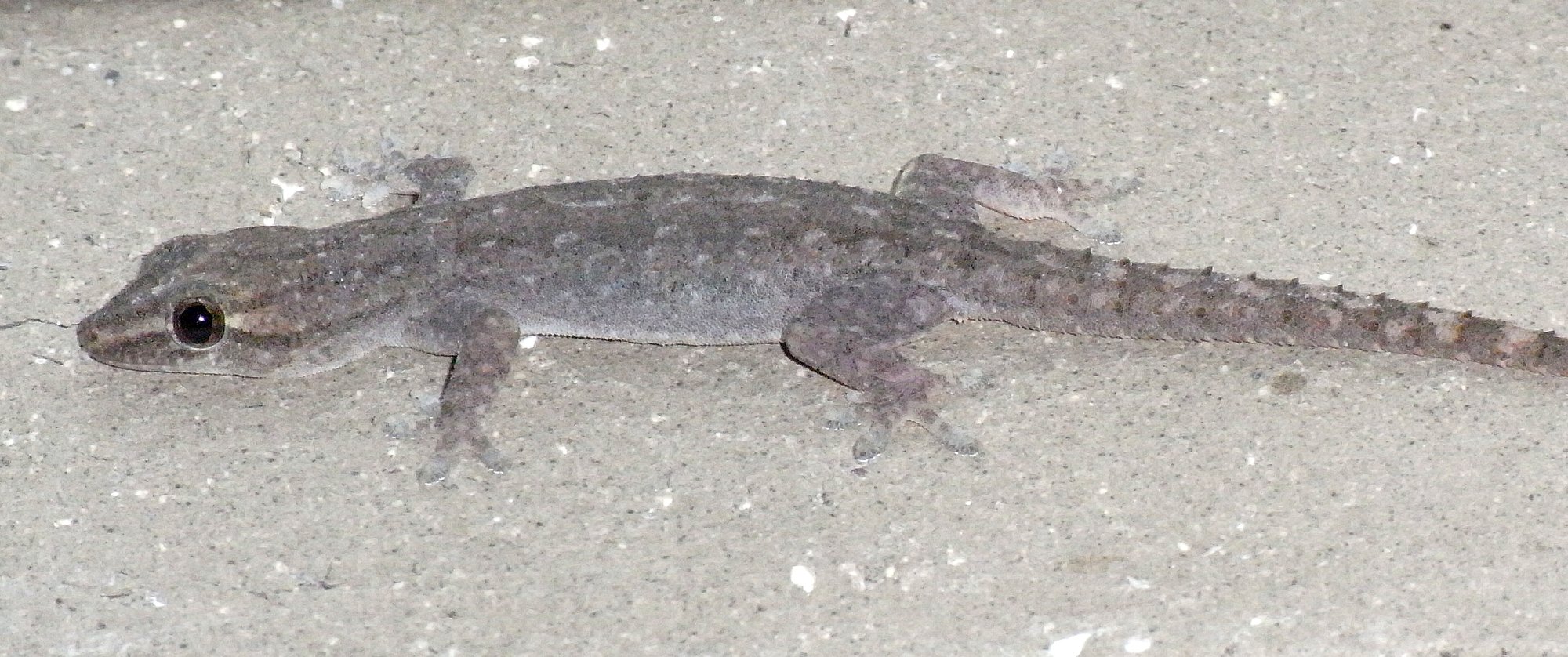
Geckos · Difficulty: Intermediate
Key facts and care guidance for Dubious dtella (Gehyra dubia) (origin: Northeast Australia (Queensland, northern New South Wales, islands of the Torres Strait and the Great Barrier Reef) as well as southern New Guinea; trees, rocks and buildings). Adult size around approx. 11–15 cm total length (snout–vent length 5–7 cm, tail about as long as the body). Life expectancy 10+ years. The values below are carefully researched guidance.
Short answers
Dubious dtella: How big does the enclosure need to be?
From 30×30×50 cm for one animal; for a pair from 35×35×50 cm (1997 expert report, at 6 cm SVL).
Dubious dtella: What temperature does it need?
Daytime 26–30 °C, basking spot 32–33 °C (local warm spot), at night 20–24 °C.
Dubious dtella: Does it need UVB lighting?
UVB: UVB not essential (nocturnal), a low dose does no harm.
Dubious dtella: How long do they live?
Life expectancy: 10+ years.
Dubious dtella: Is it suitable for beginners?
Rather not – it is considered an intermediate species (difficulty: Intermediate).
Climate
- Daytime temperature
- 26–30 °C
- Night temperature
- 20–24 °C
- Basking spot
- 32–33 °C (local warm spot)
- Humidity
- 50–70 % (mist in the evening, drying out by day)
- UVB
- UVB not essential (nocturnal), a low dose does no harm
Enclosure
- Minimum size
- from 30×30×50 cm for one animal; for a pair from 35×35×50 cm (1997 expert report, at 6 cm SVL)
- Substrate
- A sand-loam mix or coco humus, rather dry; cork and bark hides
Feeding
- Food
- Insects (crickets, roaches, beetles); occasionally nectar or fruit purée
- Feeding interval
- adults 2–3×/week, juveniles daily
Key facts
- Adult size
- approx. 11–15 cm total length (snout–vent length 5–7 cm, tail about as long as the body)
- Life expectancy
- 10+ years
- Origin
- Northeast Australia (Queensland, northern New South Wales, islands of the Torres Strait and the Great Barrier Reef) as well as southern New Guinea; trees, rocks and buildings
- Protection status
- No CITES; Australia prohibits the export of wild-caught animals → only captive-bred animals in the trade; no special protection in Germany
- Brumation
- No real winter rest; a slight winter drop in temperature or photoperiod to stimulate breeding is possible
- Cohabitation
- Keep them singly or as a pair (1.1); NEVER keep males together (territorial). If kept as a pair, provide enough climbing surfaces and visual barriers
Notes
Very fast and with extremely thin, easily torn skin – barely handleable. Species-specific keeper data are sparse; the care is derived conservatively from genus and field data (Gehyra spp.).
Do you keep this species?
Add your animal to Reptoria – Reptoria reminds you about feeding and shedding. Add your animal for free →
Related species
- Halmahera giant gecko (Gehyra marginata) – Beginner
- Stump-toed gecko (Gehyra mutilata) – Intermediate
- Voracious gecko (Gehyra vorax) – Intermediate
- Thick-tailed gecko (Underwoodisaurus milii) – Beginner to intermediate
- Broad-tailed gecko (Phyllurus platurus) – Intermediate
- Fat-tailed diplodactylus (Diplodactylus conspicillatus) – Intermediate
- Delean's knob-tailed gecko (Nephrurus deleani) – Intermediate
- Jewelled gecko (Strophurus elderi) – Intermediate
What you need to start
To keep Dubious dtella (Gehyra dubia) you typically need: a suitable enclosure (from 30×30×50 cm for one animal; for a pair from 35×35×50 cm (1997 expert report, at 6 cm SVL)), substrate (A sand-loam mix or coco humus, rather dry; cork and bark hides), a heat source with a thermostat, UVB lighting, thermometer and hygrometer, a water dish and hides. You will find equipment in the Reptoria marketplace.
The complete, interactive care database is in the Reptoria app.
Last updated: 9 October 2026 · Editor: Reptoria editorial team · Sources include: reptile-database.reptarium.cz, Wikipedia EN, arod.com.au, bmleh.de, herpconbio.org
All values are non-binding guidance and do not replace expert advice. Research thoroughly from several sources before acquiring and keeping an animal, and observe the applicable law (species and animal protection in particular).