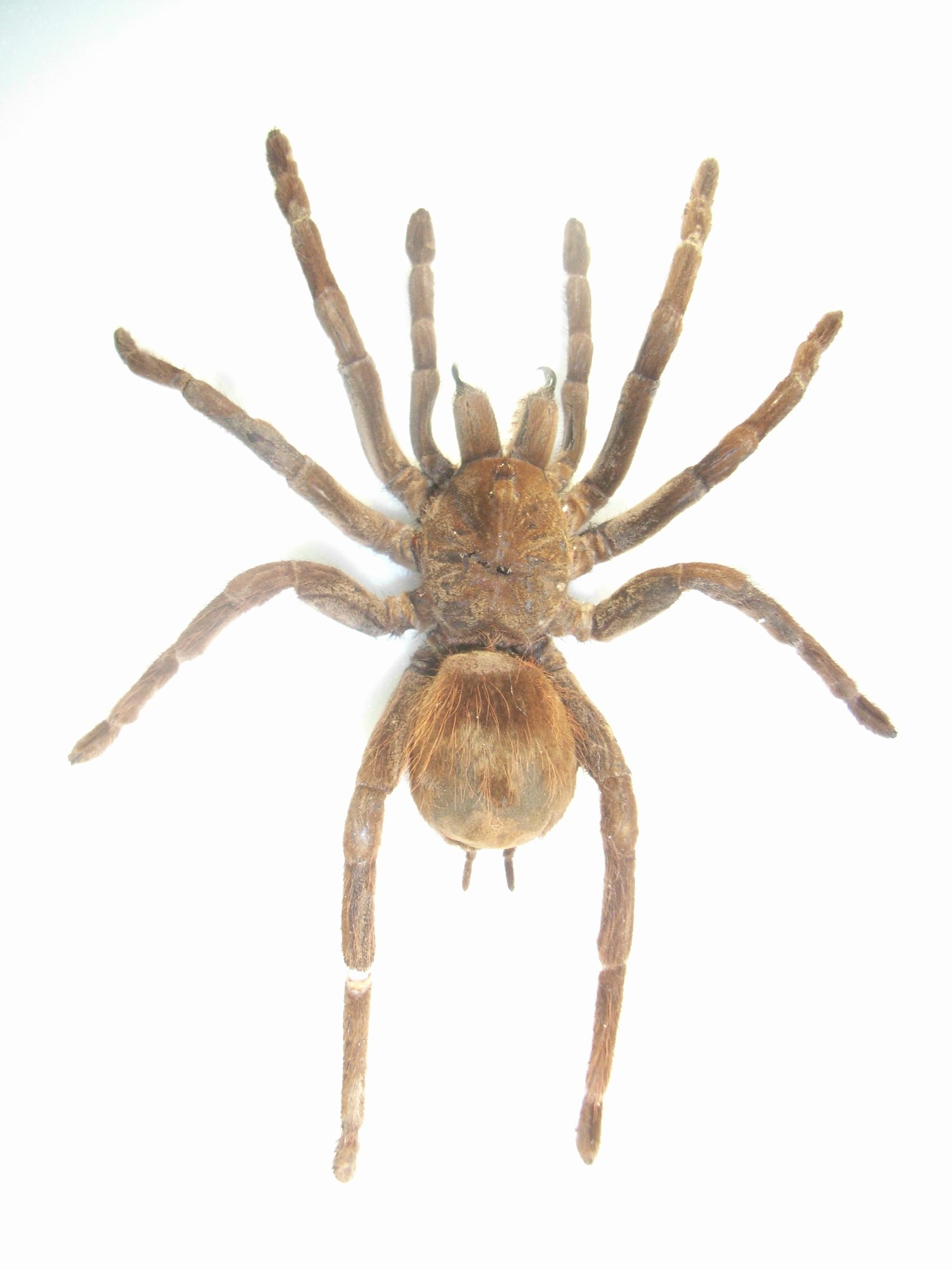
Ecuadorian velvet tarantula (Megaphobema velvetosoma)
Invertebrates · Difficulty: Intermediate
Key facts and care guidance for Ecuadorian velvet tarantula (Megaphobema velvetosoma) (origin: Ecuador (the Amazon lowlands)). Adult size around 17–20 cm leg span (figures in the literature vary considerably, occasionally up to 25 cm). Life expectancy females 15–20 years, males 3–4 years. The values below are carefully researched guidance.
Short answers
Ecuadorian velvet tarantula: How big does the enclosure need to be?
40×30×30 cm (floor area over height, deep substrate).
Ecuadorian velvet tarantula: What temperature does it need?
Daytime 24–28 °C, at night 20–22 °C.
Ecuadorian velvet tarantula: Does it need UVB lighting?
UVB: No UVB needed (nocturnal).
Ecuadorian velvet tarantula: How long do they live?
Life expectancy: females 15–20 years, males 3–4 years.
Ecuadorian velvet tarantula: Is it suitable for beginners?
Rather not – it is considered an intermediate species (difficulty: Intermediate).
Climate
- Daytime temperature
- 24–28 °C
- Night temperature
- 20–22 °C
- Basking spot
- —
- Humidity
- 75–85 %
- UVB
- No UVB needed (nocturnal)
Enclosure
- Minimum size
- 40×30×30 cm (floor area over height, deep substrate)
- Substrate
- Damp coco humus, 10–15 cm deep for digging; large cork bark, a large water dish
Feeding
- Food
- Insects (house crickets, roaches, crickets, locusts)
- Feeding interval
- adults approx. 1×/week or every 10–14 days, juveniles 2–3×/week
Key facts
- Adult size
- 17–20 cm leg span (figures in the literature vary considerably, occasionally up to 25 cm)
- Life expectancy
- females 15–20 years, males 3–4 years
- Origin
- Ecuador (the Amazon lowlands)
- Protection status
- Not listed under CITES; no special registration duties
- Brumation
- None
- Cohabitation
- Single housing. Solitary and cannibalistic; no pair/group housing. The reason is not conflict but predation: these animals take anything that fits in their mouths, and a second animal in the enclosure is included.
Notes
Velvety dark brown, powerfully built. Care as for the Theraphosa species: permanently humid, cool enough, plenty of substrate. Defensive and with very unpleasant urticating hairs; no handling.
Do you keep this species?
Add your animal to Reptoria – Reptoria reminds you about feeding and shedding. Add your animal for free →
Look for Ecuadorian velvet tarantula (Megaphobema velvetosoma) in the marketplace →
Related species
- Colombian giant redleg tarantula (Megaphobema robustum) – Intermediate
- Amazon birdeater (Iridopelma hirsutum) – Intermediate
- Arizona blonde tarantula (Aphonopelma chalcodes) – Beginner
- Pinktoe tarantula (Avicularia avicularia) – Beginner
- Cobalt blue tarantula (Cyriopagopus lividus) – Expert
- Gooty sapphire ornamental tarantula (Poecilotheria metallica) – Expert
- Peruvian blue tarantula (Thrixopelma cyaneolum) – Beginner
- Singapore blue tarantula (Omothymus violaceopes) – Expert
What you need to start
To keep Ecuadorian velvet tarantula (Megaphobema velvetosoma) you typically need: a suitable enclosure (40×30×30 cm (floor area over height, deep substrate)), substrate (Damp coco humus, 10–15 cm deep for digging; large cork bark, a large water dish), a heat source with a thermostat, UVB lighting, thermometer and hygrometer, a water dish and hides. You will find equipment in the Reptoria marketplace.
The complete, interactive care database is in the Reptoria app.
Last updated: 9 October 2026 · Editor: Reptoria editorial team · Sources include: https://wsc.nmbe.ch/species/37682/Megaphobema_velvetosoma, https://www.jungledragon.com/specie/30015/ecuadorian_brown_velvet_tarantula.html, https://www.tarantupedia.com/theraphosinae/megaphobema/megaphobema-velvetosoma
All values are non-binding guidance and do not replace expert advice. Research thoroughly from several sources before acquiring and keeping an animal, and observe the applicable law (species and animal protection in particular).