Egyptian spiny-tailed lizard (Uromastyx aegyptia)
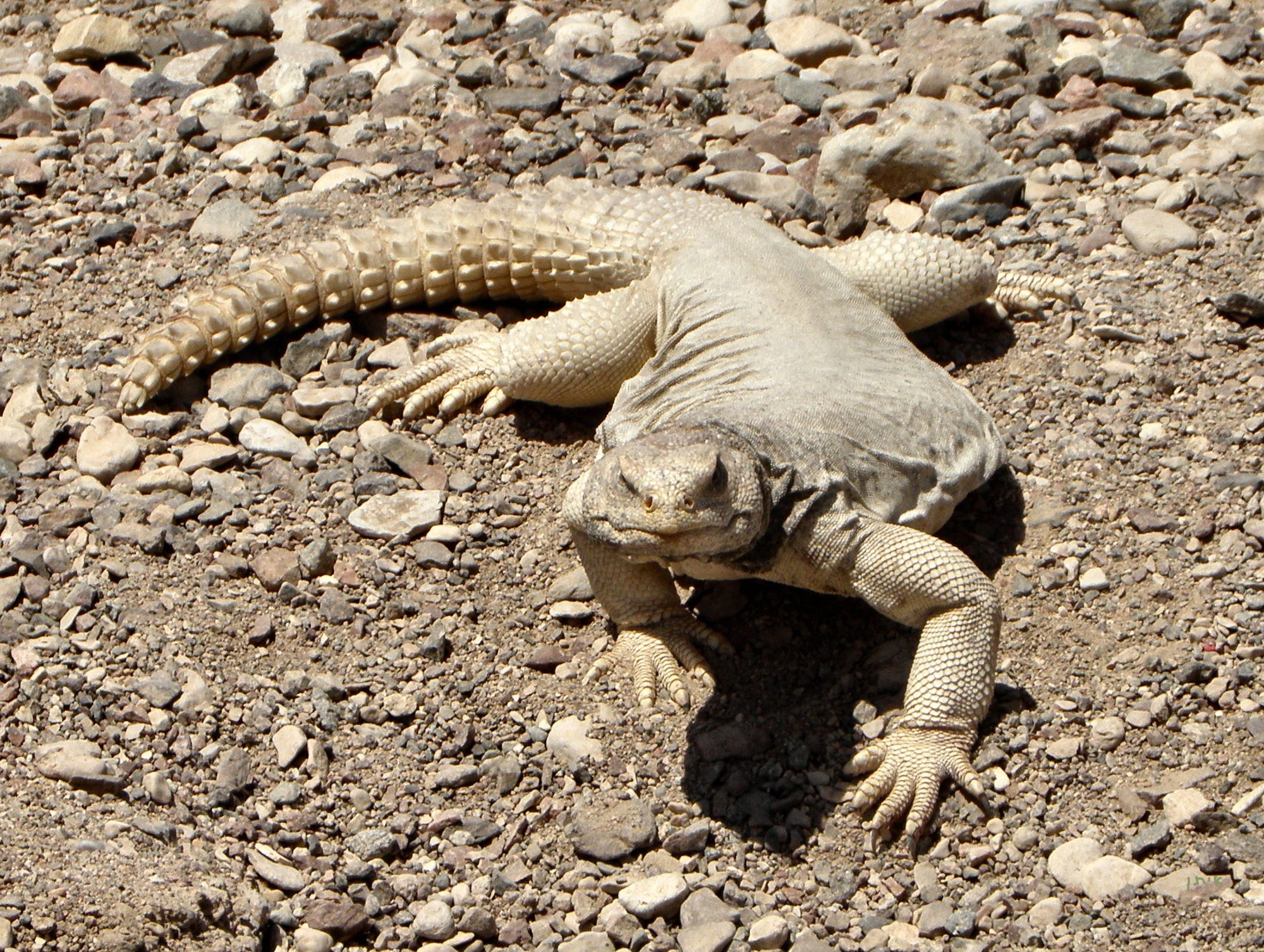
Agamas · Difficulty: Intermediate to expert
Key facts and care guidance for Egyptian spiny-tailed lizard (Uromastyx aegyptia) (origin: North Africa to the Arabian Peninsula (desert)). Adult size around 65–75 cm (up to ~90 cm), up to ~1.5 kg. Life expectancy 25–40 years, considerably longer with very good care (over 50 years has been reported). The values below are carefully researched guidance.
Short answers
Egyptian spiny-tailed lizard: How big does the enclosure need to be?
200 × 160 × 120 cm (expert-report formula: 5 × 4 × 3 times snout–vent length, for up to 40 cm SVL); for this largest spiny-tailed lizard species, the specialist literature gives 240 × 120 × 120 cm as the lower limit for a single animal.
Egyptian spiny-tailed lizard: What temperature does it need?
Daytime 35–40 °C (cool zone ~29 °C), basking spot ~50 °C, at night 20–25 °C (it may cool noticeably at night; room temperature is enough).
Egyptian spiny-tailed lizard: Does it need UVB lighting?
UVB: Essential (desert-grade UVB, 10–12 %).
Egyptian spiny-tailed lizard: How long do they live?
Life expectancy: 25–40 years, considerably longer with very good care (over 50 years has been reported).
Egyptian spiny-tailed lizard: Is it suitable for beginners?
No – better suited to experienced keepers (difficulty: Intermediate to expert).
Climate
- Daytime temperature
- 35–40 °C (cool zone ~29 °C)
- Night temperature
- 20–25 °C (it may cool noticeably at night; room temperature is enough)
- Basking spot
- ~50 °C
- Humidity
- 20–35 % (keep dry; permanently above 40 % promotes respiratory infections). A humid chamber or a dampened hide for shedding is still worthwhile, with the top substrate layer staying dry.
- UVB
- Essential (desert-grade UVB, 10–12 %)
Enclosure
- Minimum size
- 200 × 160 × 120 cm (expert-report formula: 5 × 4 × 3 times snout–vent length, for up to 40 cm SVL); for this largest spiny-tailed lizard species, the specialist literature gives 240 × 120 × 120 cm as the lower limit for a single animal
- Substrate
- Diggable sand-clay mix, at least 20 cm deep, so the animal can dig its own burrow; the top layer dry, with one corner dampened occasionally. Plus heavy, stable rock structures and tight-fitting hides.
Feeding
- Food
- Purely plant-based: about 60% dark leafy greens and wild herbs (dandelion, endive, chicory, kohlrabi leaves), 30% other vegetables and edible flowers, 10% seeds such as lentils and millet. No insects, no animal protein — in this species that is the direct route to gout. Calcium once or twice, multivitamin once a week via the food.
- Feeding interval
- Green food daily
Key facts
- Adult size
- 65–75 cm (up to ~90 cm), up to ~1.5 kg
- Life expectancy
- 25–40 years, considerably longer with very good care (over 50 years has been reported)
- Origin
- North Africa to the Arabian Peninsula (desert)
- Protection status
- Annex B (CITES II) – registration required
- Brumation
- A winter rest of ~2–3 months
- Cohabitation
- Single housing. This species is intolerant of others long-term: males fight over territory and basking spot, and even pairs and groups of females end up, over the years, with biting and one animal being constantly displaced. Only put males and females together during the mating season and under supervision.
Notes
The largest spiny-tailed lizard, for experienced keepers with a great deal of space only. Extremely hot and dry, with deep diggable ground and a stable basking spot as a must.
Do you keep this species?
Add your animal to Reptoria – Reptoria reminds you about feeding and shedding. Add your animal for free →
Look for Egyptian spiny-tailed lizard (Uromastyx aegyptia) in the marketplace →
Related species
- Bent's spiny-tailed lizard (Uromastyx benti) – Intermediate
- Indian spiny-tailed lizard (Uromastyx hardwickii) – Intermediate
- Iraqi spiny-tailed lizard (Uromastyx loricata) – Intermediate
- Yemeni spiny-tailed lizard (Uromastyx shobraki) – Intermediate
- Macfadyen's spiny-tailed lizard (Uromastyx macfadyeni) – Intermediate
- Mali spiny-tailed lizard (Uromastyx dispar maliensis) – Intermediate
- Moroccan spiny-tailed lizard (Uromastyx acanthinura) – Intermediate
- Geyr's spiny-tailed lizard (Uromastyx geyri) – Intermediate
What you need to start
To keep Egyptian spiny-tailed lizard (Uromastyx aegyptia) you typically need: a suitable enclosure (200 × 160 × 120 cm (expert-report formula: 5 × 4 × 3 times snout–vent length, for up to 40 cm SVL); for this largest spiny-tailed lizard species, the specialist literature gives 240 × 120 × 120 cm as the lower limit for a single animal), substrate (Diggable sand-clay mix, at least 20 cm deep, so the animal can dig its own burrow; the top layer dry, with one corner dampened occasionally. Plus heavy, stable rock structures and tight-fitting hides.), a heat source with a thermostat, UVB lighting, thermometer and hygrometer, a water dish and hides. You will find equipment in the Reptoria marketplace.
The complete, interactive care database is in the Reptoria app.
Last updated: 2 November 2026 · Editor: Reptoria editorial team · Sources include: reptifiles.com, dubiaroaches.com, shadowsreptiles.com, Wikipedia EN, aridsonly.com
All values are non-binding guidance and do not replace expert advice. Research thoroughly from several sources before acquiring and keeping an animal, and observe the applicable law (species and animal protection in particular).