Geyr's spiny-tailed lizard (Uromastyx geyri)
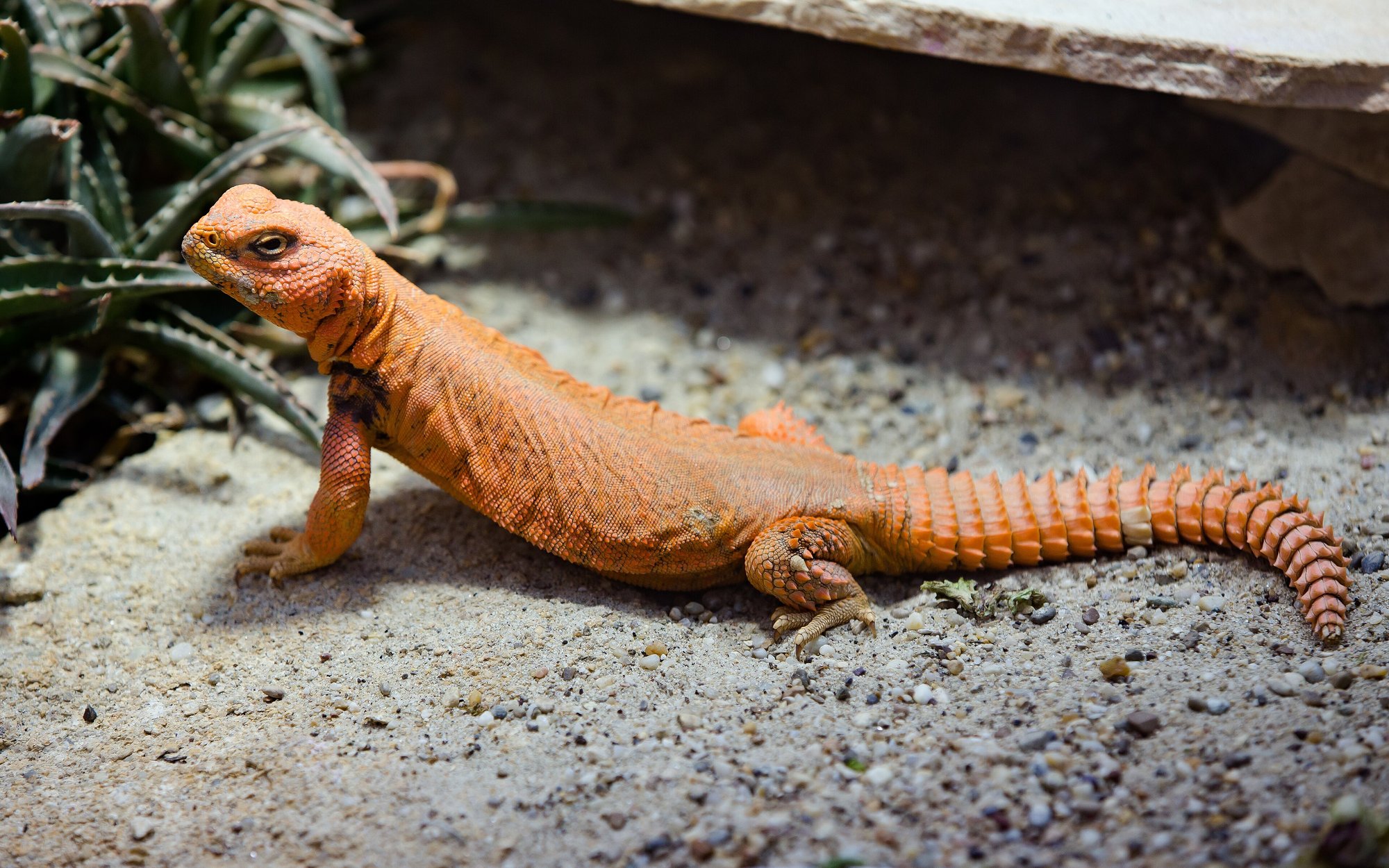
Agamas · Difficulty: Intermediate
Key facts and care guidance for Geyr's spiny-tailed lizard (Uromastyx geyri) (origin: Niger, Mali, Algeria (the Sahara)). Adult size around 35–38 cm total length. Life expectancy 15–25 years. The values below are carefully researched guidance.
Short answers
Geyr's spiny-tailed lizard: How big does the enclosure need to be?
From 130×90×70 cm for one animal or a pair (1997 expert report: 5 × 4 × 3 times snout–vent length, valid for up to two animals).
Geyr's spiny-tailed lizard: What temperature does it need?
Daytime 28–35 °C, basking spot 45–50 °C, at night 18–22 °C.
Geyr's spiny-tailed lizard: Does it need UVB lighting?
UVB: Essential (desert-grade UVB, 10–12 %).
Geyr's spiny-tailed lizard: How long do they live?
Life expectancy: 15–25 years.
Geyr's spiny-tailed lizard: Is it suitable for beginners?
Rather not – it is considered an intermediate species (difficulty: Intermediate).
Climate
- Daytime temperature
- 28–35 °C
- Night temperature
- 18–22 °C
- Basking spot
- 45–50 °C
- Humidity
- 40–60 %
- UVB
- Essential (desert-grade UVB, 10–12 %)
Enclosure
- Minimum size
- from 130×90×70 cm for one animal or a pair (1997 expert report: 5 × 4 × 3 times snout–vent length, valid for up to two animals)
- Substrate
- A sand-loam mix they can dig in, 20–30 cm
Feeding
- Food
- Mostly plant-based (wild herbs, seeds); juveniles take some insects
- Feeding interval
- Green food daily; adults take almost no animal food
Key facts
- Adult size
- 35–38 cm total length
- Life expectancy
- 15–25 years
- Origin
- Niger, Mali, Algeria (the Sahara)
- Protection status
- Annex B (CITES II) – registration required
- Brumation
- A winter rest of ~2–3 months
- Cohabitation
- Keeping them singly is the least stressful option; uromastyx live as loners in the wild. This is considered the most tolerant uromastyx species: a pair, or one male with two to three females, often works in a large enclosure, but not always; females may suppress each other, especially during the breeding season and gravidity. Males do not tolerate each other: they fight over territory and the basking spot until one is injured or sits permanently in a corner. When kept together, every animal needs its own basking and hiding spots; if sizes differ, feed separately and have a way to separate them ready.
Notes
One of the most colourful and well-bred Uromastyx. Adults are mainly plant-eating – too much animal food leads to obesity.
Do you keep this species?
Add your animal to Reptoria – Reptoria reminds you about feeding and shedding. Add your animal for free →
Look for Geyr's spiny-tailed lizard (Uromastyx geyri) in the marketplace →
Related species
- Egyptian spiny-tailed lizard (Uromastyx aegyptia) – Intermediate to expert
- Bent's spiny-tailed lizard (Uromastyx benti) – Intermediate
- Indian spiny-tailed lizard (Uromastyx hardwickii) – Intermediate
- Iraqi spiny-tailed lizard (Uromastyx loricata) – Intermediate
- Yemeni spiny-tailed lizard (Uromastyx shobraki) – Intermediate
- Macfadyen's spiny-tailed lizard (Uromastyx macfadyeni) – Intermediate
- Mali spiny-tailed lizard (Uromastyx dispar maliensis) – Intermediate
- Moroccan spiny-tailed lizard (Uromastyx acanthinura) – Intermediate
What you need to start
To keep Geyr's spiny-tailed lizard (Uromastyx geyri) you typically need: a suitable enclosure (from 130×90×70 cm for one animal or a pair (1997 expert report: 5 × 4 × 3 times snout–vent length, valid for up to two animals)), substrate (A sand-loam mix they can dig in, 20–30 cm), a heat source with a thermostat, UVB lighting, thermometer and hygrometer, a water dish and hides. You will find equipment in the Reptoria marketplace.
The complete, interactive care database is in the Reptoria app.
Last updated: 9 October 2026 · Editor: Reptoria editorial team · Sources include: einrichtungsbeispiele.de, Gutachten 1997, tropic-shop.de, zoomalia.de, mountain-monitors.ch
All values are non-binding guidance and do not replace expert advice. Research thoroughly from several sources before acquiring and keeping an animal, and observe the applicable law (species and animal protection in particular).