Electric blue tarantula (Chilobrachys natanicharum)
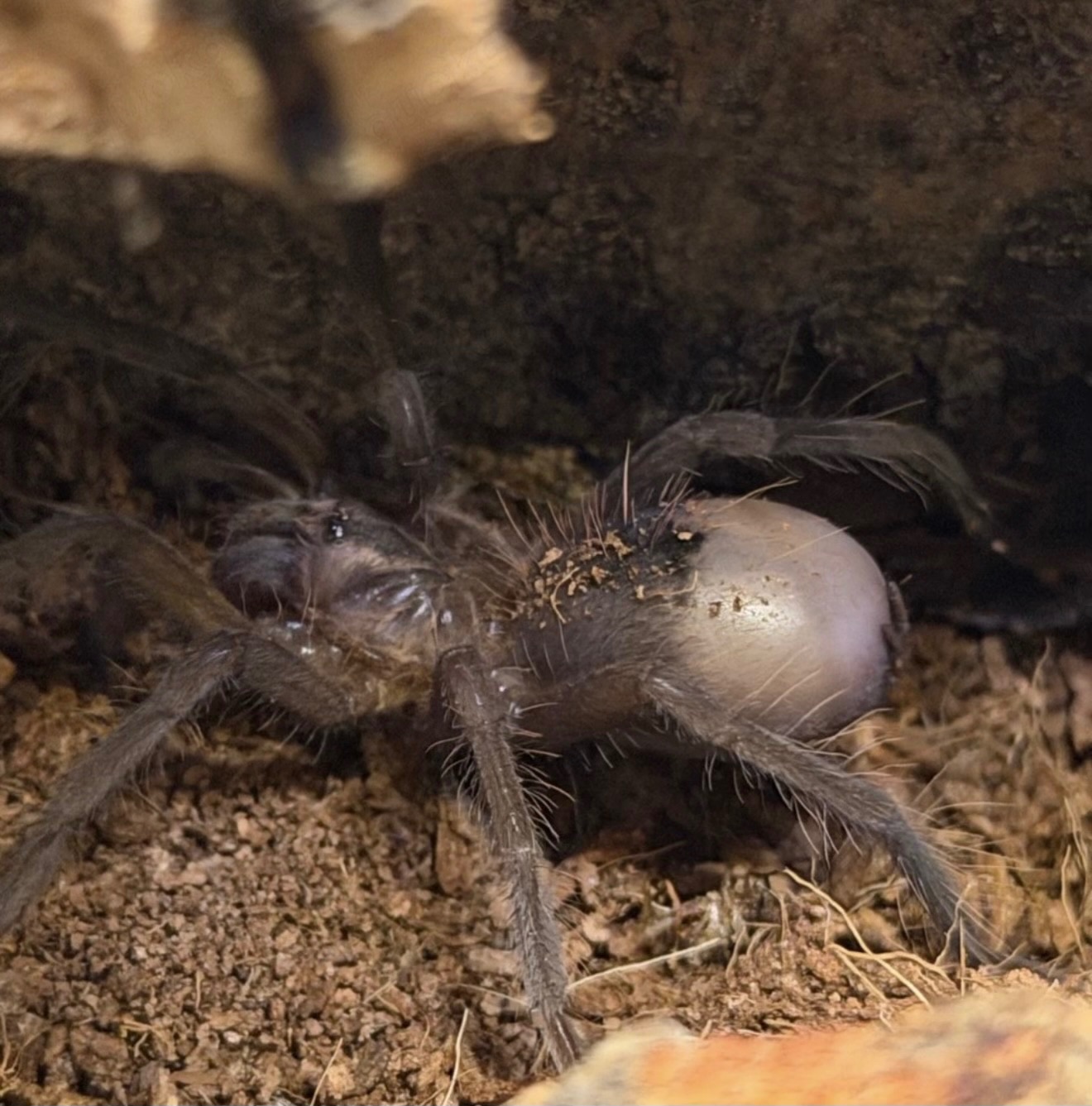
Invertebrates · Difficulty: Expert
Key facts and care guidance for Electric blue tarantula (Chilobrachys natanicharum) (origin: Thailand). Adult size around 13–16 cm leg span (body ~5–6 cm). Life expectancy females 12–15 years, males 3–4 years. The values below are carefully researched guidance.
Short answers
Electric blue tarantula: How big does the enclosure need to be?
30×30×30 cm (floor area over height, very deep substrate they can dig in).
Electric blue tarantula: What temperature does it need?
Daytime 24–29 °C, at night 20–22 °C.
Electric blue tarantula: Does it need UVB lighting?
UVB: No UVB needed (nocturnal).
Electric blue tarantula: How long do they live?
Life expectancy: females 12–15 years, males 3–4 years.
Electric blue tarantula: Is it suitable for beginners?
No – better suited to experienced keepers (difficulty: Expert).
Climate
- Daytime temperature
- 24–29 °C
- Night temperature
- 20–22 °C
- Basking spot
- —
- Humidity
- 70–80 %
- UVB
- No UVB needed (nocturnal)
Enclosure
- Minimum size
- 30×30×30 cm (floor area over height, very deep substrate they can dig in)
- Substrate
- Coco humus or peat, 10–15 cm deep for digging; the lower layer slightly damp, letting the top dry out — never wet. A cork tube, plenty of webbing
Feeding
- Food
- Insects (house crickets, roaches, crickets, locusts)
- Feeding interval
- adults approx. 1×/week or every 10–14 days, juveniles 2–3×/week
Key facts
- Adult size
- 13–16 cm leg span (body ~5–6 cm)
- Life expectancy
- females 12–15 years, males 3–4 years
- Origin
- Thailand
- Protection status
- Not listed under CITES; no special registration duties
- Brumation
- None
- Cohabitation
- Single housing. Solitary and cannibalistic; no pair/group housing. The reason is not conflict but predation: these animals take anything that fits in their mouths, and a second animal in the enclosure is included.
Notes
Described scientifically only in 2023 and since then one of the most sought-after species there is — with a strong blue sheen. Very fast, defensive, and with medically significant venom. It webs the whole enclosure and is usually seen only at night. Purely an animal to watch.
Do you keep this species?
Add your animal to Reptoria – Reptoria reminds you about feeding and shedding. Add your animal for free →
Look for Electric blue tarantula (Chilobrachys natanicharum) in the marketplace →
Related species
- Hua Hin earth tiger tarantula (Chilobrachys huahini) – Intermediate
- Indian violet tarantula (Chilobrachys fimbriatus) – Intermediate
- Amazon birdeater (Iridopelma hirsutum) – Intermediate
- Arizona blonde tarantula (Aphonopelma chalcodes) – Beginner
- Pinktoe tarantula (Avicularia avicularia) – Beginner
- Cobalt blue tarantula (Cyriopagopus lividus) – Expert
- Gooty sapphire ornamental tarantula (Poecilotheria metallica) – Expert
- Peruvian blue tarantula (Thrixopelma cyaneolum) – Beginner
What you need to start
To keep Electric blue tarantula (Chilobrachys natanicharum) you typically need: a suitable enclosure (30×30×30 cm (floor area over height, very deep substrate they can dig in)), substrate (Coco humus or peat, 10–15 cm deep for digging; the lower layer slightly damp, letting the top dry out — never wet. A cork tube, plenty of webbing), a heat source with a thermostat, UVB lighting, thermometer and hygrometer, a water dish and hides. You will find equipment in the Reptoria marketplace.
The complete, interactive care database is in the Reptoria app.
Last updated: 25 September 2026 · Editor: Reptoria editorial team · Sources include: https://www.appalachiantarantulas.com/care-guides/chilobrachys-natanicharum, https://www.thedefiantforest.com/blogs/news/electric-blue-tarantula-species-care-guide-chilobrachys-natanicharum
All values are non-binding guidance and do not replace expert advice. Research thoroughly from several sources before acquiring and keeping an animal, and observe the applicable law (species and animal protection in particular).