Florida softshell turtle (Apalone ferox)
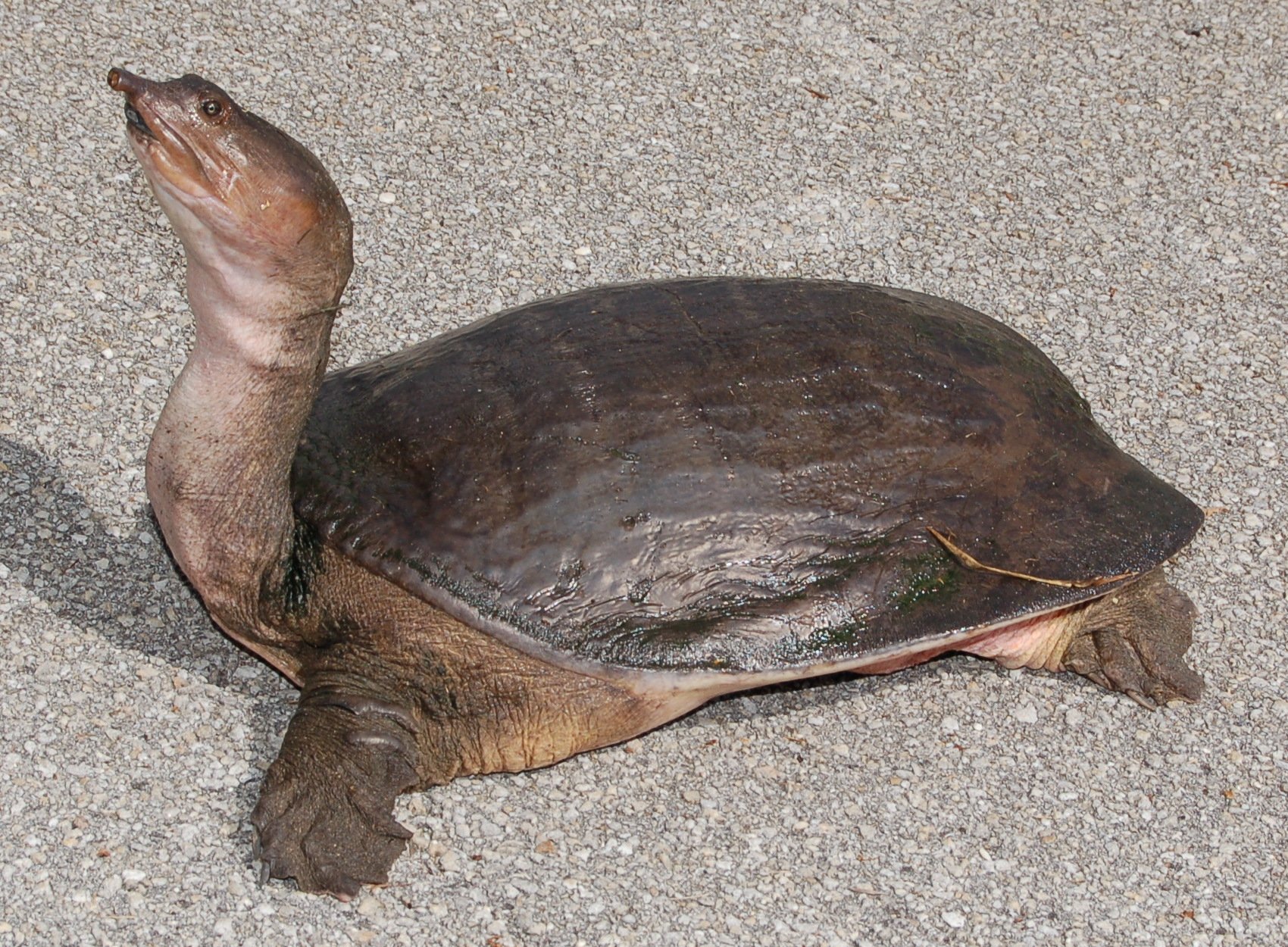
Turtles & tortoises · Difficulty: Expert
Key facts and care guidance for Florida softshell turtle (Apalone ferox) (origin: The south-eastern USA (Florida, Georgia, South Carolina, Alabama)). Adult size around females up to ~60–67 cm, males ~30–35 cm. Life expectancy 20–30 years and more. The values below are carefully researched guidance.
Short answers
Florida softshell turtle: How big does the enclosure need to be?
Very large: a tank of at least 8–10× the shell length; several thousand litres for adult females, or a large indoor basin or pond – not for the living room.
Florida softshell turtle: What temperature does it need?
Daytime 22–26 °C water (not above ~30 °C – harmful), basking spot 30–35 °C (land section, rarely used), at night approx. 22 °C.
Florida softshell turtle: Does it need UVB lighting?
UVB: UVB recommended (above the land section).
Florida softshell turtle: How long do they live?
Life expectancy: 20–30 years and more.
Florida softshell turtle: Is it suitable for beginners?
No – better suited to experienced keepers (difficulty: Expert).
Climate
- Daytime temperature
- 22–26 °C water (not above ~30 °C – harmful)
- Night temperature
- approx. 22 °C
- Basking spot
- 30–35 °C (land section, rarely used)
- Humidity
- — (aquatic)
- UVB
- UVB recommended (above the land section)
Enclosure
- Minimum size
- Very large: a tank of at least 8–10× the shell length; several thousand litres for adult females, or a large indoor basin or pond – not for the living room
- Substrate
- Fine, non-abrasive sand (for burying)
Feeding
- Food
- Carnivorous – fish, worms, crayfish, snails, insects
- Feeding interval
- adults 2–3×/week, juveniles daily
Key facts
- Adult size
- females up to ~60–67 cm, males ~30–35 cm
- Life expectancy
- 20–30 years and more
- Origin
- The south-eastern USA (Florida, Georgia, South Carolina, Alabama)
- Protection status
- CITES Appendix II (Apalone, since 2023; previously Appendix III since 2016), EU Regulation Annex B; proof of origin required
- Brumation
- In warm areas they are active all year; northern animals overwinter – in captivity no true winter dormancy is usually needed
- Cohabitation
- Keeping them singly is essential – very aggressive towards its own kind and towards other turtles.
Notes
The largest softshell turtle in the USA – an enormous final size and a powerful bite. A delicate shell and skin → immaculate water, fine sand, and NO sharp-edged furnishings or exposed heaters (a risk of injury). Only for very experienced keepers with huge tanks.
Do you keep this species?
Add your animal to Reptoria – Reptoria reminds you about feeding and shedding. Add your animal for free →
Look for Florida softshell turtle (Apalone ferox) in the marketplace →
Related species
- Smooth softshell turtle (Apalone mutica) – Expert
- Spiny softshell turtle (Apalone spinifera) – Expert
- Chinese softshell turtle (Pelodiscus sinensis) – Intermediate
- Indian flapshell turtle (Lissemys punctata) – Intermediate
- Indian softshell turtle (Nilssonia gangetica) – Expert
- African softshell turtle (Trionyx triunguis) – Expert
- Asiatic softshell turtle (Amyda cartilaginea) – Expert
- Wattle-necked softshell turtle (Palea steindachneri) – Intermediate
What you need to start
To keep Florida softshell turtle (Apalone ferox) you typically need: a suitable enclosure (Very large: a tank of at least 8–10× the shell length; several thousand litres for adult females, or a large indoor basin or pond – not for the living room), substrate (Fine, non-abrasive sand (for burying)), a heat source with a thermostat, UVB lighting, thermometer and hygrometer, a water dish and hides. You will find equipment in the Reptoria marketplace.
The complete, interactive care database is in the Reptoria app.
Last updated: 30 October 2026 · Editor: Reptoria editorial team · Sources include: https://en.wikipedia.org/wiki/Florida_softshell_turtle, https://reptile-database.reptarium.cz/species?genus=Apalone&species=ferox, https://www.zierschildkroete.de/weichschildkroeten-apalone-sp/
All values are non-binding guidance and do not replace expert advice. Research thoroughly from several sources before acquiring and keeping an animal, and observe the applicable law (species and animal protection in particular).