Giant African land snail (Lissachatina immaculata)
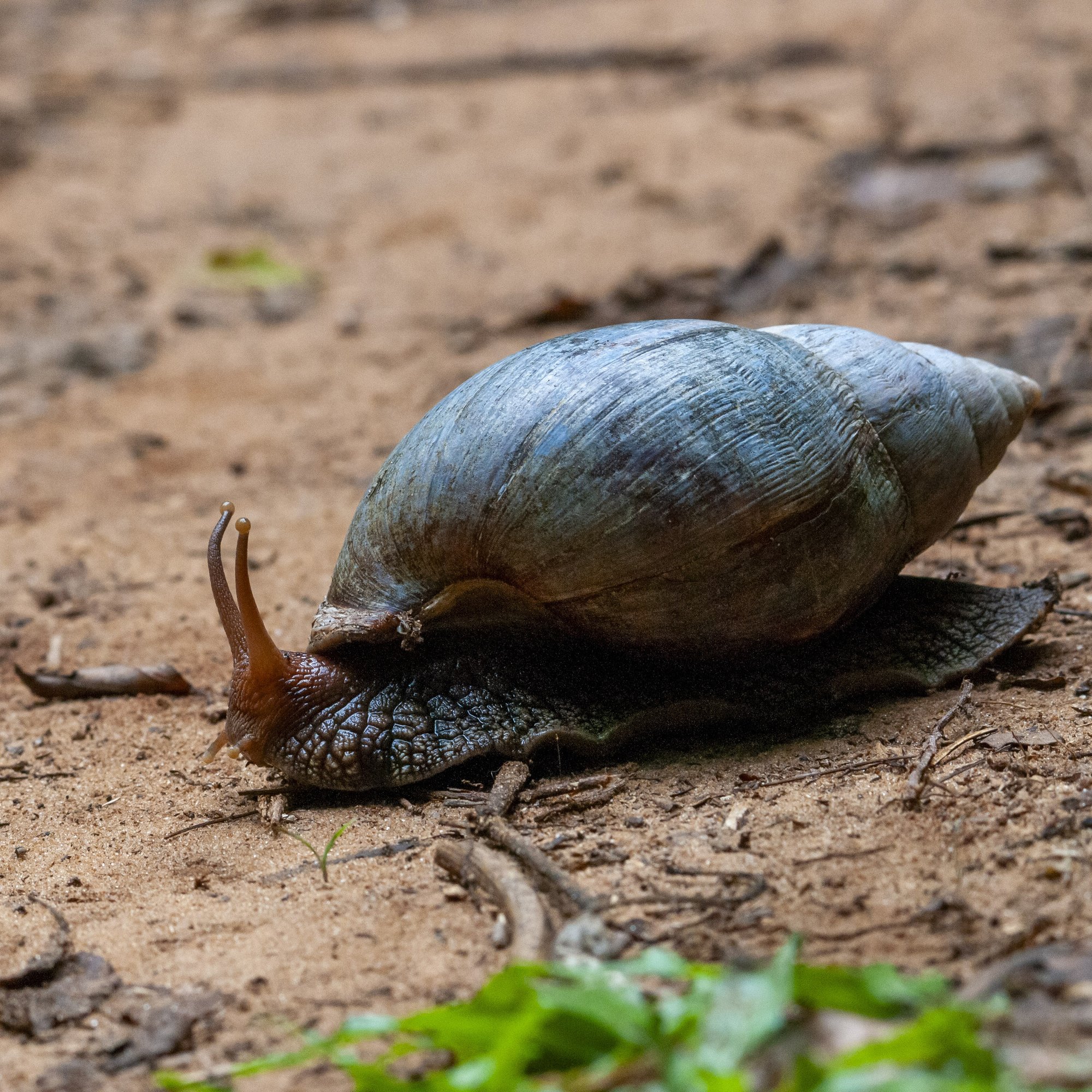
Invertebrates · Difficulty: Beginner
Key facts and care guidance for Giant African land snail (Lissachatina immaculata) (origin: South-eastern and eastern Africa (the type locality is Maputo, Mozambique; savannah and dune forest)). Adult size around shell approx. 9–13 cm (up to ~15 cm). Life expectancy approx. 5–10 years. The values below are carefully researched guidance.
Short answers
Giant African land snail: How big does the enclosure need to be?
From ~80×50 cm of floor area (a large species reaching 15 cm); a tightly closing, well-ventilated lid.
Giant African land snail: What temperature does it need?
Daytime 24–28 °C, basking spot — (no heat lamp; an infrared emitter or heat mat if needed), at night not below 22–24 °C.
Giant African land snail: Does it need UVB lighting?
UVB: No UVB needed.
Giant African land snail: How long do they live?
Life expectancy: approx. 5–10 years.
Giant African land snail: Is it suitable for beginners?
Yes – it is considered suitable for beginners (difficulty: Beginner).
Climate
- Daytime temperature
- 24–28 °C
- Night temperature
- not below 22–24 °C
- Basking spot
- — (no heat lamp; an infrared emitter or heat mat if needed)
- Humidity
- above 80 % (highest at night)
- UVB
- No UVB needed
Enclosure
- Minimum size
- from ~80×50 cm of floor area (a large species reaching 15 cm); a tightly closing, well-ventilated lid
- Substrate
- Lime-rich, loose soil or coco humus, at least as deep as the shell is long (for burying and egg-laying), always damp
Feeding
- Food
- Lettuce, cucumber, sweet potato, assorted vegetables and fruit; calcium at all times: a cuttlebone plus lime-rich substrate
- Feeding interval
- fresh food daily, a calcium source always available
Key facts
- Adult size
- shell approx. 9–13 cm (up to ~15 cm)
- Life expectancy
- approx. 5–10 years
- Origin
- South-eastern and eastern Africa (the type locality is Maputo, Mozambique; savannah and dune forest)
- Protection status
- Not protected under CITES or German nature conservation law, but an invasive species – strictly prevent release or escape (import is prohibited in some countries, e.g. the USA).
- Brumation
- Aestivation (a dry rest) is possible – Achatina/Lissachatina immaculata is considered the "greatest long sleeper" (2–5 months); kept constantly warm and humid it is usually unnecessary
- Cohabitation
- Group keeping is straightforward (hermaphrodites and sociable); several animals together is usual. Note: they breed very readily – check for and remove egg clutches regularly to avoid a population explosion.
Notes
A hermaphroditic giant land snail; nocturnal. Important: heat lamps are unsuitable (they dry it out) – better a heat mat plus a hygrometer. A calcium supply is essential for building the shell. The young need calcium-rich substrate.
Do you keep this species?
Add your animal to Reptoria – Reptoria reminds you about feeding and shedding. Add your animal for free →
Look for Giant African land snail (Lissachatina immaculata) in the marketplace →
Related species
- Giant African land snail (Lissachatina fulica) – Beginner
- Zanzibar land snail (Lissachatina reticulata) – Beginner
- Roman snail (Helix pomatia) – Beginner
- Flame land snail (Limicolaria flammea) – Beginner
- Garden snail (Cornu aspersum) – Beginner
- Giant West African land snail (Archachatina marginata) – Beginner
- Cuban land snail (Caracolus sagemon) – Intermediate
- Giant land snail (Megalobulimus oblongus) – Intermediate
What you need to start
To keep Giant African land snail (Lissachatina immaculata) you typically need: a suitable enclosure (from ~80×50 cm of floor area (a large species reaching 15 cm); a tightly closing, well-ventilated lid), substrate (Lime-rich, loose soil or coco humus, at least as deep as the shell is long (for burying and egg-laying), always damp), a heat source with a thermostat, UVB lighting, thermometer and hygrometer, a water dish and hides. You will find equipment in the Reptoria marketplace.
The complete, interactive care database is in the Reptoria app.
Last updated: 9 October 2026 · Editor: Reptoria editorial team · Sources include: https://en.wikipedia.org/wiki/Lissachatina_immaculata, https://www.reptilecentre.com/pages/info-african-land-snail-care-sheet
All values are non-binding guidance and do not replace expert advice. Research thoroughly from several sources before acquiring and keeping an animal, and observe the applicable law (species and animal protection in particular).