Great desert skink (Liopholis kintorei)
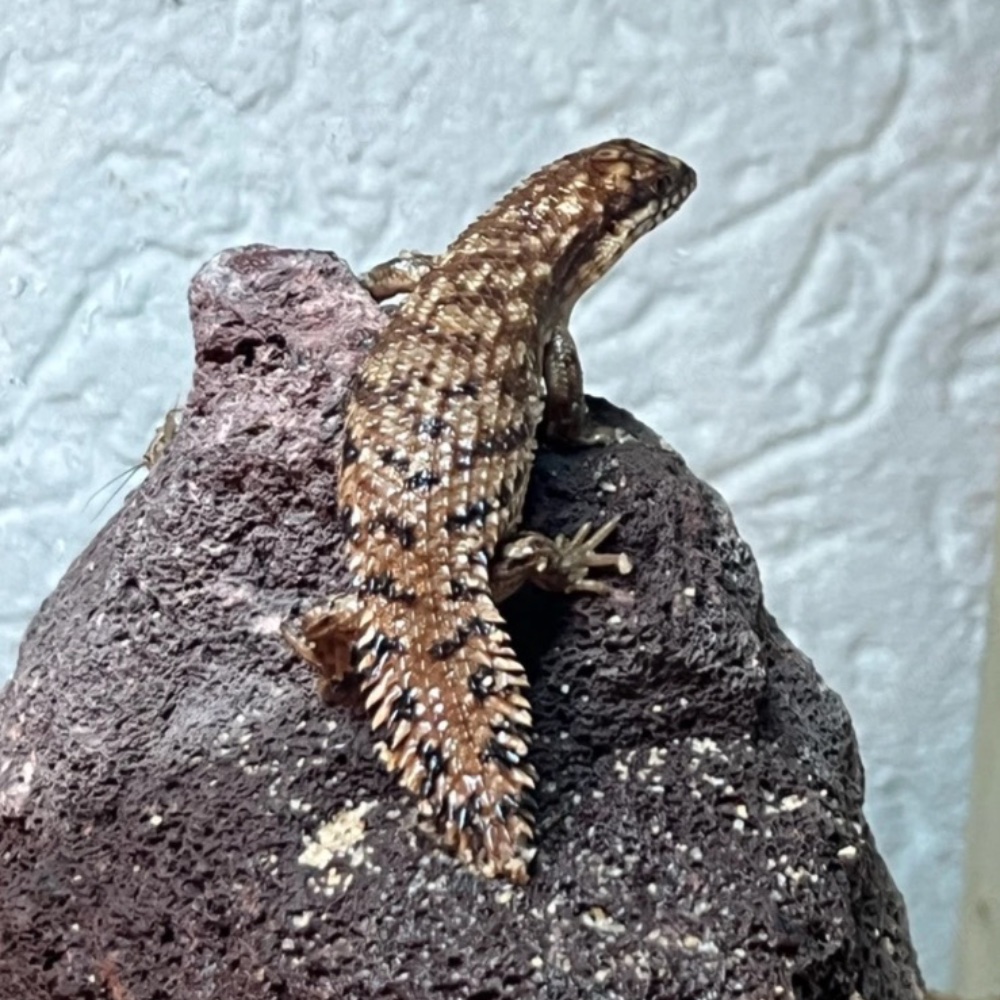
Skinks · Difficulty: Intermediate
Key facts and care guidance for Great desert skink (Liopholis kintorei) (origin: Central Australia – sandy desert). Adult size around 20–28 cm total length. Life expectancy 15–25 years. The values below are carefully researched guidance.
Short answers
Great desert skink: How big does the enclosure need to be?
150×70×60 cm.
Great desert skink: What temperature does it need?
Daytime 28–34 °C, basking spot 44 °C, at night 16–21 °C.
Great desert skink: Does it need UVB lighting?
UVB: Essential (UVB 10.0–12 %).
Great desert skink: How long do they live?
Life expectancy: 15–25 years.
Great desert skink: Is it suitable for beginners?
Rather not – it is considered an intermediate species (difficulty: Intermediate).
Climate
- Daytime temperature
- 28–34 °C
- Night temperature
- 16–21 °C
- Basking spot
- 44 °C
- Humidity
- 30–45 %
- UVB
- Essential (UVB 10.0–12 %)
Enclosure
- Minimum size
- 150×70×60 cm
- Substrate
- Sand-loam 25–35 cm for burrowing, stone slabs
Feeding
- Food
- Insects, leafy greens, flowers
- Feeding interval
- 3×/week
Key facts
- Adult size
- 20–28 cm total length
- Life expectancy
- 15–25 years
- Origin
- Central Australia – sandy desert
- Protection status
- Export from Australia is prohibited; IUCN "Vulnerable"
- Brumation
- A cooler dry spell of 8–10 weeks
- Cohabitation
- A group (family unit) is closest to natural behaviour: the species lives monogamously or in small families, with siblings of different ages staying together in the burrow. Two males do not get along – they fight over territory and basking spots until one is seriously injured. Several warm spots and hides, plus separate feeding for size differences, matter.
Notes
It builds extensive, multi-branched family burrows with several entrances – the substrate has to be very deep and compactable. Live-bearing, and the young stay in the burrow for several years.
Do you keep this species?
Add your animal to Reptoria – Reptoria reminds you about feeding and shedding. Add your animal for free →
Look for Great desert skink (Liopholis kintorei) in the marketplace →
Related species
- White's skink (Liopholis whitii) – Beginner
- Tree skink (Egernia striolata) – Beginner
- Cunningham's skink (Egernia cunninghami) – Intermediate
- Black rock skink (Egernia saxatilis) – Intermediate
- Hosmer's spiny-tailed skink (Egernia hosmeri) – Intermediate
- Desert skink (Egernia formosa) – Intermediate
- King's skink (Egernia kingii) – Intermediate
- Eastern crevice skink (Egernia mcpheei) – Intermediate
What you need to start
To keep Great desert skink (Liopholis kintorei) you typically need: a suitable enclosure (150×70×60 cm), substrate (Sand-loam 25–35 cm for burrowing, stone slabs), a heat source with a thermostat, UVB lighting, thermometer and hygrometer, a water dish and hides. You will find equipment in the Reptoria marketplace.
The complete, interactive care database is in the Reptoria app.
Last updated: 25 September 2026 · Editor: Reptoria editorial team · Sources include: https://en.wikipedia.org/wiki/Great_desert_skink, https://reptile-database.reptarium.cz/species?genus=Liopholis&species=kintorei
All values are non-binding guidance and do not replace expert advice. Research thoroughly from several sources before acquiring and keeping an animal, and observe the applicable law (species and animal protection in particular).