Kimberley rock monitor (Varanus glauerti)
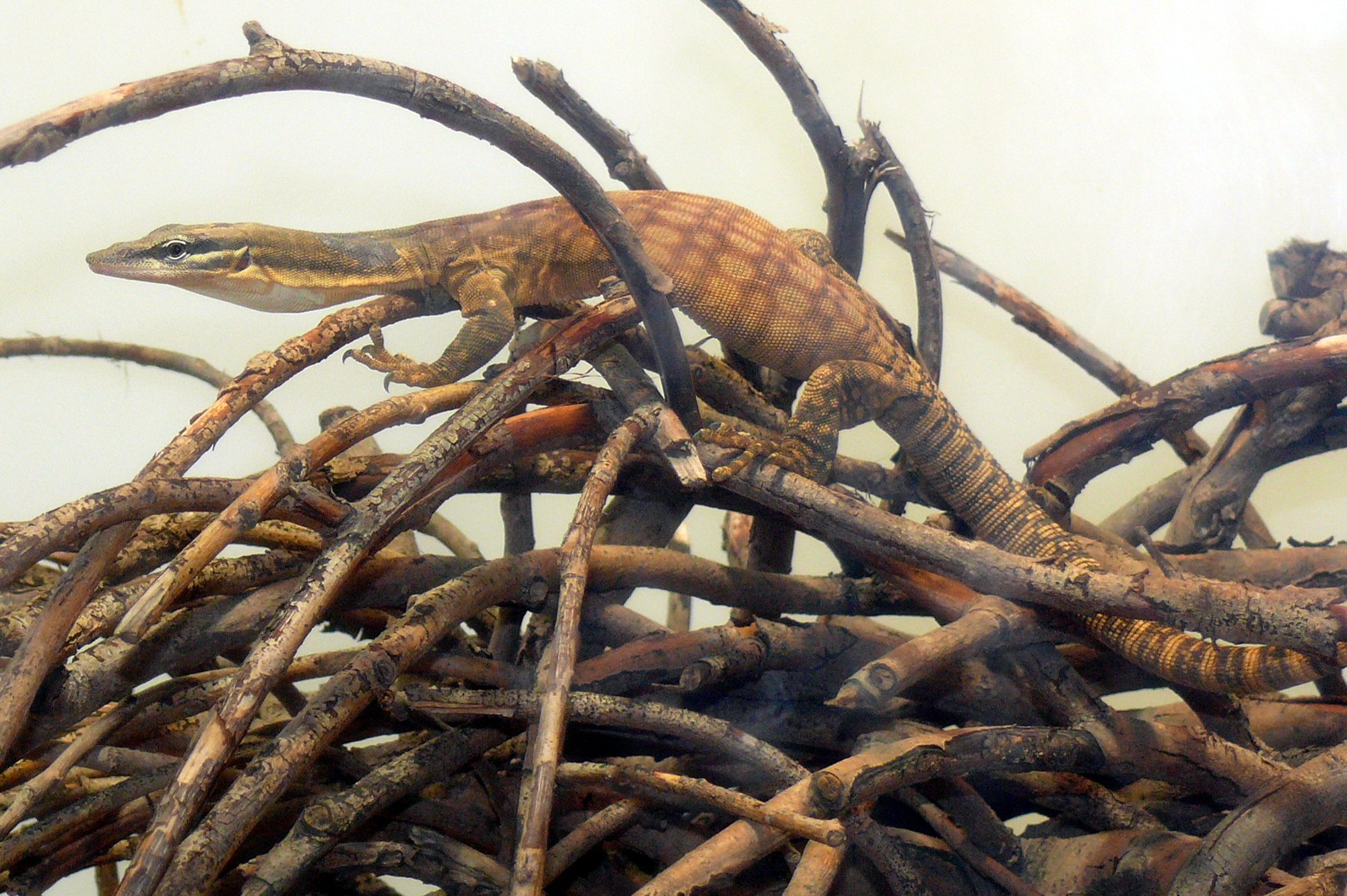
Monitors & tegus · Difficulty: Intermediate
Key facts and care guidance for Kimberley rock monitor (Varanus glauerti) (origin: Northern Australia (the Kimberley region), rock-dwelling). Adult size around 50–60 cm total length (tail well over twice as long as the body). Life expectancy approx. 15–20 years. The values below are carefully researched guidance.
Short answers
Kimberley rock monitor: How big does the enclosure need to be?
From 180×80×120 cm; moulded cork back and side panels considerably increase the usable surface area.
Kimberley rock monitor: What temperature does it need?
Daytime 30–35 °C with a gradient, basking spot 45–50 °C at the basking spot (mercury vapour lamp), at night 20–25 °C.
Kimberley rock monitor: Does it need UVB lighting?
UVB: Essential (UVB 7.5–10).
Kimberley rock monitor: How long do they live?
Life expectancy: approx. 15–20 years.
Kimberley rock monitor: Is it suitable for beginners?
Rather not – it is considered an intermediate species (difficulty: Intermediate).
Climate
- Daytime temperature
- 30–35 °C with a gradient
- Night temperature
- 20–25 °C
- Basking spot
- 45–50 °C at the basking spot (mercury vapour lamp)
- Humidity
- 40–60 %, plus a permanently humid hide (wet box); do not keep it constantly wet
- UVB
- Essential (UVB 7.5–10)
Enclosure
- Minimum size
- from 180×80×120 cm; moulded cork back and side panels considerably increase the usable surface area
- Substrate
- Sand-clay mix for digging, plus a structure of stone slabs and cork tubes — this species lives in rock crevices and climbs vertical surfaces. A permanently damp humid hide is essential, otherwise shedding problems occur.
Feeding
- Food
- Mainly insects (crickets, roaches), also eggs and poultry
- Feeding interval
- Adults 3–4× a week (juveniles more often)
Key facts
- Adult size
- 50–60 cm total length (tail well over twice as long as the body)
- Life expectancy
- approx. 15–20 years
- Origin
- Northern Australia (the Kimberley region), rock-dwelling
- Protection status
- CITES Appendix II / EU Annex B, registration required
- Brumation
- Recommended: switch off the heating in winter and lower to 15–18 °C, shorten lighting. This matches the dry season in the species' range.
- Cohabitation
- In pairs (1.1) in a large enclosure, or singly. Two males never belong together — they fight over territory and the basking spot until one is injured or permanently sits in a corner. One male with several females is possible, but each animal needs its own basking spot and hide, otherwise the lower-ranking one is pushed aside; feed separately if sizes differ.
Notes
A slender, extremely agile rock-dwelling dwarf monitor that often hangs head-down. It needs a high basking spot plus vertical rock and climbing structures.
Do you keep this species?
Add your animal to Reptoria – Reptoria reminds you about feeding and shedding. Add your animal for free →
Look for Kimberley rock monitor (Varanus glauerti) in the marketplace →
Related species
- Argus monitor (Varanus panoptes) – Expert
- Bengal monitor (Varanus bengalensis) – Expert
- Blue tree monitor (Varanus macraei) – Expert
- Blue-tailed monitor (Varanus doreanus) – Intermediate to expert
- Finsch's monitor (Varanus doreanus finschi) – Expert
- Boatsi tree monitor (Varanus boatsi) – Expert
- Bogert's tree monitor (Varanus bogerti) – Expert
- Lace monitor (Varanus varius) – Expert
What you need to start
To keep Kimberley rock monitor (Varanus glauerti) you typically need: a suitable enclosure (from 180×80×120 cm; moulded cork back and side panels considerably increase the usable surface area), substrate (Sand-clay mix for digging, plus a structure of stone slabs and cork tubes — this species lives in rock crevices and climbs vertical surfaces. A permanently damp humid hide is essential, otherwise shedding problems occur.), a heat source with a thermostat, UVB lighting, thermometer and hygrometer, a water dish and hides. You will find equipment in the Reptoria marketplace.
The complete, interactive care database is in the Reptoria app.
Last updated: 9 October 2026 · Editor: Reptoria editorial team · Sources include: DGHT Schweiz Caresheet, monster-reptiles.com, reptile-care.de, warane.jimdofree.com, zootier-lexikon.org
All values are non-binding guidance and do not replace expert advice. Research thoroughly from several sources before acquiring and keeping an animal, and observe the applicable law (species and animal protection in particular).