Nose-horned viper (Vipera ammodytes)
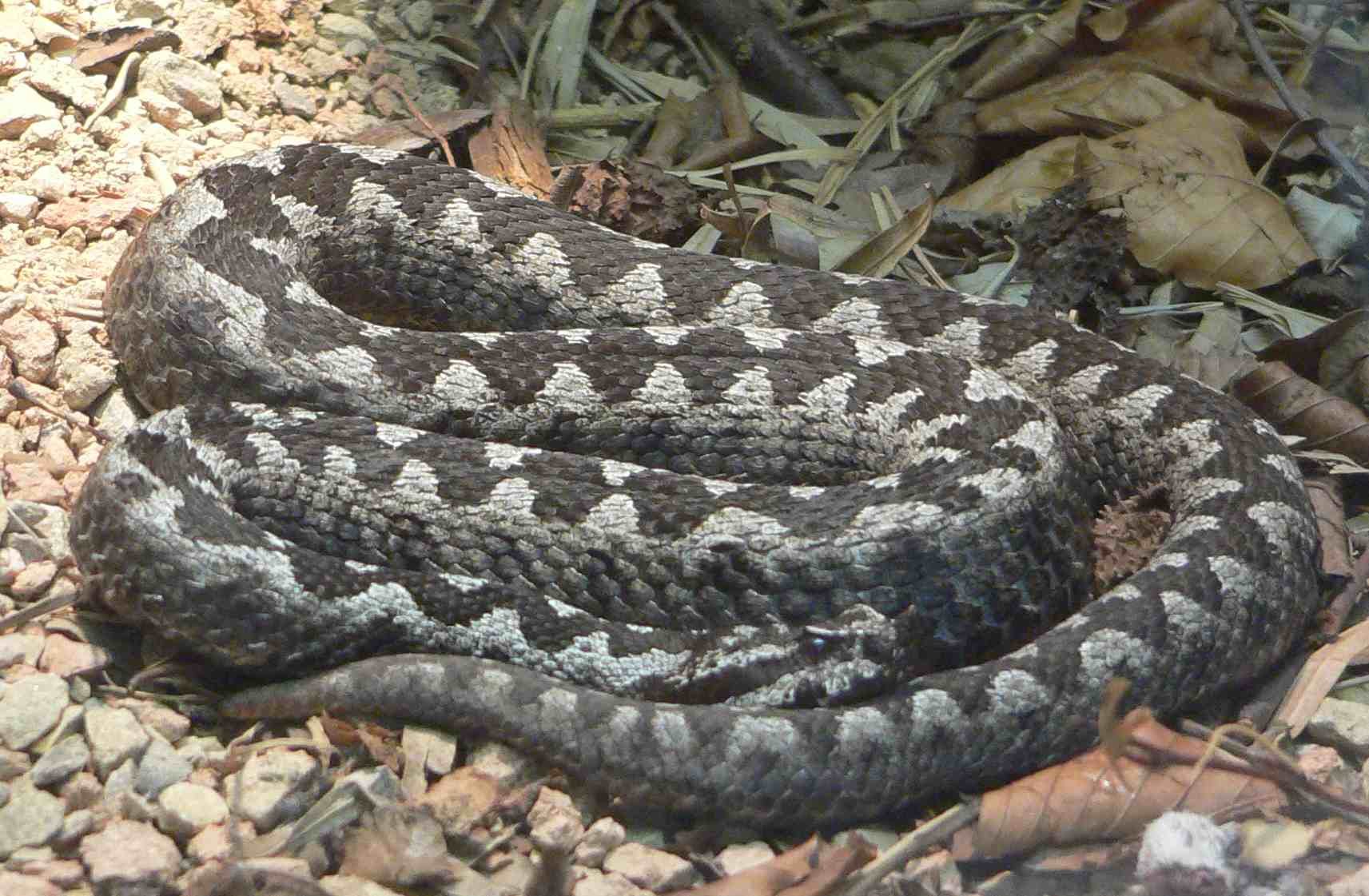
Snakes · Difficulty: Expert
Key facts and care guidance for Nose-horned viper (Vipera ammodytes) (origin: South-eastern Europe (the Balkans) to Asia Minor). Adult size around 60–90 cm. Life expectancy 15–20 years. The values below are carefully researched guidance.
Short answers
Nose-horned viper: How big does the enclosure need to be?
From 120×70×60 cm (minimum size per the 1997 expert report, European vipers).
Nose-horned viper: What temperature does it need?
Daytime 22–28 °C, basking spot 32–34 °C, at night 14–18 °C.
Nose-horned viper: Does it need UVB lighting?
UVB: UVB recommended.
Nose-horned viper: How long do they live?
Life expectancy: 15–20 years.
Nose-horned viper: Is it suitable for beginners?
No – better suited to experienced keepers (difficulty: Expert).
Climate
- Daytime temperature
- 22–28 °C
- Night temperature
- 14–18 °C
- Basking spot
- 32–34 °C
- Humidity
- 45–60 %
- UVB
- UVB recommended
Enclosure
- Minimum size
- from 120×70×60 cm (minimum size per the 1997 expert report, European vipers)
- Substrate
- Rock and loam with crevices, stone slabs, dry areas
Feeding
- Food
- Frozen-thawed mice
- Feeding interval
- adults every 10–14 days
Key facts
- Adult size
- 60–90 cm
- Life expectancy
- 15–20 years
- Origin
- South-eastern Europe (the Balkans) to Asia Minor
- Protection status
- VENOMOUS – the most venomous viper in Europe; a dangerous animal. Protected in many countries, so proof of origin matters
- Brumation
- A winter rest of 12–16 weeks at 5–10 °C (essential)
- Cohabitation
- Keep singly. One animal per enclosure is the safe and less stressful solution for a venomous snake – no feeding accidents, no squabbles, and when you open it you know where the animal is. Keeping adult pairs does happen, but has drawbacks: competition over food, no way to tell who is eating, and two venomous animals during every task. Juveniles cannibalise each other and are raised singly; for breeding, introduce them under supervision after brumation.
Notes
It needs a genuine, cold winter rest – without it there is no breeding success and health problems in the long run. Diurnal, and it basks at length. A striking nasal horn.
Do you keep this species?
Add your animal to Reptoria – Reptoria reminds you about feeding and shedding. Add your animal for free →
Look for Nose-horned viper (Vipera ammodytes) in the marketplace →
Related species
- Eastern nose-horned viper (Vipera ammodytes ammodytes) – Expert
- Savanna vine snake (Thelotornis capensis) – Expert
- Egyptian cobra (Naja haje) – Expert
- Egyptian saw-scaled viper (Echis pyramidum) – Expert
- Barnett's lancehead (Bothrops barnetti) – Expert
- Usambara bush viper (Atheris ceratophora) – Expert
- Ottoman viper (Montivipera xanthina) – Expert
- Malayan krait (Bungarus candidus) – Expert
What you need to start
To keep Nose-horned viper (Vipera ammodytes) you typically need: a suitable enclosure (from 120×70×60 cm (minimum size per the 1997 expert report, European vipers)), substrate (Rock and loam with crevices, stone slabs, dry areas), a heat source with a thermostat, UVB lighting, thermometer and hygrometer, a water dish and hides. You will find equipment in the Reptoria marketplace.
The complete, interactive care database is in the Reptoria app.
Last updated: 9 October 2026 · Editor: Reptoria editorial team · Sources include: https://academy.herpeton.net/en/caresheets/snakes/vipera-ammodytes/, https://de.wikipedia.org/wiki/Europäische_Hornotter, https://en.wikipedia.org/wiki/Vipera_ammodytes, https://reptile-database.reptarium.cz/species?genus=Vipera&species=ammodytes, https://savethereptiles.wordpress.com/2010/02/21/guidelines-to-successful-keeping-and-breeding-of-the-nose-horned-viper/
All values are non-binding guidance and do not replace expert advice. Research thoroughly from several sources before acquiring and keeping an animal, and observe the applicable law (species and animal protection in particular).