Peloponnese wall lizard (Podarcis peloponnesiacus)
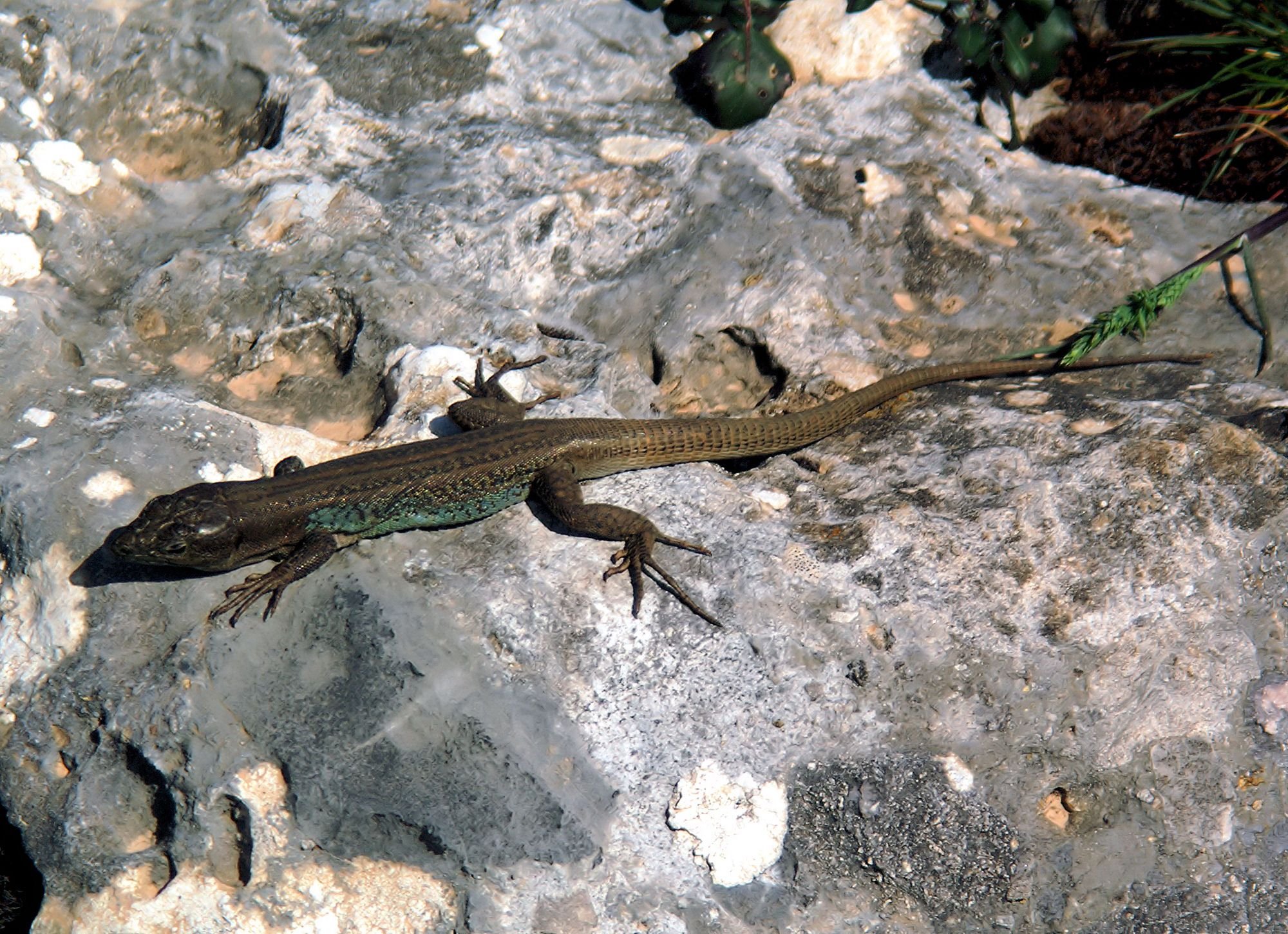
Lizards · Difficulty: Beginner with some knowledge
Key facts and care guidance for Peloponnese wall lizard (Podarcis peloponnesiacus) (origin: The Peloponnese, Greece). Adult size around 20–30 cm. Life expectancy 8–12 years. The values below are carefully researched guidance.
Short answers
Peloponnese wall lizard: How big does the enclosure need to be?
From 100×50×60 cm for one animal or a pair; for a group about 15 % more floor space per additional animal.
Peloponnese wall lizard: What temperature does it need?
Daytime 24–30 °C, basking spot Basking spot, locally 40–45 °C under the lamp, at night 12–18 °C.
Peloponnese wall lizard: Does it need UVB lighting?
UVB: Essential (UVB 10.0 — these species bask for hours).
Peloponnese wall lizard: How long do they live?
Life expectancy: 8–12 years.
Peloponnese wall lizard: Is it suitable for beginners?
Partly – manageable with some prior knowledge (difficulty: Beginner with some knowledge).
Climate
- Daytime temperature
- 24–30 °C
- Night temperature
- 12–18 °C
- Basking spot
- Basking spot, locally 40–45 °C under the lamp
- Humidity
- 40–60 %
- UVB
- Essential (UVB 10.0 — these species bask for hours)
Enclosure
- Minimum size
- from 100×50×60 cm for one animal or a pair; for a group about 15 % more floor space per additional animal
- Substrate
- A sand-loam mix with stone slabs, a dry-stone wall and a few plants
Feeding
- Food
- Crickets, house crickets, roaches, wax moths and the occasional fruit, dusted regularly with calcium and vitamins
- Feeding interval
- adults 3–4×/week
Key facts
- Adult size
- 20–30 cm
- Life expectancy
- 8–12 years
- Origin
- The Peloponnese, Greece
- Protection status
- Bern Convention Appendix II — proof of origin required
- Brumation
- A gentle winter rest of about 6 weeks at around 15 °C, lighting off and no feeding — no cold overwintering at 5 °C. Without this rest, breeding won't happen.
- Cohabitation
- Pairs (1.1) or 1.2; never keep males together. The reason: several males fight over territory and basking spot until one is injured or permanently sits in the corner. Males and females can form a temporary pair bond that lasts beyond the mating season; a second female is possible but means more competition for warmth and hides. Females usually get along but each needs its own basking and hiding spots; feed separately if sizes differ.
Notes
One of the largest Podarcis species, powerfully built.
Do you keep this species?
Add your animal to Reptoria – Reptoria reminds you about feeding and shedding. Add your animal for free →
Look for Peloponnese wall lizard (Podarcis peloponnesiacus) in the marketplace →
Related species
- Aeolian wall lizard (Podarcis raffonei) – Expert
- Erhard's wall lizard (Podarcis erhardii) – Beginner to intermediate
- Lilford's wall lizard (Podarcis lilfordi) – Expert
- Bocage's wall lizard (Podarcis bocagei) – Beginner with some knowledge
- Carbonell's wall lizard (Podarcis carbonelli) – Beginner with some knowledge
- Geniez's wall lizard (Podarcis virescens) – Beginner with some knowledge
- Guadarrama wall lizard (Podarcis guadarramae) – Beginner with some knowledge
- Ionian wall lizard (Podarcis ionicus) – Beginner with some knowledge
What you need to start
To keep Peloponnese wall lizard (Podarcis peloponnesiacus) you typically need: a suitable enclosure (from 100×50×60 cm for one animal or a pair; for a group about 15 % more floor space per additional animal), substrate (A sand-loam mix with stone slabs, a dry-stone wall and a few plants), a heat source with a thermostat, UVB lighting, thermometer and hygrometer, a water dish and hides. You will find equipment in the Reptoria marketplace.
The complete, interactive care database is in the Reptoria app.
Last updated: 2 November 2026 · Editor: Reptoria editorial team · Sources include: EUR-Lex Richtlinie 92/43/EWG (FFH), Wikipedia EN, einrichtungsbeispiele.de, eu_annex.txt (lokal, VO (EU) 2026/1383), gesetze-im-internet.de (BArtSchV Anlage 5)
All values are non-binding guidance and do not replace expert advice. Research thoroughly from several sources before acquiring and keeping an animal, and observe the applicable law (species and animal protection in particular).