Savannah monitor (Varanus exanthematicus)
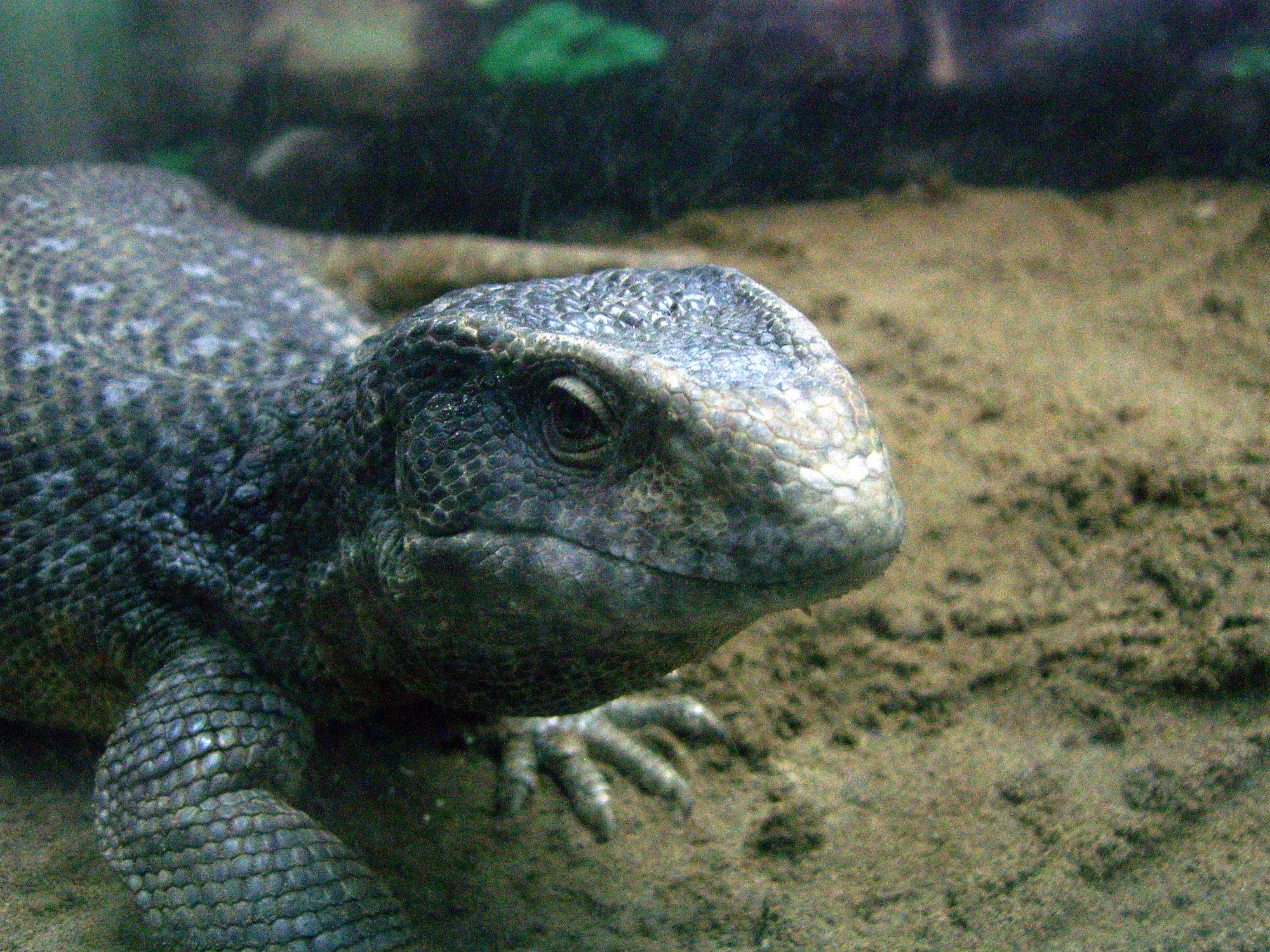
Monitors & tegus · Difficulty: Intermediate to expert
Key facts and care guidance for Savannah monitor (Varanus exanthematicus) (origin: Sub-Saharan Africa (Senegal to Sudan and Ethiopia, savannah)). Adult size around approx. 90–130 cm (rarely up to 150 cm). Life expectancy approx. 10–20 years. The values below are carefully researched guidance.
Short answers
Savannah monitor: How big does the enclosure need to be?
From 275×165×110 cm for one animal; for a pair from 315×165×110 cm (15 % more floor space per additional animal, as in the 1997 expert report).
Savannah monitor: What temperature does it need?
Daytime 25–35 °C, basking spot 45–55 °C, at night 20–22 °C.
Savannah monitor: Does it need UVB lighting?
UVB: Essential (10–12 % UVB).
Savannah monitor: How long do they live?
Life expectancy: approx. 10–20 years.
Savannah monitor: Is it suitable for beginners?
No – better suited to experienced keepers (difficulty: Intermediate to expert).
Climate
- Daytime temperature
- 25–35 °C
- Night temperature
- 20–22 °C
- Basking spot
- 45–55 °C
- Humidity
- 60–70 % (higher in spring, up to 90–100 %)
- UVB
- Essential (10–12 % UVB)
Enclosure
- Minimum size
- from 275×165×110 cm for one animal; for a pair from 315×165×110 cm (15 % more floor space per additional animal, as in the 1997 expert report)
- Substrate
- A diggable soil-sand mix at least 30–60 cm deep (clay-sand or coco fibre with sand) that holds its shape; plus a permanently damp hide, stones, roots and cork tubes
Feeding
- Food
- Predominantly invertebrates: roaches, grasshoppers, house crickets, superworms, earthworms and above all snails (the main prey in the wild; adult animals crack the shells with their blunt teeth). Rodents, chicks and eggs only rarely.
- Feeding interval
- Adults 1–2× a week
Key facts
- Adult size
- approx. 90–130 cm (rarely up to 150 cm)
- Life expectancy
- approx. 10–20 years
- Origin
- Sub-Saharan Africa (Senegal to Sudan and Ethiopia, savannah)
- Protection status
- CITES Appendix II / EU Annex B, registration required
- Brumation
- No real cold period. A rest period with a shorter day and noticeably less food is worthwhile; adult animals take long feeding breaks on their own anyway. The common recommendation of 2–3 months at 15 °C is unusually cold for an animal from the African savanna and is at most something for experienced keepers after a prior health check.
- Cohabitation
- Usually single housing, a compatible pair possible. The reason: several males fight over territory and basking spot until one is injured or permanently confined to a corner.
Notes
It runs strongly to obesity in captivity – feed it mainly on insects and do NOT fatten it on rodents. It needs deep digging substrate and a dry rest.
Do you keep this species?
Add your animal to Reptoria – Reptoria reminds you about feeding and shedding. Add your animal for free →
Look for Savannah monitor (Varanus exanthematicus) in the marketplace →
Related species
- Argus monitor (Varanus panoptes) – Expert
- Bengal monitor (Varanus bengalensis) – Expert
- Blue tree monitor (Varanus macraei) – Expert
- Blue-tailed monitor (Varanus doreanus) – Intermediate to expert
- Finsch's monitor (Varanus doreanus finschi) – Expert
- Boatsi tree monitor (Varanus boatsi) – Expert
- Bogert's tree monitor (Varanus bogerti) – Expert
- Lace monitor (Varanus varius) – Expert
What you need to start
To keep Savannah monitor (Varanus exanthematicus) you typically need: a suitable enclosure (from 275×165×110 cm for one animal; for a pair from 315×165×110 cm (15 % more floor space per additional animal, as in the 1997 expert report)), substrate (A diggable soil-sand mix at least 30–60 cm deep (clay-sand or coco fibre with sand) that holds its shape; plus a permanently damp hide, stones, roots and cork tubes), a heat source with a thermostat, UVB lighting, thermometer and hygrometer, a water dish and hides. You will find equipment in the Reptoria marketplace.
The complete, interactive care database is in the Reptoria app.
Last updated: 5 November 2026 · Editor: Reptoria editorial team · Sources include: Wikipedia EN, animaldiversity.org, einrichtungsbeispiele.de, Wikipedia DE, dubiaroaches.com
All values are non-binding guidance and do not replace expert advice. Research thoroughly from several sources before acquiring and keeping an animal, and observe the applicable law (species and animal protection in particular).