Silverstone's poison frog (Ameerega silverstonei)
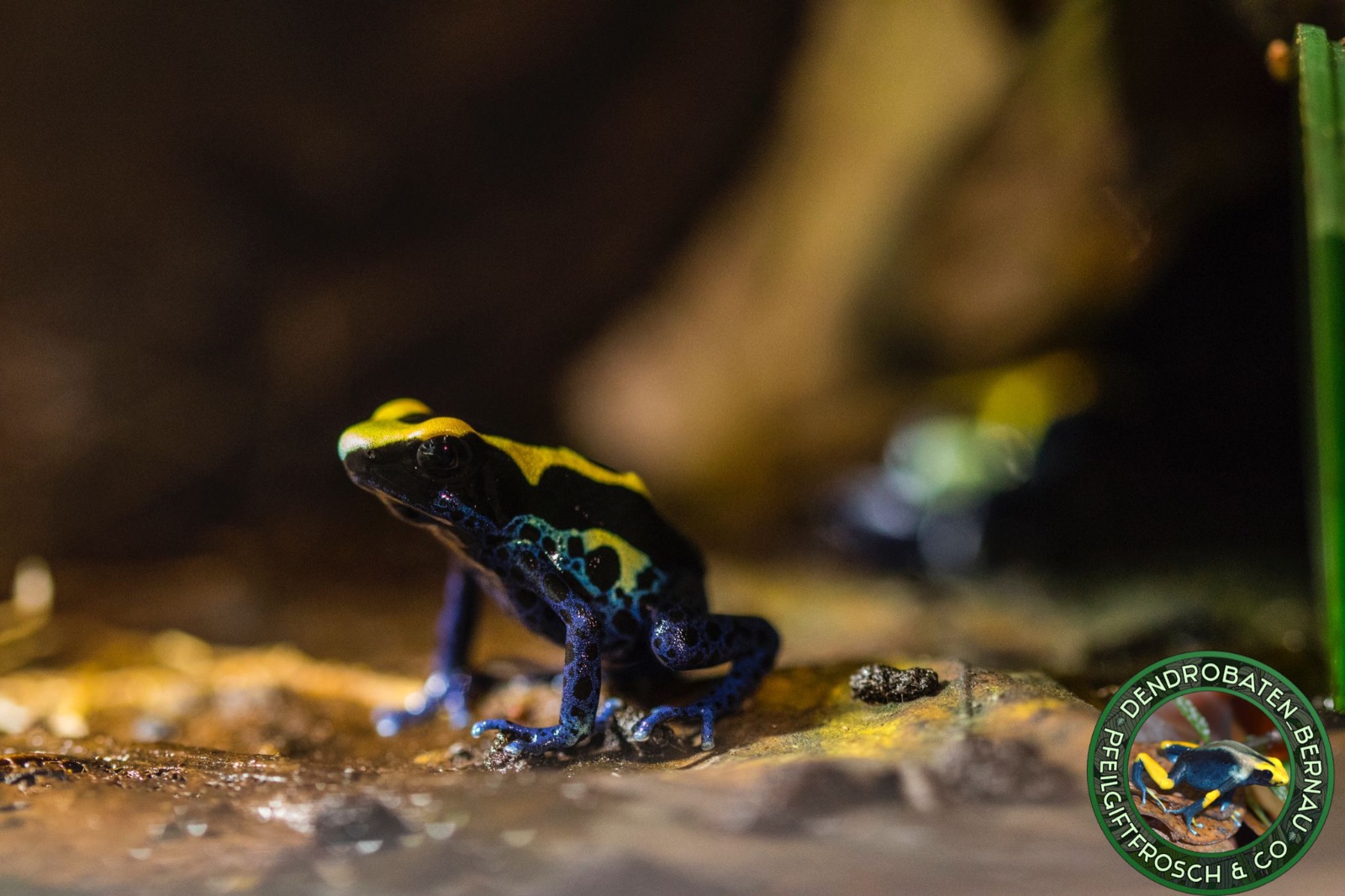
Amphibians · Difficulty: Intermediate
Key facts and care guidance for Silverstone's poison frog (Ameerega silverstonei) (origin: Central Peru). Adult size around 3,5–4,2 cm. Life expectancy 8–15 years. The values below are carefully researched guidance.
Short answers
Silverstone's poison frog: How big does the enclosure need to be?
40×40×50 cm for a pair, planted.
Silverstone's poison frog: What temperature does it need?
Daytime 22–26 °C, basking spot No basking spot — direct heat is harmful, at night 18–21 °C.
Silverstone's poison frog: Does it need UVB lighting?
UVB: Weak UVB recommended (UVB 2.0), no strong lamp.
Silverstone's poison frog: How long do they live?
Life expectancy: 8–15 years.
Silverstone's poison frog: Is it suitable for beginners?
Rather not – it is considered an intermediate species (difficulty: Intermediate).
Climate
- Daytime temperature
- 22–26 °C
- Night temperature
- 18–21 °C
- Basking spot
- No basking spot — direct heat is harmful
- Humidity
- 80–95 %, mist daily
- UVB
- Weak UVB recommended (UVB 2.0), no strong lamp
Enclosure
- Minimum size
- 40×40×50 cm for a pair, planted
- Substrate
- Forest-floor substrate with a drainage layer, moss, leaf litter, bromeliads and film canisters as spawning sites
Feeding
- Food
- Springtails, fruit flies and aphids, dusted regularly with calcium and vitamins
- Feeding interval
- adults daily to every other day
Key facts
- Adult size
- 3,5–4,2 cm
- Life expectancy
- 8–15 years
- Origin
- Central Peru
- Protection status
- CITES II, IUCN "Vulnerable" — proof of origin required
- Brumation
- No winter rest, at most a short dry spell to trigger breeding
- Cohabitation
- Keeping a pair is least stressful, since males are territorial during the mating season and guard clutches - two males would compete over territory. Only acquire captive-bred animals, as the species is endangered with an extremely small range.
Notes
One of the largest species in the genus, brilliant orange. A very small range.
Do you keep this species?
Add your animal to Reptoria – Reptoria reminds you about feeding and shedding. Add your animal for free →
Look for Silverstone's poison frog (Ameerega silverstonei) in the marketplace →
Related species
- Yellow-bellied poison frog (Ameerega hahneli) – Intermediate
- Bassler's poison frog (Ameerega bassleri) – Intermediate
- Painted poison frog (Ameerega picta) – Intermediate
- Ruby poison frog (Ameerega parvula) – Intermediate
- Yellow-striped poison frog (Ameerega flavopicta) – Intermediate
- Three-striped poison frog (Ameerega trivittata) – Intermediate
- Pepper's poison frog (Ameerega pepperi) – Intermediate
- Anthony's poison frog (Hyloxalus nexipus) – Intermediate
What you need to start
To keep Silverstone's poison frog (Ameerega silverstonei) you typically need: a suitable enclosure (40×40×50 cm for a pair, planted), substrate (Forest-floor substrate with a drainage layer, moss, leaf litter, bromeliads and film canisters as spawning sites), a heat source with a thermostat, UVB lighting, thermometer and hygrometer, a water dish and hides. You will find equipment in the Reptoria marketplace.
The complete, interactive care database is in the Reptoria app.
Last updated: 25 September 2026 · Editor: Reptoria editorial team · Sources include: https://en.wikipedia.org/wiki/Silverstone%27s_poison_frog, https://reptilesmagazine.com/beginners-guide-to-poison-frog-care/, https://www.thebiodude.com/blogs/frog-caresheets/keeping-poison-dart-frogs-as-pets-and-bioactive-terrarium-maintenance
All values are non-binding guidance and do not replace expert advice. Research thoroughly from several sources before acquiring and keeping an animal, and observe the applicable law (species and animal protection in particular).