Smith's arboreal alligator lizard (Abronia smithi)
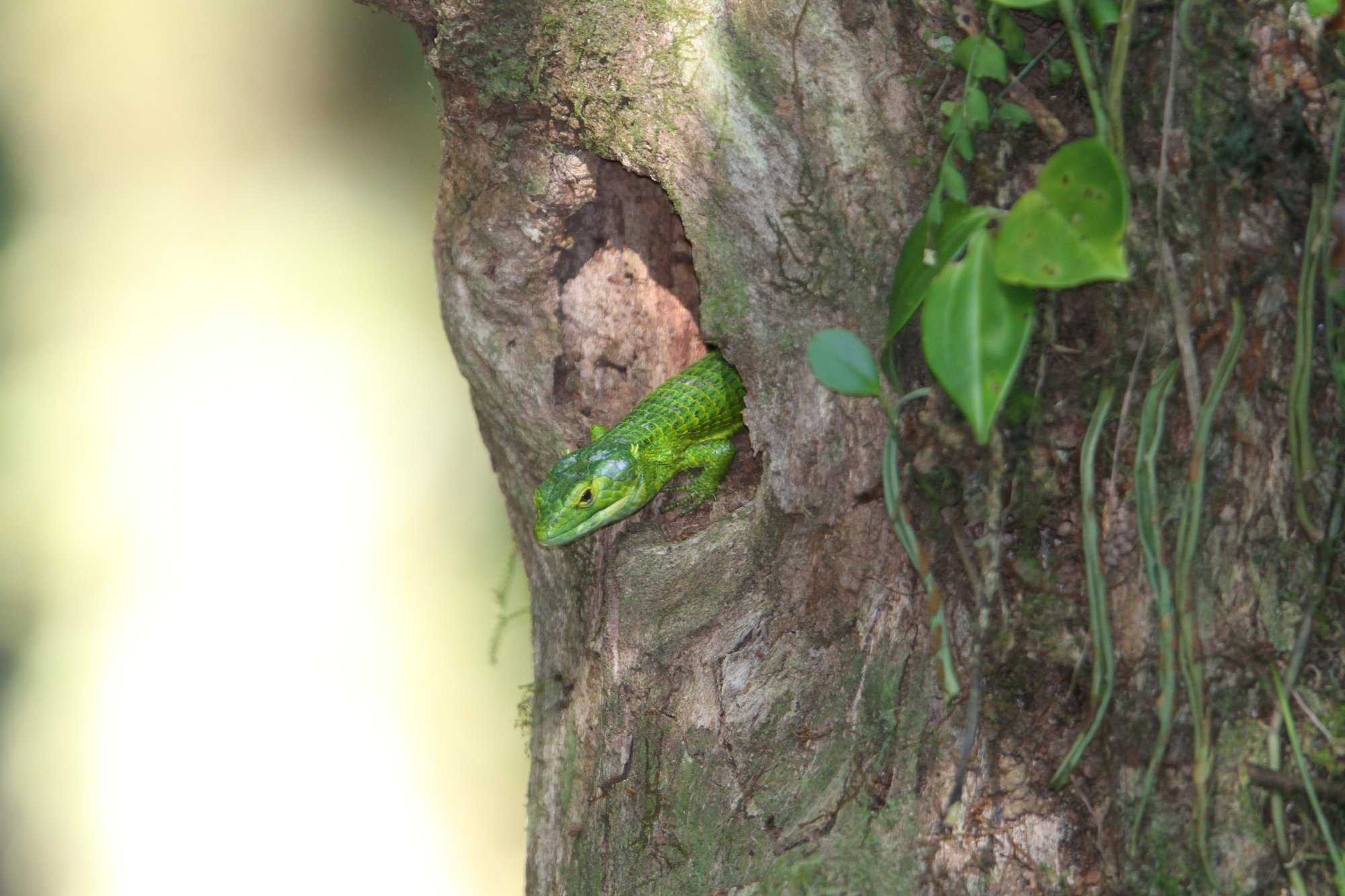
Lizards · Difficulty: Expert
Key facts and care guidance for Smith's arboreal alligator lizard (Abronia smithi) (origin: Endemic to Chiapas (Mexico), the Sierra Madre de Chiapas; cloud forest at about 1,800–2,800 m, including the El Triunfo Biosphere Reserve (Campbell & Frost 1993)). Adult size around small to medium: approx. 18–25 cm total length (the tail about as long as the body); species-specific measurements are barely documented. Life expectancy genus guide figure 10–15 (up to 20) years; not documented for this species. The values below are carefully researched guidance.
Short answers
Smith's arboreal alligator lizard: How big does the enclosure need to be?
Approx. 45×45×90 cm for one adult animal (arboreal, height before floor area; a well-ventilated mesh or hybrid enclosure).
Smith's arboreal alligator lizard: What temperature does it need?
Daytime 19–25 °C (high cloud forest up to ~2,800 m; keep cool, sustained temperatures above 27 °C are dangerous), basking spot 27–30 °C (small, short-use basking spot; avoid overheating), at night 13–17 °C (a clear night-time drop matters).
Smith's arboreal alligator lizard: Does it need UVB lighting?
UVB: UVB recommended (low, Ferguson zone 1–2, UV index 1–2; cloud forest / partial shade).
Smith's arboreal alligator lizard: How long do they live?
Life expectancy: genus guide figure 10–15 (up to 20) years; not documented for this species.
Smith's arboreal alligator lizard: Is it suitable for beginners?
No – better suited to experienced keepers (difficulty: Expert).
Climate
- Daytime temperature
- 19–25 °C (high cloud forest up to ~2,800 m; keep cool, sustained temperatures above 27 °C are dangerous)
- Night temperature
- 13–17 °C (a clear night-time drop matters)
- Basking spot
- 27–30 °C (small, short-use basking spot; avoid overheating)
- Humidity
- 75–95 % (cloud forest, close to saturated at night), together with very good air movement
- UVB
- UVB recommended (low, Ferguson zone 1–2, UV index 1–2; cloud forest / partial shade)
Enclosure
- Minimum size
- approx. 45×45×90 cm for one adult animal (arboreal, height before floor area; a well-ventilated mesh or hybrid enclosure)
- Substrate
- Moisture-retaining (coco humus or sphagnum), plenty of thin climbing branches, lianas, cork, epiphytes and bromeliads
Feeding
- Food
- Insectivorous: crickets, house crickets, roaches, locusts, caterpillars, small snails; dust with calcium and vitamins
- Feeding interval
- adults 2–3×/week, juveniles ~daily to every other day
Key facts
- Adult size
- small to medium: approx. 18–25 cm total length (the tail about as long as the body); species-specific measurements are barely documented
- Life expectancy
- genus guide figure 10–15 (up to 20) years; not documented for this species
- Origin
- Endemic to Chiapas (Mexico), the Sierra Madre de Chiapas; cloud forest at about 1,800–2,800 m, including the El Triunfo Biosphere Reserve (Campbell & Frost 1993)
- Protection status
- CITES Appendix II / EU Annex B (the whole genus Abronia since 2017); EU Regulation 338/97 Annex B; specially protected in Germany – proof of origin and registration required. It occurs in a protected area; wild-caught animals are effectively not legally available
- Brumation
- A slight seasonal cooling or dry spell (a highland climate) may help; no strict winter rest or brumation is documented
- Cohabitation
- Keep them singly (the standard). Strictly territorial – males fight and must NEVER be kept together. A pair or harem (1.1 or 1.2) only in a very large, structured enclosure with visual barriers, by experienced keepers for breeding; females are more tolerant. There are no species-specific data for this rare species → keep them singly to be safe
Notes
IUCN Least Concern, but locally rare and confined to a few sites in Chiapas; threatened by deforestation. A very high-altitude cloud-forest species – especially temperature-sensitive, and to be kept rather cool. NO species-specific husbandry data; the figures are derived from the genus and are conservative. Not in the regular trade. Live-bearing. The husbandry figures are uncertain.
Do you keep this species?
Add your animal to Reptoria – Reptoria reminds you about feeding and shedding. Add your animal for free →
Look for Smith's arboreal alligator lizard (Abronia smithi) in the marketplace →
Related species
- Anzueto's arboreal alligator lizard (Abronia anzuetoi) – Expert
- Aurita arboreal alligator lizard (Abronia aurita) – Intermediate to expert
- Bogert's arboreal alligator lizard (Abronia bogerti) – Expert
- Campbell's alligator lizard (Abronia campbelli) – Expert
- Campbell's arboreal alligator lizard (Abronia lythrochila campbelli) – Intermediate to expert
- Chiszar's arboreal alligator lizard (Abronia chiszari) – Expert
- Cuetzpali arboreal alligator lizard (Abronia cuetzpali) – Expert
- Deppe's arboreal alligator lizard (Abronia deppii) – Expert
What you need to start
To keep Smith's arboreal alligator lizard (Abronia smithi) you typically need: a suitable enclosure (approx. 45×45×90 cm for one adult animal (arboreal, height before floor area; a well-ventilated mesh or hybrid enclosure)), substrate (Moisture-retaining (coco humus or sphagnum), plenty of thin climbing branches, lianas, cork, epiphytes and bromeliads), a heat source with a thermostat, UVB lighting, thermometer and hygrometer, a water dish and hides. You will find equipment in the Reptoria marketplace.
The complete, interactive care database is in the Reptoria app.
Last updated: 30 October 2026 · Editor: Reptoria editorial team · Sources include: https://en.wikipedia.org/wiki/Abronia_(lizard), https://reptile-database.reptarium.cz/species?genus=Abronia&species=smithi, https://www.thebiodude.com/blogs/lizard-caresheets/arboreal-alligator-lizard-caresheet-and-bioactive-habitat-maintenance
All values are non-binding guidance and do not replace expert advice. Research thoroughly from several sources before acquiring and keeping an animal, and observe the applicable law (species and animal protection in particular).