Spencer's monitor (Varanus spenceri)
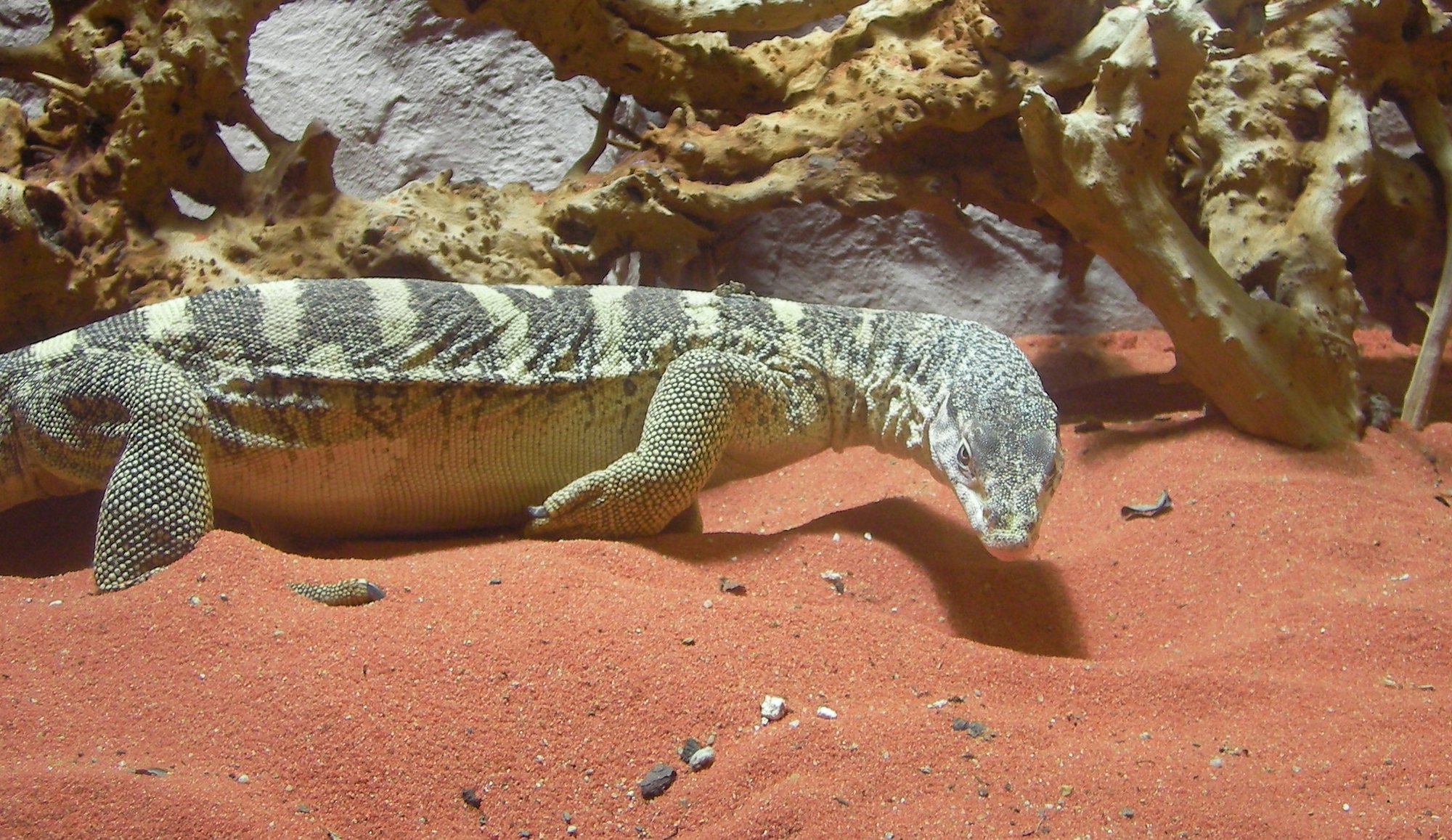
Monitors & tegus · Difficulty: Expert
Key facts and care guidance for Spencer's monitor (Varanus spenceri) (origin: The central and eastern arid parts of Australia (cracking clay plains)). Adult size around approx. 100–125 cm total length (a robust, heavy ground monitor). Life expectancy approx. 10–20 years. The values below are carefully researched guidance.
Short answers
Spencer's monitor: How big does the enclosure need to be?
At least 200×100×80 cm, very deep substrate they can dig in (a powerful digger); a front-glass enclosure is not recommended.
Spencer's monitor: What temperature does it need?
Daytime 28–34 °C (warm side), cool side ~26–28 °C, basking spot 55–65 °C (very hot basking spot), at night 20–24 °C.
Spencer's monitor: Does it need UVB lighting?
UVB: UVB needed (Ferguson zone 3–4, UV index 4–6).
Spencer's monitor: How long do they live?
Life expectancy: approx. 10–20 years.
Spencer's monitor: Is it suitable for beginners?
No – better suited to experienced keepers (difficulty: Expert).
Climate
- Daytime temperature
- 28–34 °C (warm side), cool side ~26–28 °C
- Night temperature
- 20–24 °C
- Basking spot
- 55–65 °C (very hot basking spot)
- Humidity
- 30–50 % (arid grass plains; a humid burrow microclimate)
- UVB
- UVB needed (Ferguson zone 3–4, UV index 4–6)
Enclosure
- Minimum size
- at least 200×100×80 cm, very deep substrate they can dig in (a powerful digger); a front-glass enclosure is not recommended
- Substrate
- A deep, firm sand-loam mix (diggable), with a hollow log as the preferred hide
Feeding
- Food
- Carnivorous: rodents, chicks, large insects, eggs
- Feeding interval
- adults approx. every 3 days, juveniles more often
Key facts
- Adult size
- approx. 100–125 cm total length (a robust, heavy ground monitor)
- Life expectancy
- approx. 10–20 years
- Origin
- The central and eastern arid parts of Australia (cracking clay plains)
- Protection status
- CITES Appendix II / EU Annex B → registration required, proof of origin required
- Brumation
- a slightly cooler, shorter winter spell is possible; no true brumation
- Cohabitation
- Keep them singly; territorial, and the males do not get on. A pair only with a great deal of space, visual barriers and supervision.
Notes
NOT a water monitor despite the list name – a terrestrial inhabitant of arid clay plains and one of the strongest diggers among the monitors; it needs an extremely hot basking spot and deep digging ground. The source's assignment to "water monitors" is inconsistent. Little solid keeper data (some figures come from specialist care sheets).
Do you keep this species?
Add your animal to Reptoria – Reptoria reminds you about feeding and shedding. Add your animal for free →
Look for Spencer's monitor (Varanus spenceri) in the marketplace →
Related species
- Argus monitor (Varanus panoptes) – Expert
- Bengal monitor (Varanus bengalensis) – Expert
- Blue tree monitor (Varanus macraei) – Expert
- Blue-tailed monitor (Varanus doreanus) – Intermediate to expert
- Finsch's monitor (Varanus doreanus finschi) – Expert
- Boatsi tree monitor (Varanus boatsi) – Expert
- Bogert's tree monitor (Varanus bogerti) – Expert
- Lace monitor (Varanus varius) – Expert
What you need to start
To keep Spencer's monitor (Varanus spenceri) you typically need: a suitable enclosure (at least 200×100×80 cm, very deep substrate they can dig in (a powerful digger); a front-glass enclosure is not recommended), substrate (A deep, firm sand-loam mix (diggable), with a hollow log as the preferred hide), a heat source with a thermostat, UVB lighting, thermometer and hygrometer, a water dish and hides. You will find equipment in the Reptoria marketplace.
The complete, interactive care database is in the Reptoria app.
Last updated: 30 October 2026 · Editor: Reptoria editorial team · Sources include: https://de.wikipedia.org/wiki/Spencers_Waran, https://reptile-database.reptarium.cz/species?genus=Varanus&species=spenceri
All values are non-binding guidance and do not replace expert advice. Research thoroughly from several sources before acquiring and keeping an animal, and observe the applicable law (species and animal protection in particular).