Spiny-tailed monitor (Varanus acanthurus)
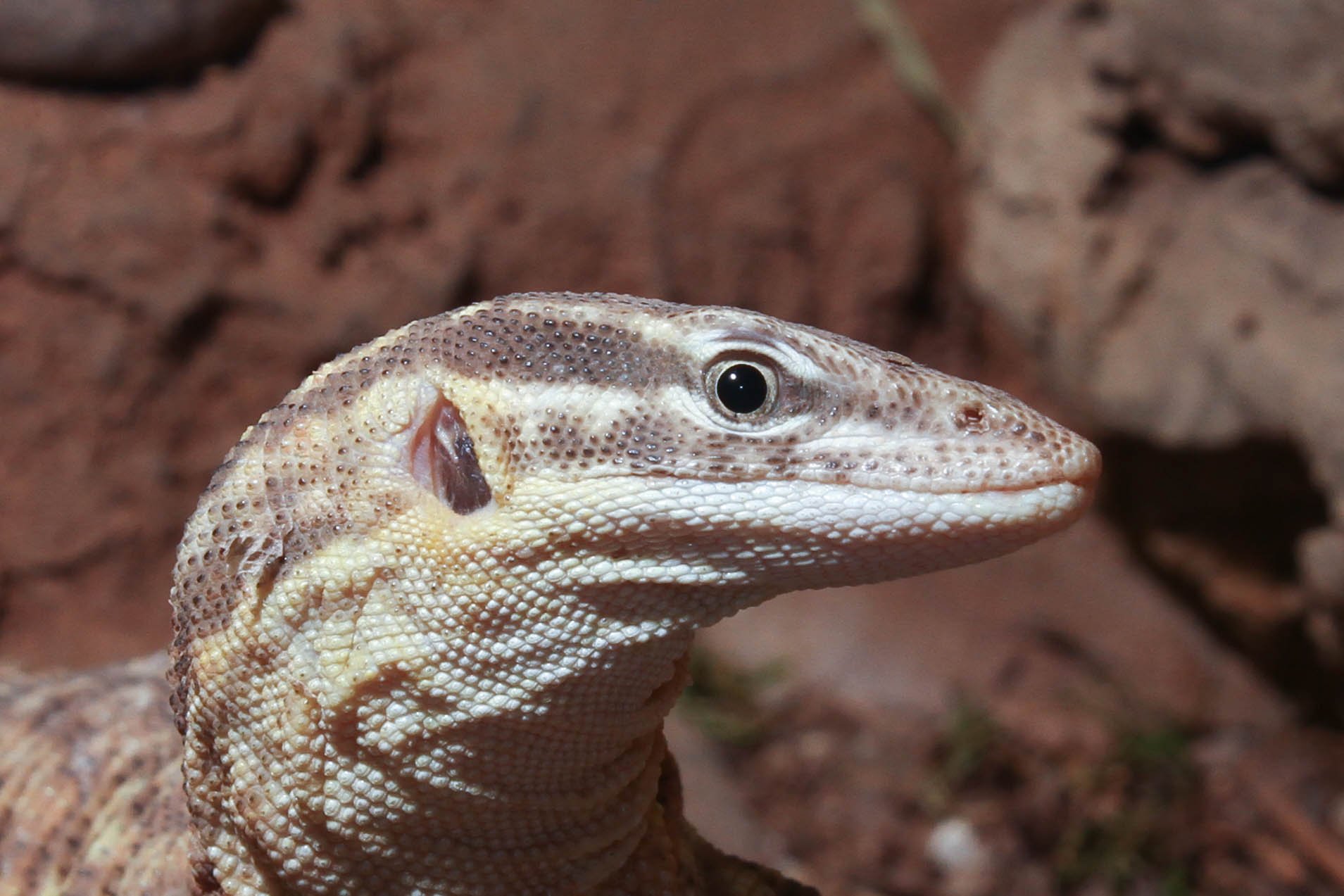
Monitors & tegus · Difficulty: Intermediate
Key facts and care guidance for Spiny-tailed monitor (Varanus acanthurus) (origin: Northern Australia (arid rocky and dry areas)). Adult size around approx. 60–70 cm. Life expectancy 10–15 years (individual animals up to 20). The values below are carefully researched guidance.
Short answers
Spiny-tailed monitor: How big does the enclosure need to be?
From 150×80×80 cm for a pair (from 150×60×60 cm for a single animal), substrate 20 cm deep and diggable.
Spiny-tailed monitor: What temperature does it need?
Daytime 25–30 °C, basking spot 40–50 °C, at night 20–23 °C.
Spiny-tailed monitor: Does it need UVB lighting?
UVB: Essential.
Spiny-tailed monitor: How long do they live?
Life expectancy: 10–15 years (individual animals up to 20).
Spiny-tailed monitor: Is it suitable for beginners?
Rather not – it is considered an intermediate species (difficulty: Intermediate).
Climate
- Daytime temperature
- 25–30 °C
- Night temperature
- 20–23 °C
- Basking spot
- 40–50 °C
- Humidity
- 50–60 % (the retreat more humid)
- UVB
- Essential
Enclosure
- Minimum size
- from 150×80×80 cm for a pair (from 150×60×60 cm for a single animal), substrate 20 cm deep and diggable
- Substrate
- A deep sand-loam mix they can dig in, with rock structures and crevices
Feeding
- Food
- Insects (crickets, locusts, roaches, larvae)
- Feeding interval
- 2–3× a week
Key facts
- Adult size
- approx. 60–70 cm
- Life expectancy
- 10–15 years (individual animals up to 20)
- Origin
- Northern Australia (arid rocky and dry areas)
- Protection status
- CITES Appendix II / EU Annex B, registration required
- Brumation
- None (a slight seasonal drop)
- Cohabitation
- A pair or small harem group in a large, well-structured enclosure. The reason: several males fight over territory and the warm spot until one is injured or spends its life in a corner. Females usually get on, but each needs its own warm spot and hide; feed them separately once they differ in size.
Notes
The most popular dwarf monitor; it likes to dig and climb. It needs a high basking spot, deep digging substrate, and rock and hide structures.
Do you keep this species?
Add your animal to Reptoria – Reptoria reminds you about feeding and shedding. Add your animal for free →
Look for Spiny-tailed monitor (Varanus acanthurus) in the marketplace →
Related species
- Argus monitor (Varanus panoptes) – Expert
- Bengal monitor (Varanus bengalensis) – Expert
- Blue tree monitor (Varanus macraei) – Expert
- Blue-tailed monitor (Varanus doreanus) – Intermediate to expert
- Finsch's monitor (Varanus doreanus finschi) – Expert
- Boatsi tree monitor (Varanus boatsi) – Expert
- Bogert's tree monitor (Varanus bogerti) – Expert
- Lace monitor (Varanus varius) – Expert
What you need to start
To keep Spiny-tailed monitor (Varanus acanthurus) you typically need: a suitable enclosure (from 150×80×80 cm for a pair (from 150×60×60 cm for a single animal), substrate 20 cm deep and diggable), substrate (A deep sand-loam mix they can dig in, with rock structures and crevices), a heat source with a thermostat, UVB lighting, thermometer and hygrometer, a water dish and hides. You will find equipment in the Reptoria marketplace.
The complete, interactive care database is in the Reptoria app.
Last updated: 9 October 2026 · Editor: Reptoria editorial team · Sources include: dahmstierleben.de, terraristikfibel.de, monster-reptiles.com, einrichtungsbeispiele.de, tropic-shop.de
All values are non-binding guidance and do not replace expert advice. Research thoroughly from several sources before acquiring and keeping an animal, and observe the applicable law (species and animal protection in particular).