Tessellated gecko (Diplodactylus tessellatus)
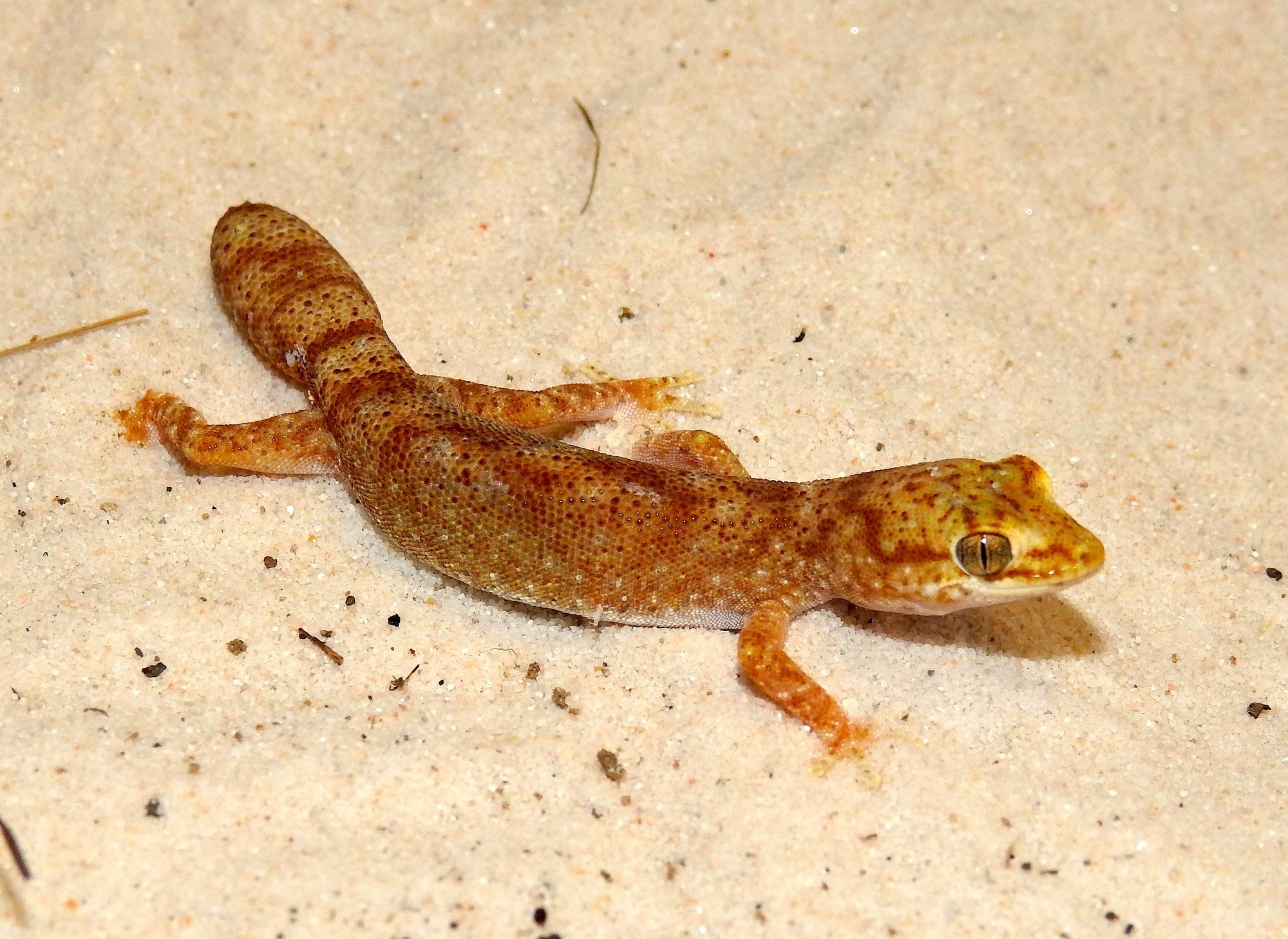
Geckos · Difficulty: Beginner
Key facts and care guidance for Tessellated gecko (Diplodactylus tessellatus) (origin: Eastern and central Australia). Adult size around 8–10 cm total length. Life expectancy 8–12 years. The values below are carefully researched guidance.
Short answers
Tessellated gecko: How big does the enclosure need to be?
45×30×30 cm.
Tessellated gecko: What temperature does it need?
Daytime 26–32 °C, basking spot 35 °C, at night 19–23 °C.
Tessellated gecko: Does it need UVB lighting?
UVB: Recommended (UVB 5.0).
Tessellated gecko: How long do they live?
Life expectancy: 8–12 years.
Tessellated gecko: Is it suitable for beginners?
Yes – it is considered suitable for beginners (difficulty: Beginner).
Climate
- Daytime temperature
- 26–32 °C
- Night temperature
- 19–23 °C
- Basking spot
- 35 °C
- Humidity
- 35–50 %
- UVB
- Recommended (UVB 5.0)
Enclosure
- Minimum size
- 45×30×30 cm
- Substrate
- Sand-loam they can dig in, flat stones, a cork hide
Feeding
- Food
- House crickets, crickets, mealworm larvae
- Feeding interval
- 2–3×/week
Key facts
- Adult size
- 8–10 cm total length
- Life expectancy
- 8–12 years
- Origin
- Eastern and central Australia
- Protection status
- Export from Australia is prohibited – only European captive-bred animals
- Brumation
- A cooler dry spell of 8–10 weeks
- Cohabitation
- In pairs or as a harem (1.2) — two males must never be kept together, they fight over territory and the basking spot until one is injured or permanently gives way. Females generally get along but need their own heat and hiding spots; feed separately if they differ in size.
Notes
A small, very robust ground gecko for compact desert terrariums. It stores fat in its thick tail. It readily takes up soil crevices under stone slabs.
Do you keep this species?
Add your animal to Reptoria – Reptoria reminds you about feeding and shedding. Add your animal for free →
Look for Tessellated gecko (Diplodactylus tessellatus) in the marketplace →
Related species
- Fat-tailed diplodactylus (Diplodactylus conspicillatus) – Intermediate
- Ranges stone gecko (Diplodactylus furcosus) – Beginner to intermediate
- Eastern stone gecko (Diplodactylus vittatus) – Intermediate
- Helmeted gecko (Diplodactylus galeatus) – Intermediate
- Western stone gecko (Diplodactylus granariensis) – Beginner to intermediate
- Thick-tailed gecko (Underwoodisaurus milii) – Beginner to intermediate
- Broad-tailed gecko (Phyllurus platurus) – Intermediate
- Delean's knob-tailed gecko (Nephrurus deleani) – Intermediate
What you need to start
To keep Tessellated gecko (Diplodactylus tessellatus) you typically need: a suitable enclosure (45×30×30 cm), substrate (Sand-loam they can dig in, flat stones, a cork hide), a heat source with a thermostat, UVB lighting, thermometer and hygrometer, a water dish and hides. You will find equipment in the Reptoria marketplace.
The complete, interactive care database is in the Reptoria app.
Last updated: 30 October 2026 · Editor: Reptoria editorial team · Sources include: https://en.wikipedia.org/wiki/Diplodactylus_tessellatus, https://reptile-database.reptarium.cz/species?genus=Diplodactylus&species=tessellatus, https://reptilescove.com/care/lizards/diplodactylus-geckos-safekeeping-guide, https://reptilesmagazine.com/diplodactylus-geckos-of-australia/
All values are non-binding guidance and do not replace expert advice. Research thoroughly from several sources before acquiring and keeping an animal, and observe the applicable law (species and animal protection in particular).