Yellow-spotted dwarf tegu (Callopistes flavipunctatus)
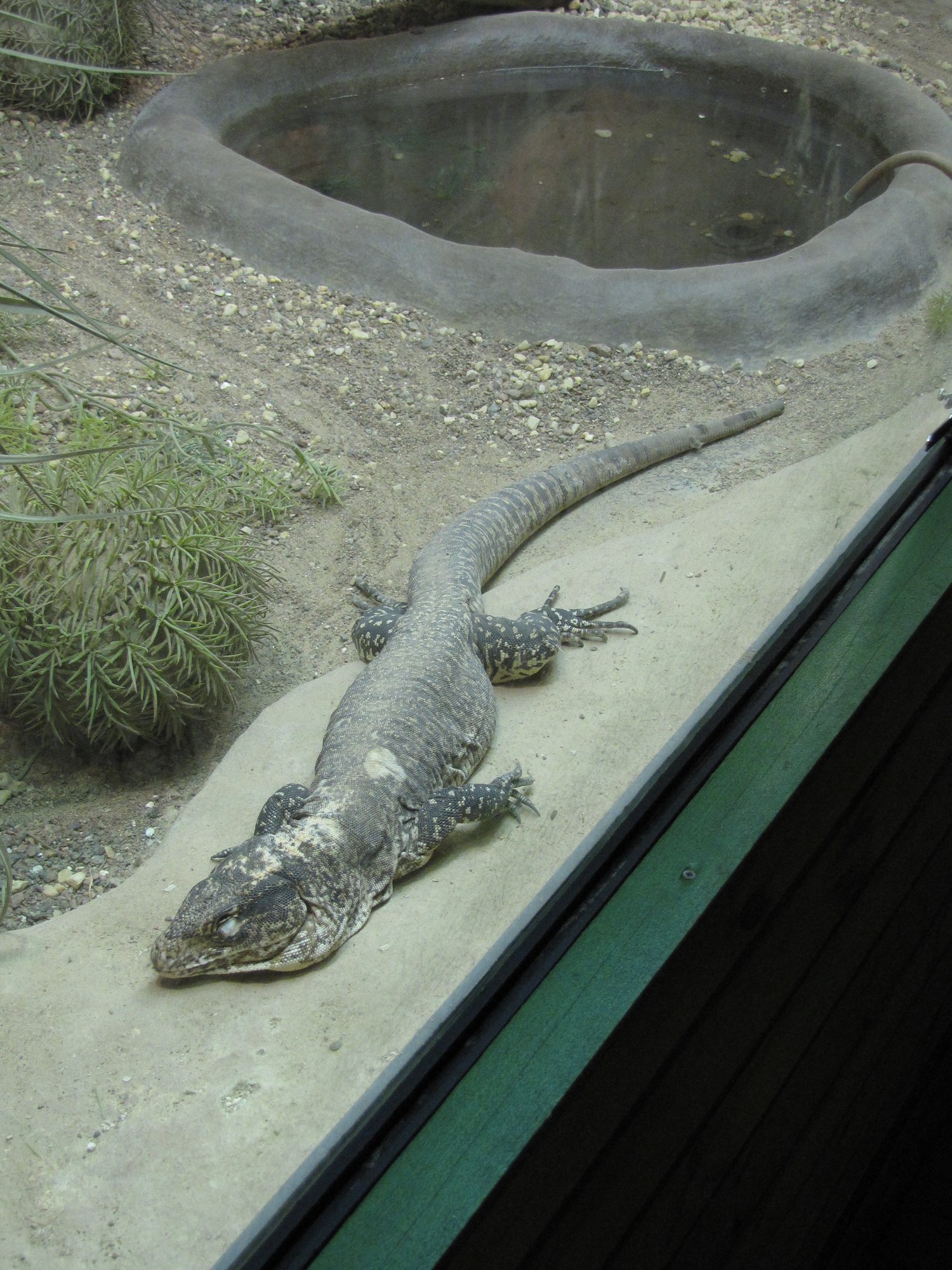
Monitors & tegus · Difficulty: Intermediate
Key facts and care guidance for Yellow-spotted dwarf tegu (Callopistes flavipunctatus) (origin: Northern Peru, southern Ecuador – dry forest). Adult size around 60–80 cm total length. Life expectancy 12–20 years. The values below are carefully researched guidance.
Short answers
Yellow-spotted dwarf tegu: How big does the enclosure need to be?
200×100×80 cm.
Yellow-spotted dwarf tegu: What temperature does it need?
Daytime 30–36 °C, basking spot 48 °C, at night 19–23 °C.
Yellow-spotted dwarf tegu: Does it need UVB lighting?
UVB: Essential (UVB 10.0–12 %).
Yellow-spotted dwarf tegu: How long do they live?
Life expectancy: 12–20 years.
Yellow-spotted dwarf tegu: Is it suitable for beginners?
Rather not – it is considered an intermediate species (difficulty: Intermediate).
Climate
- Daytime temperature
- 30–36 °C
- Night temperature
- 19–23 °C
- Basking spot
- 48 °C
- Humidity
- 35–50 %
- UVB
- Essential (UVB 10.0–12 %)
Enclosure
- Minimum size
- 200×100×80 cm
- Substrate
- Sand-loam 25–35 cm for digging, stone slabs, a cave
Feeding
- Food
- Insects, roaches, rodents, eggs, small lizards
- Feeding interval
- 3×/week
Key facts
- Adult size
- 60–80 cm total length
- Life expectancy
- 12–20 years
- Origin
- Northern Peru, southern Ecuador – dry forest
- Protection status
- Not listed under CITES
- Brumation
- A cooler dry spell of 8–10 weeks
- Cohabitation
- Keep them singly. Monitors and tegus are territorial; grown animals defend their territory and injure each other with serious bites in the process. Even small size differences mean one animal claims the warm spot and the food for itself while the other falls behind — which is often only noticed once the weaker animal has already lost weight. For breeding, put them together only under supervision.
Notes
A dry-forest tegu with strong spotting, markedly smaller than the Salvator tegus. A pronounced digger and an active hunter – keep it singly, as animals of its own kind are attacked.
Do you keep this species?
Add your animal to Reptoria – Reptoria reminds you about feeding and shedding. Add your animal for free →
Look for Yellow-spotted dwarf tegu (Callopistes flavipunctatus) in the marketplace →
Related species
- Chilean dwarf tegu (Callopistes maculatus) – Intermediate
- Argentine black and white tegu (Salvator merianae) – Intermediate
- Yellow tegu (Salvator dracaena) – Intermediate
- Golden tegu (Tupinambis cryptus) – Intermediate
- Golden tegu (Tupinambis teguixin) – Intermediate
- Caiman lizard (Dracaena guianensis) – Expert
- Crocodile tegu (Crocodilurus amazonicus) – Expert
- Paraguay caiman lizard (Dracaena paraguayensis) – Expert
What you need to start
To keep Yellow-spotted dwarf tegu (Callopistes flavipunctatus) you typically need: a suitable enclosure (200×100×80 cm), substrate (Sand-loam 25–35 cm for digging, stone slabs, a cave), a heat source with a thermostat, UVB lighting, thermometer and hygrometer, a water dish and hides. You will find equipment in the Reptoria marketplace.
The complete, interactive care database is in the Reptoria app.
Last updated: 9 October 2026 · Editor: Reptoria editorial team · Sources include: https://en.wikipedia.org/wiki/False_monitor, https://reptile-database.reptarium.cz/species?genus=Callopistes&species=flavipunctatus
All values are non-binding guidance and do not replace expert advice. Research thoroughly from several sources before acquiring and keeping an animal, and observe the applicable law (species and animal protection in particular).